• Home
  • Bank of Subjects of Articles
    • Bibliography
    • Characters
    • Culture and art
    • Economics
    • Educational sciences
    • ethics
    • Geography of Islamic world
    • History
    • Islamic jurisprudence and principles
    • Kalam (Islamic scholastic theology)
    • Mahdism
    • Philosophy and logic
    • Political science
    • pray and pilgrimage
    • Prophet and Ahl-al bayt
  • Islamic Teachings
  • quran
  • The Infallibles
  • Shia Beliefs
  • Morality
  • Events
    • Media Reflection
    • Muharram
    • News of Shia World
    • News of Worldly Assembly for Shia Studies
  • Home
  • Bank of Subjects of Articles
    • Bibliography
    • Characters
    • Culture and art
    • Economics
    • Educational sciences
    • ethics
    • Geography of Islamic world
    • History
    • Islamic jurisprudence and principles
    • Kalam (Islamic scholastic theology)
    • Mahdism
    • Philosophy and logic
    • Political science
    • pray and pilgrimage
    • Prophet and Ahl-al bayt
  • Islamic Teachings
  • quran
  • The Infallibles
  • Shia Beliefs
  • Morality
  • Events
    • Media Reflection
    • Muharram
    • News of Shia World
    • News of Worldly Assembly for Shia Studies
Home Bank of Subjects of Articles ethics

One Who Only Sees Self Gets Nowhere

by mustafa askari
2022-11-24
in ethics, Islamic Teachings
0
One Who Only Sees Self Gets Nowhere
0
SHARES
27
VIEWS
Share on FacebookShare on Twitter
As long as we are connected to the origin of existence, the whole world of exeistence is within our grasp but if this connection is severed and we turn to worldly matters and selfishness, we would be unable to even know ourselves.


This is according to religious scholar and researcher Hojat-ol-Islam Mohammad Ali Khosravi, speaking about signs of God’s presence all over the world. Excerpts from his remarks are as follows:

Thinking, reflection and contemplation are movements in the mind. If there is such a movement, one can say thought has been created. Basically, thought is defined is movement toward a goal and finding solution. If such a thinking is created, we move from the spring season, the nature, blossoms and change in years and learn about the one behind all of these, the Creator.

All of the Quran’s focus is on drawing the attention of you, who see the spring, the change of years and other changes, to the one who is behind all of these changes. This is what distinguishes the believers from unbelievers. Everyone sees changes, but a monotheist person also sees the one that creates changes. The supplication read at the beginning of the Persian calendar year is a very beautiful and profound one: “O’ the Transformer of hearts and eyes, O’ the Planner of night and day, O’ the Transmuter of power and circumstances, turn our condition into the best of conditions”. Since the beginning of the year, we turn to the one who beings about change.

Change itself is not what matters but what is important the one who brings about change. So the fundamental point that the Quran wants to draw our attention to is to see the signs of God, the Creator, everywhere. “… with which He caused to grow” (Surah Luqman, Verse 10)

It says if there are things that grow, it is God Who causes them to grow. In all verses we see this path that God introduces Himself so that people may get awakened from negligence.

As long as we are connected to the origin of existence, the whole world of exeistence is within our grasp but if this connection is severed and we turn to worldly matters and selfishness, we would be unable to even know ourselves. I hope that by reading the Quran, we would strengthen our connection to the origin.

source: iqna

Previous Post

Religious Faith A Major Factor in Giving Hope, Preventing Suicide

Next Post

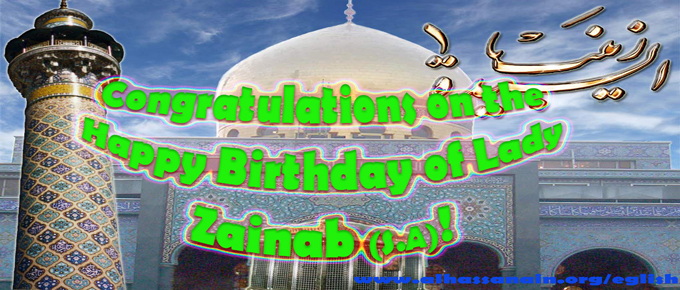
The Birth of Sayyeda Zainab (s.a.)

mustafa askari

Related Posts

The Status of Raj‘ah (Return) in Shi’a Beliefs
Article Database

The Status of Raj‘ah (Return) in Shi’a Beliefs

by mehdi mollayi
2026-11-29
Article Database

Three Verses in the Holy Qur’an Regarding Tawassul (Seeking Intercession)

by mehdi mollayi
2026-11-22
The Passing of Lady Fatima Masuma (Peace Be Upon Her)
Article Database

The Will of Lady Fatima al-Zahra (Peace Be Upon Her): Its Economic, Political, and Historical Dimensions

by mehdi mollayi
2026-11-19
Message of the Leader of the Islamic Revolution on the Passing of Grand Ayatollah Vahid Khorasani
Article Database

Message of the Leader of the Islamic Revolution on the Passing of Grand Ayatollah Vahid Khorasani

by mehdi mollayi
2026-11-19
The Incident of Fadak: From the Prophet Muhammad’s Gift to Lady Fatimah al-Zahra (PBUH) to Her Demand for Her Rightful Ownership
Article Database

The Incident of Fadak: From the Prophet Muhammad’s Gift to Lady Fatimah al-Zahra (PBUH) to Her Demand for Her Rightful Ownership

by mehdi mollayi
2026-11-11
Next Post
The Birth of Sayyeda Zainab (s.a.)

The Birth of Sayyeda Zainab (s.a.)

Leave a Reply Cancel reply

Your email address will not be published. Required fields are marked *

Latest Post

The Status of Raj‘ah (Return) in Shi’a Beliefs

The Status of Raj‘ah (Return) in Shi’a Beliefs

2026-11-29

Three Verses in the Holy Qur’an Regarding Tawassul (Seeking Intercession)

2026-11-22
The Passing of Lady Fatima Masuma (Peace Be Upon Her)

The Will of Lady Fatima al-Zahra (Peace Be Upon Her): Its Economic, Political, and Historical Dimensions

2026-11-19
Message of the Leader of the Islamic Revolution on the Passing of Grand Ayatollah Vahid Khorasani

Message of the Leader of the Islamic Revolution on the Passing of Grand Ayatollah Vahid Khorasani

2026-11-19
The Incident of Fadak: From the Prophet Muhammad’s Gift to Lady Fatimah al-Zahra (PBUH) to Her Demand for Her Rightful Ownership

The Incident of Fadak: From the Prophet Muhammad’s Gift to Lady Fatimah al-Zahra (PBUH) to Her Demand for Her Rightful Ownership

2026-11-11
Fatimah al-Zahra’s (Peace Be Upon Her) موقف Toward the Usurpers of Fadak  Fatimah al-Zahra’s (Peace Be Upon Her) Turning Away from Abu Bakr

Fatimah al-Zahra’s (Peace Be Upon Her) موقف Toward the Usurpers of Fadak Fatimah al-Zahra’s (Peace Be Upon Her) Turning Away from Abu Bakr

2026-11-11
Load More

Browse by Tags

Ahl al-Bayt (A.S.) Ahlul Bayt Al-Mahdi (AS) Allah Ashura Ayatollah Sobhani Ethics faith Fatima fiqh ghadir God History Holy Prophet Imam 'Ali Imam Ali (A.S.) Imam Husain Imams infallibles Islam Islamic Laws Islamic rules Jurisprudence Karbala Martyrdom morality Muhammad Nahj al Balaghah prayer prophet Quran Ramadan Reborn Salat Sayed Moustafa Qazwini shaistudies shia Shia Beliefs Shia Imams Shia Islam Shia Studie's World Assembly shiastudies Sin the differences between Shi’a and Sunni the story of those who converted to Shia Islam

The World Assembly of Shiite Studies was established in 2003 (1382 AH) by a group of scholars from seminaries and universities. The purpose of founding this independent academic institution was to introduce the school of Shi‘ism and defend its legitimacy through education, research, translation and publication, communications, and Islamic promotion. This center has continued its mission with strength and determination and envisions a bright future ahead.

Address: Qom, 45-Meter Ammar Yaser Boulevard, between Alley 4 and 6, World Assembly of Shiite Studies, Secretariat of Religious Scholars

Phone: +982537713773

Fax: +982537713774

All rights of the website are reserved and belong to the World Assembly of Shiite Studies.