Beliefs: Did the Prophet (s) Appoint a Successor
O Messenger, Proclaim what has been sent down to you from your Lord; and if you don’t do it, you have not delivered His Message (at all); and Allah will protect you from the people (Holy Qur’an: Chapter 5, Verse 67)
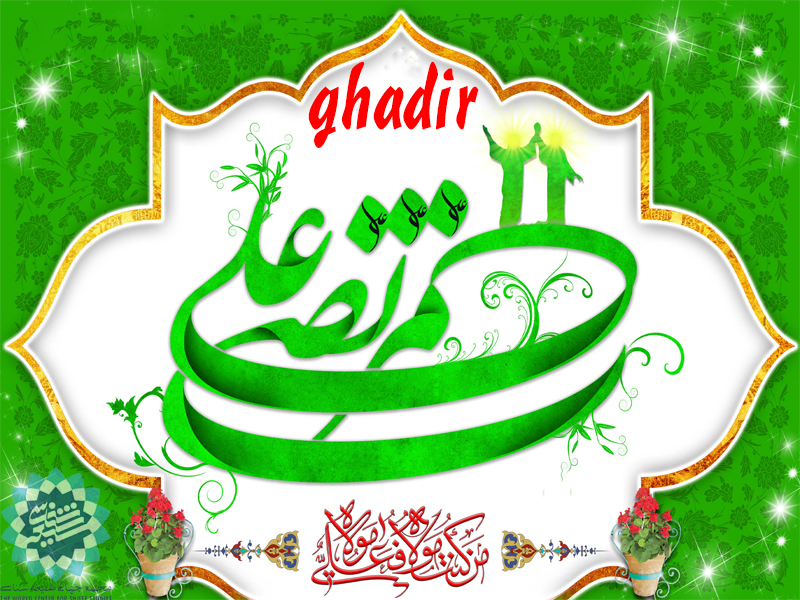
The Shi’ah believe that the proclamation mentioned by the Qur’anic verse was fulfilled by the Prophet (s) when he appointed Imam ‘Ali bin Abi Talib (a) as his successor on the day of Ghadir Khumm.
What happened on the day of Ghadir Khumm?
Ghadir Khumm is a location some miles from Makkah on the road to Madinah. When the Prophet (s) was passing by this place on 18 Dhu’l Hijja (10 March 632) on his return from the Farewell Pilgrimage, the verse “O Messenger, Proclaim what has been sent down…” was revealed. He therefore stopped to make an announcement to the pilgrims who accompanied him from Makkah and who were to disperse from that junction to their respective destinations. By the orders of the Prophet (s) a special pulpit made of branches of trees was erected for him. After the noon prayer the Prophet (s) sat on the pulpit and made his last public address to the largest gathering before his death three months later.
The highlight of his sermon was when, taking Imam ‘Ali (a) by the hand, the Prophet (s) asked his followers whether he was superior in authority (awla) to the believers themselves. The crowd cried out in one voice: “It is so, O Apostle of Allah”. He then declared: “He of whom I am the master (mawla), of him ‘Ali is also the master (mawla). O God, be the friend of him who is his friend, and be the enemy of him who is his enemy.”
Immediately after the Prophet (s) finished his speech, the following verse of the Qur’an was revealed:
Today I have perfected your religion and completed my favor upon you, and I was satisfied that Islam be your religion. (Holy Qur’an 5:3)
After his speech, the Prophet (s) asked everybody to give the oath of allegiance to ‘Ali (a) and congratulate him. Among those who did so was ‘Umar bin al-Khattab, who said: “Well done Ibn Abi Talib! Today you became the master of all believing men and women.”
An Arab, having heard of the event of Ghadir Khumm, came up to the Prophet (s) and said: “You commanded us to testify that there is no deity but Allah and that you are the Messenger of Allah. We obeyed you. You ordered us to perform the prayers five times a day and we obeyed. You ordered us to observe fasts during the month of Ramadhan and we obeyed. Then you commanded us to offer pilgrimage to Makkah and we obeyed. But you are not satisfied with all this and you raised your cousin by your hand and imposed him upon us as our master by saying ‘Ali is the mawla of whom I am mawla.’ Is this imposition from Allah or from you?” The Prophet (s) said : “By Allah who is the only deity! This is from Allah, the Mighty and the Glorious.”
On hearing this reply the man turned back and proceeded towards his she-camel saying: “O Allah! If what Muhammad said is correct then fling on us a stone from the sky and subject us to severe pain and torture.” He had not reached his she-camel when Allah flung at him a stone which struck him on his head, penetrated his body and left him dead. It was on this occasion that Allah, the exalted, caused to descend the following verses:
A questioner questioned about the punishment to fall. For the disbelievers there is nothing to avert it, from Allah the Lord of the Ascent. (Holy Qur’an 70:1-3)
Do the Sunni scholars consider this event authentic?
The number of Sunni authorities who narrate this event, both in detail and in summary, is mind boggling! This historic event was narrated by 110 Companions of the Prophet (s), 84 Successors from the following generation and then by many hundreds of scholars of the Islamic world, from the first to the fourteenth century AH (seventh to twentieth century CE). These statistics only include transmitters appearing in narrations recorded by Sunni scholars!
A very small selection of these sources is given below. Many of these scholars not only quote the Prophet’s declaration but also call it authentic:
• al-Hakim al-Naysaburi, al-Mustadrak ‘ala al-Sahihayn (Beirut), volume 3, pp. 109- 110, p. 133, p. 148, p. 533. He expressly states that the tradition is sahih in accordance with the criteria of al-Bukhari and Muslim; al-Dhahabi has confirmed his judgment.
• al-Tirmidhi, Sunan (Cairo), vol. 5, p. 633
• Ibn Majah, Sunan, (Cairo, 1952), vol. 1, p. 45
• Ibn Hajar al-’Asqalani, Fath al-Bari bi Sharh Sahih al-Bukhari, (Beirut, 1988), vol. 7, p. 61
• Al-’Ayni, ‘Umdat al-Qari Sharh Sahih al-Bukhari, vol. 8, p. 584
• Ibn al-’Athir, Jami‘ al-’usul, i, 277, no. 65;
• Al-Suyuti, al-Durr al-Manthur, vol. 2, p. 259 and p. 298
• Fakhr al-Din al-Razi, Tafsir al-Kabir, (Beirut, 1981), vol. 11, p. 53
• Ibn Kathir, Tafsir Qur’an al-’Azim, (Beirut), vol. 2, p. 14
• Al-Wahidi, Asbab al-Nuzul, p. 164
• Ibn al-’Athir, Usd al-Ghaba fi Ma’rifat al-Sahaba, (Cairo), vol.3, p. 92
• Ibn Hajar al-’Asqalani, Tahdhib al-Tahdhib, (Hyderabad, 1325), vol. 7, p. 339
• Ibn Kathir, al-Bidayah wa al-Nihayah, (Cairo, 1932), vol. 7, p. 340, vol. 5, p. 213
• Al-Tahawi, Mushkil al-Athar, (Hyderabad, 1915), vol. 2, pp. 308-9
• Nur al-Din al-Halabi al-Shafi’i, al-Sirah al-Halabiyya, vol. 3, p. 337
• Al-Zurqani, Sharh al-Mawahib al-Ladunniyya, vol. 7, p. 13
But doesn’t the word mawla mean friend?
Although a huge number of Sunni scholars from all ages and from all points of view have confirmed the event and the historic words of the Prophet (s), they have found it difficult to reconcile it with what actually happened after the demise of the Prophet (s). It is outside the scope of this short document to detail those incidents. The important point is that many Sunni scholars claimed that the Prophet (s) merely wished to declare ‘Ali (a) as a friend and helper to the Muslims!
There are many aspects to this event that show that it was much more significant. The revelation of the various verses of the Qur’an, the large gathering, the final stages of the Prophet’s life, the confirmation by the people that the Prophet (s) was superior in authority, the subsequent congratulations by ‘Umar as well as many other factors which are difficult to cover in this short document, all point to the occasion as one of designation of successor by the Prophet (s). It is evident that the word mawla was used in the sense of absolute authority after the Prophet (s) including, but not restricted to, temporal power.
The Final Word
If there still remains doubt about the historic importance of this statement and the efforts of some people to cover it up, let this be the final word:
When Imam ‘Ali (a), during the time of his caliphate and decades after the event of Ghadir, said to Anas bin Malik, the Companion of the Prophet (s): “Why don’t you stand up and testify what you heard from the Messenger of Allah on the day of Ghadir?” He answered, “O Amir al-Muminin! I have grown old and do not remember.”
Thereupon ‘Ali (a) said: “May Allah mark you with a white spot (of leprosy) unconcealable with your turban, if you are intentionally withholding the truth.” And before Anas got up from his place he bore a large white spot on his face.”
notes:
• Ibn Qutaybah al-Dinawari, Kitab al-Ma’arif, (Cairo, 1353 AH), p. 251
• Ahmad bin Hanbal, al-Musnad, vol. 1, p. 119
• Abu Nu‘aym al-’Isfahani ,Hilyat al-Awliya’, (Beirut, 1988), vol. 5, p. 27
• Nur al-Din al-Halabi al-Shafi’i, al-Sirah al-Halabiyya, vol. 3, p. 336
• Al-Muttaqi al-Hindi, Kanz al-’Ummal, (Halab, 1969-84), vol. 13, p. 131
Language English
Topic Tags:
Successor
Ghadir
Category:
Sunni & Shi’a
Early Islamic History
Person Tags:
Imam Ali