• Home
  • Bank of Subjects of Articles
    • Bibliography
    • Characters
    • Culture and art
    • Economics
    • Educational sciences
    • ethics
    • Geography of Islamic world
    • History
    • Islamic jurisprudence and principles
    • Kalam (Islamic scholastic theology)
    • Mahdism
    • Philosophy and logic
    • Political science
    • pray and pilgrimage
    • Prophet and Ahl-al bayt
  • Islamic Teachings
  • quran
  • The Infallibles
  • Shia Beliefs
  • Morality
  • Events
    • Media Reflection
    • Muharram
    • News of Shia World
    • News of Worldly Assembly for Shia Studies
  • Home
  • Bank of Subjects of Articles
    • Bibliography
    • Characters
    • Culture and art
    • Economics
    • Educational sciences
    • ethics
    • Geography of Islamic world
    • History
    • Islamic jurisprudence and principles
    • Kalam (Islamic scholastic theology)
    • Mahdism
    • Philosophy and logic
    • Political science
    • pray and pilgrimage
    • Prophet and Ahl-al bayt
  • Islamic Teachings
  • quran
  • The Infallibles
  • Shia Beliefs
  • Morality
  • Events
    • Media Reflection
    • Muharram
    • News of Shia World
    • News of Worldly Assembly for Shia Studies
Home Bank of Subjects of Articles ethics

When your Work is Done, Nominate…

by mustafa askari
2022-10-10
in ethics
0
When your Work is Done, Nominate…
0
SHARES
14
VIEWS
Share on FacebookShare on Twitter
As it is mentioned in many narrations, the holy verse “When your work is done, nominate (go and completing other worships)” means nominating the Commander of the Faithful for the Khilafa after finishing his call for Islam (as a confrimation for the general meaning of the verse).
After recalling from some Imams this explanation, Al Alousi says in the book “Rouh Al Maani” (the soul of meanings): those people read the verb nominate in a way that doesn’t show the meaning of nominating Ali bin abi Taleb but in a way that means showing enmity to him. Then he recalled what Al ZamKhashry says in the book Al Kashaf: Al Nawasib (haters of Ali) were able to translate this word in a way that shows that it is a command to hate Ali.  [1]
Do you think that the Shiites need to change the reading of the verse in order to infer from it the authority of Ali?!  Of course not, but this well-known reading is sufficient for the aforementioned interpretation because it says: If you have finished a task such as the mission of the message, start with another task such as the task of guardianship, and this is accepted as one of the pieces of evidence.  We know that the Messenger of God (pbuh)- according to the well-known hadith of Al Ghadir and other hadiths circulated in the Sahihs and the Musnads – was in constant pursuit in this field.
But it is very unfortunate that fanaticism pushes a man of knowledge like “Al-Zamakhshari” to allow himself to say that the Nawasib can also interpret the verse as a command to hate Ali!!  What poor expression is this about a person whom Al Zamakhshari believes in as the fourth caliph of the Muslims!  Indeed, the pitfalls of fanaticism are bad!
The Mu’tazila scholar “ibn Abi Al Hadid” narrates in the “Explanation of Nahj Al Balagha”, narrated by Al Zubair bin Bakkar” who is a non Shiite man and not an enemy to Mouawiya but he left Ali and followed his opposers, as ibn Abi Hadid said. Al Zubair here recalls from ibn “Al Maghira bin Sha’ba” and says: I entered with my father to Mouawiya. My father used to visit him, talk with him, then turn back home and talk about Mouawiya and his knowledge, and feels amazed by what he sees from him. One night, he turned back and abstained from eating dinner. I saw him distressed and waited for one hour, so I thought that a misfortune had happened to us. So I said: why are you looking distressed tonight? He said: O my son, I return today from the most unbeliever and the most vile man. So I asked him : what happened? He said: I said to Mouawiya when we were alone: you get all the traits of being the commander of the faithful so if you show justice and spread goodness, you’ll be greater in value. If you give care to your brothers of Bani Hashem and keep good relationships with them, you’ll not have anything to fear. You will get in return the good fame and reward of that. So Mouawiya said: No way! No way! Which good fame will I get? When Akhu Taym (Abu Baker) had authority, he led with justice and did what he had to do, but when he died his fame died too. His name is only mentioned when someone says “Abu Baker narrates’ ‘. Then Akhu Oday (Omar) had authority, so he made efforts and led for 10 years until he died and took his fame with him too. His name is only mentioned when someone says “Omar narrates”. But Ibn Abi Kabsha (God’s prophet) name is mentioned 5 times per day: “I bear witness to God that Mohammad is the messenger of God ”, so what good work do you think will remain? And what fame stays after death, you who has no father? I swear to God that our end is only being buried”. [2]
If we concentrate on this narration, we will know the catastrophes that muslims face until the Umayyad family has the authority… Verily we belong to Allah and verily to him do we return.
O our God, relieve us of self-love, and fill our hearts with your love.
O God, you promise us with ease in times of distress… so provide muslims with ease at the time they suffer the conspiracies of enemies and the intrigues of the covetous. O God, increase your blessings upon us and give us the good luck to be among the thankful people!
‏Tafsir Al Noor, His Eminence Al Sheikh Mohsin Qaraati- Freely


[1] Rouh  Al Maani, Part 30, p. 172;  Interpretation of the Scout, part 4, page 772.
[2] Ibn Abi Al Hadid, Sharh Nahj Al Balagh
a,part 5, page 129.

source:english.almaaref  

Tags: Ahlul BaytEthicsImam 'AliIslammoralityQuran
Previous Post

How to Accomplish Guidance and Deviation

Next Post

Asking for Intercession from other than God, and the Suspicion of Polytheism

mustafa askari

Related Posts

10 facts about marriage in Islam
ethics

10 facts about marriage in Islam

by mustafa askari
2025-05-26
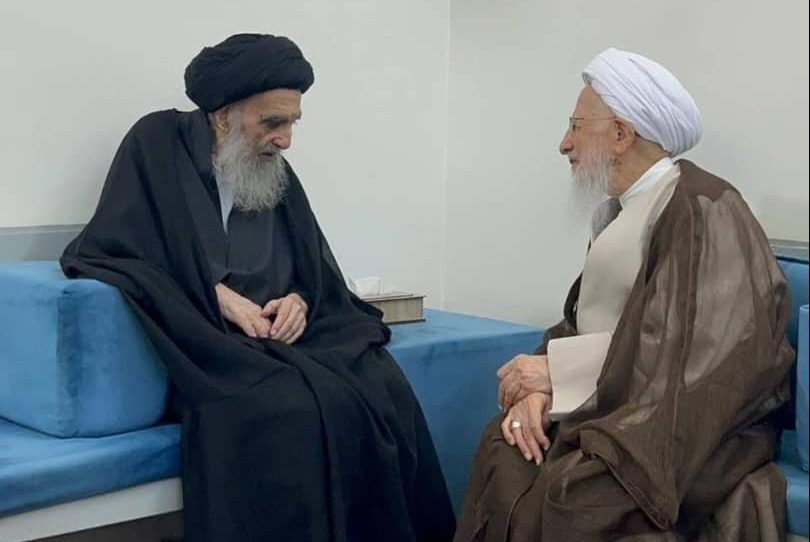
The Grand Ayatollah Sistani & the Grand Ayatollah Javadi Amoli Met in Najaf Ashraf
ethics

The Grand Ayatollah Sistani & the Grand Ayatollah Javadi Amoli Met in Najaf Ashraf

by mustafa askari
2025-05-19
Imam Ali (AS) Did Not Compromise on Unethical Politics
ethics

Imam Ali (AS) Did Not Compromise on Unethical Politics

by mustafa askari
2025-05-11
UK: Reform councillors face allegations of sharing social media Islamophobic content
ethics

UK: Reform councillors face allegations of sharing social media Islamophobic content

by mustafa askari
2025-05-11
How to be just with your children?
ethics

How to be just with your children?

by mustafa askari
2025-05-10
Next Post
Asking for Intercession from other than God, and the Suspicion of Polytheism

Asking for Intercession from other than God, and the Suspicion of Polytheism

Leave a Reply Cancel reply

Your email address will not be published. Required fields are marked *

Latest Post

10 facts about marriage in Islam

10 facts about marriage in Islam

2025-05-26
A Clear Message in Response to the Arrogance of Donald Trump

A Clear Message in Response to the Arrogance of Donald Trump

2025-05-24
The Grand Ayatollah Sistani & the Grand Ayatollah Javadi Amoli Met in Najaf Ashraf

The Grand Ayatollah Sistani & the Grand Ayatollah Javadi Amoli Met in Najaf Ashraf

2025-05-19
Imam Ali (AS) Did Not Compromise on Unethical Politics

Imam Ali (AS) Did Not Compromise on Unethical Politics

2025-05-11
UK: Reform councillors face allegations of sharing social media Islamophobic content

UK: Reform councillors face allegations of sharing social media Islamophobic content

2025-05-11
How to be just with your children?

How to be just with your children?

2025-05-10
Load More

Browse by Tags

Ahl al-Bayt (A.S.) Ahlul Bayt Al-Mahdi (AS) Allah Ashura Ayatollah Sobhani Ethics faith Fatima fiqh ghadir God History Holy Prophet Imam 'Ali Imam Ali (A.S.) Imam Husain Imams infallibles Islam Islamic Laws Islamic rules Jurisprudence Karbala Martyrdom morality Muhammad Nahj al Balaghah prayer prophet Quran Ramadan Reborn Salat Sayed Moustafa Qazwini shaistudies shia Shia Beliefs Shia Imams Shia Islam Shia Studie's World Assembly shiastudies Sin the differences between Shi’a and Sunni the story of those who converted to Shia Islam

The World Assembly of Shiite Studies was established in 2003 (1382 AH) by a group of scholars from seminaries and universities. The purpose of founding this independent academic institution was to introduce the school of Shi‘ism and defend its legitimacy through education, research, translation and publication, communications, and Islamic promotion. This center has continued its mission with strength and determination and envisions a bright future ahead.

Address: Qom, 45-Meter Ammar Yaser Boulevard, between Alley 4 and 6, World Assembly of Shiite Studies, Secretariat of Religious Scholars

Phone: +982537713773

Fax: +982537713774

All rights of the website are reserved and belong to the World Assembly of Shiite Studies.

Are you sure want to unlock this post?
Unlock left : 0
Are you sure want to cancel subscription?