• Home
  • Bank of Subjects of Articles
    • Bibliography
    • Characters
    • Culture and art
    • Economics
    • Educational sciences
    • ethics
    • Geography of Islamic world
    • History
    • Islamic jurisprudence and principles
    • Kalam (Islamic scholastic theology)
    • Mahdism
    • Philosophy and logic
    • Political science
    • pray and pilgrimage
    • Prophet and Ahl-al bayt
  • Islamic Teachings
  • quran
  • The Infallibles
  • Shia Beliefs
  • Morality
  • Events
    • Media Reflection
    • Muharram
    • News of Shia World
    • News of Worldly Assembly for Shia Studies
  • Home
  • Bank of Subjects of Articles
    • Bibliography
    • Characters
    • Culture and art
    • Economics
    • Educational sciences
    • ethics
    • Geography of Islamic world
    • History
    • Islamic jurisprudence and principles
    • Kalam (Islamic scholastic theology)
    • Mahdism
    • Philosophy and logic
    • Political science
    • pray and pilgrimage
    • Prophet and Ahl-al bayt
  • Islamic Teachings
  • quran
  • The Infallibles
  • Shia Beliefs
  • Morality
  • Events
    • Media Reflection
    • Muharram
    • News of Shia World
    • News of Worldly Assembly for Shia Studies
Home Bank of Subjects of Articles Culture and art

No Compulsion in Religion According to Seerah of Holy Prophet

by mustafa askari
2022-10-15
in Culture and art
0
No Compulsion in Religion According to Seerah of Holy Prophet
0
SHARES
66
VIEWS
Share on FacebookShare on Twitter
The Holy Prophet (PBUH), based on various verses of the Holy Quran that consider his mission to be conveying the message, did not impose anything on people.


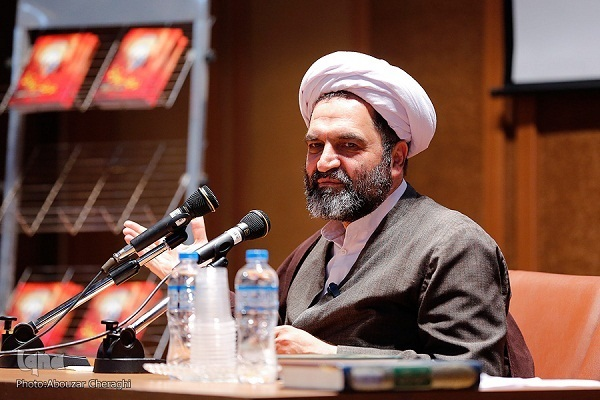
This is according to the Muslim scholar Hojat-ol-Islam Mohammad Soroush Mahalati, speaking at a forum on the Holy Prophet’s (PBUH) mission. Excerpts from his speech are as follows:

It is understood from the verses of the Quran that the Holy Prophet (PBUH) has no mission other than Tabligh (propagation). Whether or not people will accept the message is up to them. So the Prophet (PBUH) did not impose religiosity on people and did not use any means of coercion and pressure in this regard.

There are many verses pointing to this fact. Some of these verses highlight the fact that the Prophet (PBUH) has no other responsibility than Tabligh. According to another group of verses, Tabligh is the Prophet’s (PBUH) mission and if people turn away from him, his mission is over. Some other verses say it is God’s will that people become believers with their own choice and based on free will.

Fiqh, which shows the practical way of being religious, should first indicate what means should be used to help people become religious.

There are three types of analysis and explanation about these verses. The first one says these verses are Makki and the Prophet’s (PBUH) mission in Mecca was Tabligh only but in Medina he had another responsibility.

The second view says that these verses are about accept Islam. That is to say, the Prophet (PBUH) does not force people to become Muslims. One is free to accept or reject Islam but when people become Muslim, being committed to its rules is necessary. One is free to enter or not to enter a country, but if he chose to enter it, that means he has accepted its rules.

The third view states that there is a distinction between divine rules and what the Prophet (PBUH) orders. What God has ordered depends on people’s free will to follow or reject. But when there is a religious government, people must follow the orders of the government.

As for the first view, it should be rejected since there are such verses not only in Makki Surahs but also in Madani ones.

Regarding the second view, we should refer to verse 92 of Surah Al-Ma’idah: “Obey Allah, and obey the Messenger. Beware; if you give no heed, know that Our Messenger’s duty is only to give the clear delivery.”

According to this verse, the Prophet (PBUH) only delivers the message and it is up to people to obey or not. So this verse refutes the second and even the third view.

The Quran says in another verse: “Whosoever obeys the Messenger, indeed he has obeyed Allah. As for those who turn away, We have not sent you to be their protector.” (Surah An-Nisa, Verse 80)

The Quran refers to people’s refusing to obey the Prophet (PBUH) but tells the Prophet (PBUH) to let them decide themselves.

Therefore, these verses show that the Prophet (PBUH) does not impose anything on people regarding both divine rules and Wilayi rules.

source:iqna
 

Tags: Ahl al-Bayt (A.S.)AllahEthicsIslamJurisprudenceShia Studie's World Assembly
Previous Post

Role of Religion in Spiritual Health

Next Post

How Small Sins Turn into Big Ones

mustafa askari

Related Posts

An Introduction to Shi‘a Studies: A Review of the Book
Article Database

An Introduction to Shi‘a Studies: A Review of the Book

by mehdi mollayi
2026-10-10
I Want to Support the Shia School of Thought
Article Database

I Want to Support the Shia School of Thought

by mehdi mollayi
2026-10-01
# How Does Remembering Death Affect Our Lives?
Article Database

# How Does Remembering Death Affect Our Lives?

by mehdi mollayi
2026-10-01
Culture and art

Role of Religion in Spiritual Health

by mustafa askari
2022-10-15
Over 6m People Visited Karbala on Ashura: Official
Culture and art

Over 6m People Visited Karbala on Ashura: Official

by mustafa askari
2022-08-17
Next Post
How Small Sins Turn into Big Ones

How Small Sins Turn into Big Ones

Leave a Reply Cancel reply

Your email address will not be published. Required fields are marked *

Latest Post

An Introduction to Shi‘a Studies: A Review of the Book

An Introduction to Shi‘a Studies: A Review of the Book

2026-10-10
The Imam: A Revealed Truth from the Unseen Realm

The Imam: A Revealed Truth from the Unseen Realm

2026-10-04
I Want to Support the Shia School of Thought

I Want to Support the Shia School of Thought

2026-10-01
# How Does Remembering Death Affect Our Lives?

# How Does Remembering Death Affect Our Lives?

2026-10-01
**Hawzah News Agency Interviews Hojjat al-Islam Dr. Mehdi Karimi, Deputy for Education at the World Assembly of Shiite Studies**

**Hawzah News Agency Interviews Hojjat al-Islam Dr. Mehdi Karimi, Deputy for Education at the World Assembly of Shiite Studies**

2026-09-29
Message from the World Assembly of Shi’a Studies on the Passing of the Eminent Religious Scholar, Grand Ayatollah Sayyid Musa Shubayri Zanjani (May God Have Mercy on Him)

Message from the World Assembly of Shi’a Studies on the Passing of the Eminent Religious Scholar, Grand Ayatollah Sayyid Musa Shubayri Zanjani (May God Have Mercy on Him)

2026-09-23
Load More

Browse by Tags

Ahl al-Bayt (A.S.) Ahlul Bayt Al-Mahdi (AS) Allah Ashura Ayatollah Sobhani Ethics faith Fatima fiqh ghadir God History Holy Prophet Imam 'Ali Imam Ali (A.S.) Imam Husain Imams infallibles Islam Islamic Laws Islamic rules Jurisprudence Karbala Martyrdom morality Muhammad Nahj al Balaghah prayer prophet Quran Ramadan Reborn Salat Sayed Moustafa Qazwini shaistudies shia Shia Beliefs Shia Imams Shia Islam Shia Studie's World Assembly shiastudies Sin the differences between Shi’a and Sunni the story of those who converted to Shia Islam

The World Assembly of Shiite Studies was established in 2003 (1382 AH) by a group of scholars from seminaries and universities. The purpose of founding this independent academic institution was to introduce the school of Shi‘ism and defend its legitimacy through education, research, translation and publication, communications, and Islamic promotion. This center has continued its mission with strength and determination and envisions a bright future ahead.

Address: Qom, 45-Meter Ammar Yaser Boulevard, between Alley 4 and 6, World Assembly of Shiite Studies, Secretariat of Religious Scholars

Phone: +982537713773

Fax: +982537713774

All rights of the website are reserved and belong to the World Assembly of Shiite Studies.