• Home
  • Bank of Subjects of Articles
    • Bibliography
    • Characters
    • Culture and art
    • Economics
    • Educational sciences
    • ethics
    • Geography of Islamic world
    • History
    • Islamic jurisprudence and principles
    • Kalam (Islamic scholastic theology)
    • Mahdism
    • Philosophy and logic
    • Political science
    • pray and pilgrimage
    • Prophet and Ahl-al bayt
  • Islamic Teachings
  • quran
  • The Infallibles
  • Shia Beliefs
  • Morality
  • Events
    • Media Reflection
    • Muharram
    • News of Shia World
    • News of Worldly Assembly for Shia Studies
  • Home
  • Bank of Subjects of Articles
    • Bibliography
    • Characters
    • Culture and art
    • Economics
    • Educational sciences
    • ethics
    • Geography of Islamic world
    • History
    • Islamic jurisprudence and principles
    • Kalam (Islamic scholastic theology)
    • Mahdism
    • Philosophy and logic
    • Political science
    • pray and pilgrimage
    • Prophet and Ahl-al bayt
  • Islamic Teachings
  • quran
  • The Infallibles
  • Shia Beliefs
  • Morality
  • Events
    • Media Reflection
    • Muharram
    • News of Shia World
    • News of Worldly Assembly for Shia Studies
Home Bank of Subjects of Articles ethics

Hajj: What Is Holding Us Back?

by javad
2021-11-30
in ethics, pray and pilgrimage
0
Social Dimensions of Hajj
0
SHARES
28
VIEWS
Share on FacebookShare on Twitter

Hajj: What Is Holding Us Back?

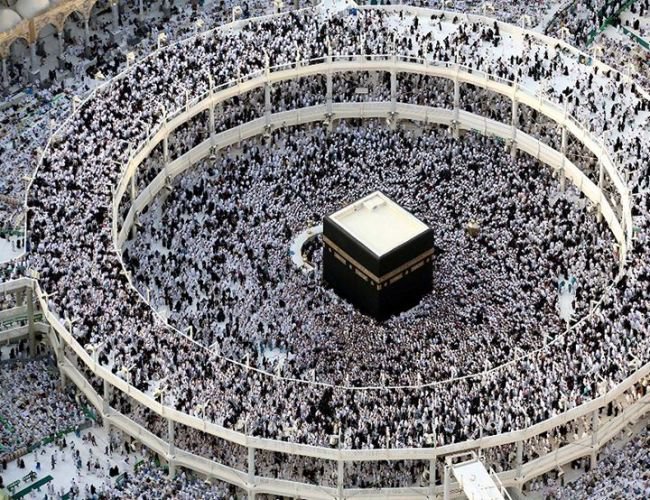
Hajj: What Is Holding Us Back? Highly emphasized through numerous traditions, being the greatest of all manifestations of the principle of unity and the doctrine of Tawheed, and the one act of worship for which a complete chapter in the Holy Qur’an has been revealed, we all acknowledge that the performance of Hajj is an act of tremendous worth. However, as highly regarded and significant as we sincerely deem it to be, what is often overlooked is the importance of not delaying it. Continuously preoccupied and so immersed in daily rituals as we are – and often blinded by the glory of this world with everything it has to offer – it becomes all too easy to place this obligatory act of worship at the back of our minds, right there at the bottom on our list of life priorities.

Perhaps we feel we are “too young”, or would like to wait until our parents have performed Hajj first. It may be that we feel our hard-earned savings would be better spent on a tour around the globe, another few visits back home, a lavish wedding, or something else equally luxurious. Yet we must stop and question: are such grounds justifiable to delay our duty to Allah? Is it really up to us to decide when we are obligated, or “ready”, to perform Hajj?

Ayatollah Dastghaib Shirazi mentions in his book Greater Sins, “Hajj is from those obligatory duties that must be performed immediately, if it is possible to do so. Not only is failure to perform Hajj a greater sin, but postponing it is also a greater sin, even if it be for a year.” It is therefore apparent that Hajj becomes obligatory in the year in which one is capable, and delaying it by even a single year after this amounts to a great sin – resulting in grave consequences to be faced in both worlds.

Imam Ali (peace be upon him) has advised, “By Allah, by Allah, keep the House of your Lord in mind. Do not disregard it as long as you remain alive, because surely if it is ignored, then He shall not look towards you with His Mercy.” (Bihar al-Anwar)

It has also been narrated from Imam Ja’far as-Sadiq (peace be upon him) that the one who dies without performing Hajj while being healthy and wealthy is like the one regarding whom Allah says, “We shall raise him blind in Qiyamat.” Upon being asked whether that person will be actually blind in Qiyamat, the Imam replied, “Yes! Allah will blind him from seeing the path to Paradise” (Wasa’il al-Shia)

Let us not be from those who say they will perform Hajj the following year, every year, until they die, while they were blessed with perfect capability in their lifetime and nothing to prevent them from doing so. Traditions tell us such a person will be raised on the Day of Reckoning as a non-Muslim. (Wasa’il al-Shia)

While there is no given age in which to perform Hajj, it is always beneficial to accomplish it early on in life when there are minimal responsibilities and few/no major expenses to eat at our savings. Being young and fit is also a plus factor, as the journey will no doubt be strenuous and involve many struggles. Summer break right around the corner is thus a great opportunity to begin saving, or to speed it up if already started. As well, Shaikh Abbas Qummi narrates in Mafatih al-Jinan some specific recommended Ramadan du’as in order to help one develop the means to perform Hajj, such as Du’a Hajj, Allahumma Arzuqni Hajja, and Allahumma Hadha Shahr Ramadan. The recitation of Surah Hajj in the Holy Qur’an is also highly recommended and will, insha’Allah, pave the way for the one who wills to perform Hajj. Some scholars have also recommended the recitation of Istaghfar 1000 times in one sitting to help achieve this goal.

Let us not delay our duty to Allah, pay this rite of our religion its due importance, and watch Allah’s Magnificence at play in our lives. Indeed, Imam Ali al-Ridha (peace be upon him) has said Hajj is made incumbent so that we may derive the spiritual and material benefits inherent in it (Wasa’il al-Shia), even if these may be beyond our scope and understanding. It has further been narrated from Imam Ridha that he said, “I have not seen a single thing which makes a person free from want (financially secure) quicker, nor which is more effective in removing poverty, than continuously performing the Hajj.” (Bihar al-Anwar)

Freedom of the Spirit and Mind

Tags: AllahhajjIslamshiaShia Studie's World Assembly
Previous Post

A Healthy Society under the Grace of Ethics

Next Post

The Origin and Early Development of Islamic Architecture

javad

Related Posts

10 facts about marriage in Islam
ethics

10 facts about marriage in Islam

by mustafa askari
2025-05-26
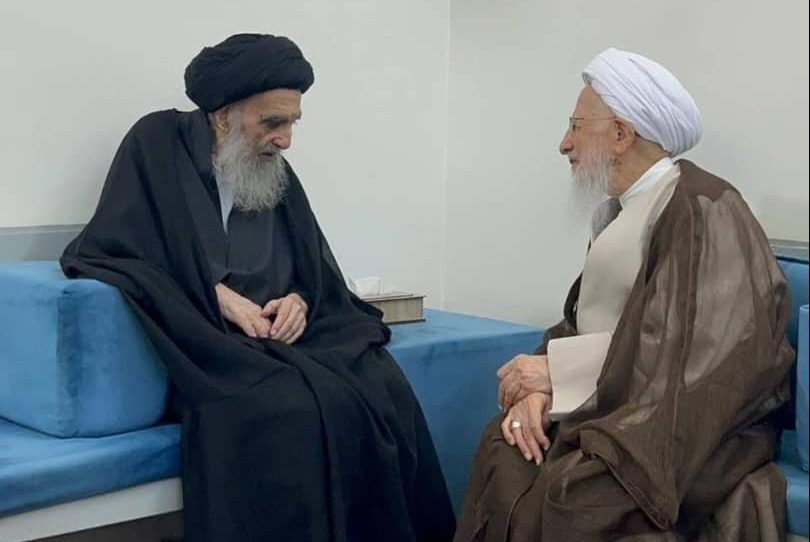
The Grand Ayatollah Sistani & the Grand Ayatollah Javadi Amoli Met in Najaf Ashraf
ethics

The Grand Ayatollah Sistani & the Grand Ayatollah Javadi Amoli Met in Najaf Ashraf

by mustafa askari
2025-05-19
Imam Ali (AS) Did Not Compromise on Unethical Politics
ethics

Imam Ali (AS) Did Not Compromise on Unethical Politics

by mustafa askari
2025-05-11
UK: Reform councillors face allegations of sharing social media Islamophobic content
ethics

UK: Reform councillors face allegations of sharing social media Islamophobic content

by mustafa askari
2025-05-11
How to be just with your children?
ethics

How to be just with your children?

by mustafa askari
2025-05-10
Next Post
Story of Saqifah & appointment of caliphs as depicted in history of Islam

The Origin and Early Development of Islamic Architecture

Leave a Reply Cancel reply

Your email address will not be published. Required fields are marked *

Latest Post

10 facts about marriage in Islam

10 facts about marriage in Islam

2025-05-26
A Clear Message in Response to the Arrogance of Donald Trump

A Clear Message in Response to the Arrogance of Donald Trump

2025-05-24
The Grand Ayatollah Sistani & the Grand Ayatollah Javadi Amoli Met in Najaf Ashraf

The Grand Ayatollah Sistani & the Grand Ayatollah Javadi Amoli Met in Najaf Ashraf

2025-05-19
Imam Ali (AS) Did Not Compromise on Unethical Politics

Imam Ali (AS) Did Not Compromise on Unethical Politics

2025-05-11
UK: Reform councillors face allegations of sharing social media Islamophobic content

UK: Reform councillors face allegations of sharing social media Islamophobic content

2025-05-11
How to be just with your children?

How to be just with your children?

2025-05-10
Load More

Browse by Tags

Ahl al-Bayt (A.S.) Ahlul Bayt Al-Mahdi (AS) Allah Ashura Ayatollah Sobhani Ethics faith Fatima fiqh ghadir God History Holy Prophet Imam 'Ali Imam Ali (A.S.) Imam Husain Imams infallibles Islam Islamic Laws Islamic rules Jurisprudence Karbala Martyrdom morality Muhammad Nahj al Balaghah prayer prophet Quran Ramadan Reborn Salat Sayed Moustafa Qazwini shaistudies shia Shia Beliefs Shia Imams Shia Islam Shia Studie's World Assembly shiastudies Sin the differences between Shi’a and Sunni the story of those who converted to Shia Islam

The World Assembly of Shiite Studies was established in 2003 (1382 AH) by a group of scholars from seminaries and universities. The purpose of founding this independent academic institution was to introduce the school of Shi‘ism and defend its legitimacy through education, research, translation and publication, communications, and Islamic promotion. This center has continued its mission with strength and determination and envisions a bright future ahead.

Address: Qom, 45-Meter Ammar Yaser Boulevard, between Alley 4 and 6, World Assembly of Shiite Studies, Secretariat of Religious Scholars

Phone: +982537713773

Fax: +982537713774

All rights of the website are reserved and belong to the World Assembly of Shiite Studies.

Are you sure want to unlock this post?
Unlock left : 0
Are you sure want to cancel subscription?