• Home
  • Bank of Subjects of Articles
    • Bibliography
    • Characters
    • Culture and art
    • Economics
    • Educational sciences
    • ethics
    • Geography of Islamic world
    • History
    • Islamic jurisprudence and principles
    • Kalam (Islamic scholastic theology)
    • Mahdism
    • Philosophy and logic
    • Political science
    • pray and pilgrimage
    • Prophet and Ahl-al bayt
  • Islamic Teachings
  • quran
  • The Infallibles
  • Shia Beliefs
  • Morality
  • Events
    • Media Reflection
    • Muharram
    • News of Shia World
    • News of Worldly Assembly for Shia Studies
  • Home
  • Bank of Subjects of Articles
    • Bibliography
    • Characters
    • Culture and art
    • Economics
    • Educational sciences
    • ethics
    • Geography of Islamic world
    • History
    • Islamic jurisprudence and principles
    • Kalam (Islamic scholastic theology)
    • Mahdism
    • Philosophy and logic
    • Political science
    • pray and pilgrimage
    • Prophet and Ahl-al bayt
  • Islamic Teachings
  • quran
  • The Infallibles
  • Shia Beliefs
  • Morality
  • Events
    • Media Reflection
    • Muharram
    • News of Shia World
    • News of Worldly Assembly for Shia Studies
Home Bank of Subjects of Articles

Short Biography of Hadrat Fatima Masoumah AS

by شهاب الدین مجتهدی
2019-12-14
in Bank of Subjects of Articles, Prophet and Ahl-al bayt
0
Short Biography of Hadrat Fatima Masoumah AS
0
SHARES
26
VIEWS
Share on FacebookShare on Twitter

 She was born on first day of the month of Zee al-Qa`adah in the year 173 A.H. in the holy city of Madinah Munawwarah. Her holy father was martyred in the Baghdad prison at the hands of the Abbasid caliph Harun al-Rashid after undergoing long term of imprisonment and tortures. After the martyrdom of her holy father she came under the care of Imam Reza (A.S.), her elder brother.
In the year 200 A.H., Imam Reza (A.S.) was forced to leave Madinah Munawwarah by the orders of Mamun,the Abbasid caliph. Imam Reza (A.S.) came alone to Marv (Khurasan) and did not accompany any of his family members.
In the year 201 A.H., Hadrat Fatimah Masoumah (A.S.) accompanied by her brothers and other elders from the Ahlul Bayt (A.S.) left Madinah Munawwarah for Marv (Khurasan) to meet Imam Reza (A.S.). On their way they were welcomed and greeted by the people of the different cities and villages

Hadrat Masoumah (A.S.) like her noble aunt Hadrat Zainab (A.S.) delivered the message of innocence of her brother Imam Reza (A.S) and revealed the evil intentions of the Abbasid caliph to the public. When the caravan reached Saveh a group of armed men who were deputed by Mamun, the Abbasid caliph, savagely attacked them and all the brothers of Hadrat Masoumah (A.S.) were martyred and according to some historical reports she was poisoned and became severely ill.
Due to her ill health she was unable to continue her journey towards Khurasan and decided to go towards Qum which is near Saveh. Hadrat Masoumah (A.S.) narrated while going towards Qum that her father, Imam Musa al-Kazim (A.S.) has said that city of Qum is the centre of the Shi`ites.
The inhabitants of Qum who were Shi`ites became very happy that Hadrat Masoumah (A.S.) is visiting their city and they gave warm welcome to her. Musa bin Khajraj, the doyen of Ashari family in Qum took the rein of the she-camel litter in his hand in which Hadrat Masoumah (A.S) was travelling and large number of people gathered around the she-camel litter. Hadrat Masoumah (A.S.) entered the city of Qum on 23rd Rabi al-Awwal, in the year 201 A.H.
She then resided in the house of Musa bin Khajraj in the locality which is now called as “Maidan Mir”.
She remained alive only for 17 days because she was poisoned in Saveh.But even in this condition she spent most of her time in praying and supplicating to Allah (SWT).
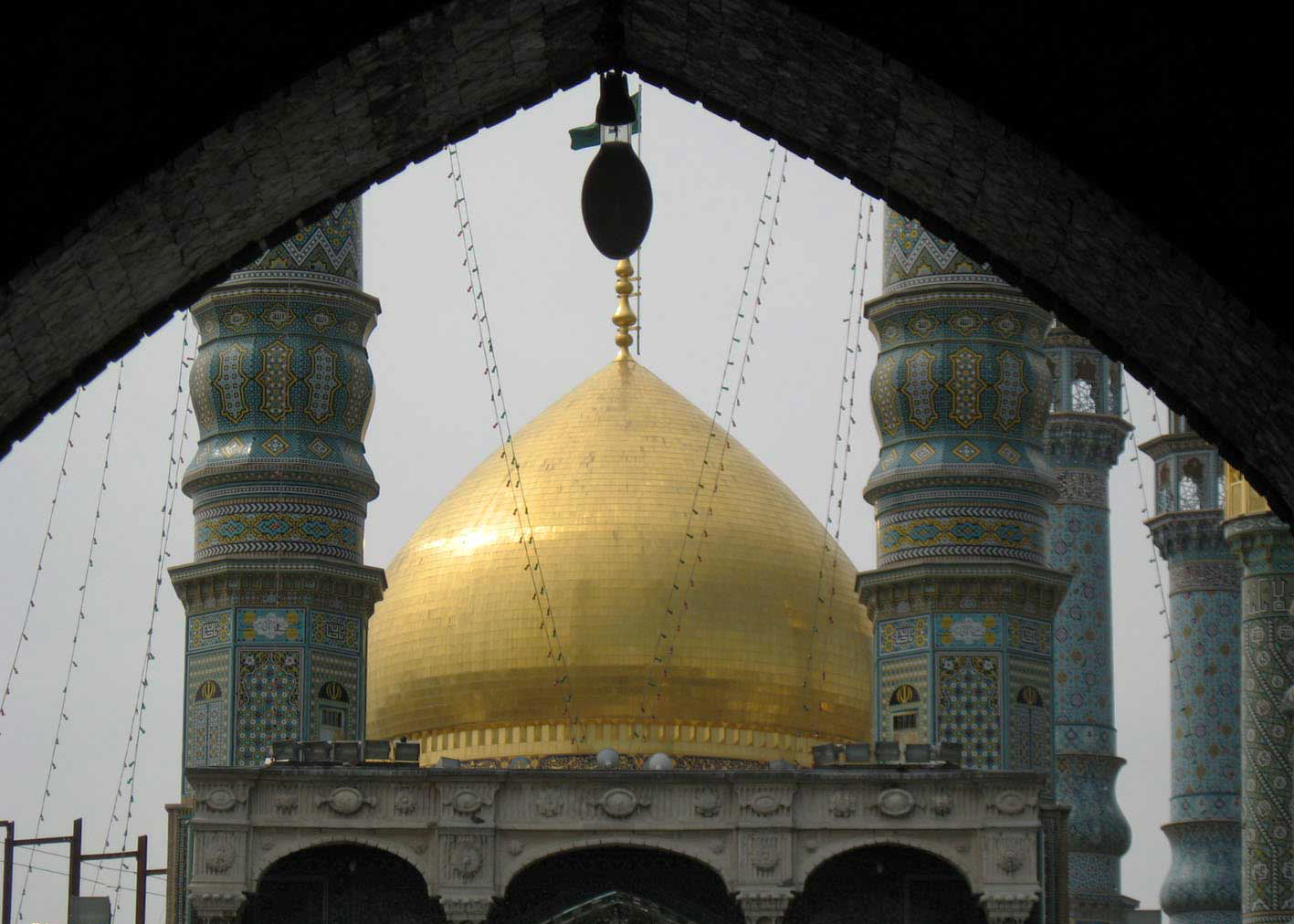
The place of her stay and worship in Qum is now situated in the Madrasa Sittiyah and is known as “Bait al-Nur” and is a place of ziyarah for the Shi`ites.
She passed away on 10th Rabi al-Thani, in the year 201 A.H. and she could not meet her elder brother before death. The Shi`ites in Qum greatly mourned her death and she was buried in a place called Bagh-i Babelan, which at that time was located outside the city. When the grave was ready there arose a difference that who should keep the body of Hadrat Masoumah (A.S.) in the grave. It is reported that suddenly two men whose face were covered and riding the horses came to that place and performed the Salaat-e Mayyit ( the prayers for the dead person) and then one of them went in the grave and the other person gave the body of Hadrat Masoumah (A.S.) to that standing person in the grave who laid her to rest in the grave.
After the burial ceremony was over both those persons without talking to anybody sat on their horse and went away.
It is said that those two holy personalities who performed the burial ceremony for Hadrat Masoumah (A.S.) were Imam Reza (A.S.) and Imam Muhammad Taqi al-Jawad (A.S.). According to sacred rules the burial ceremony of an infallible has to be performed by another infallible person for example the burial ceremony of Hadrat Fatima Zahra (A.S.) was performed by Amir al-Muminin Imam Ali (A.S.).
After the burial of Hadrat Masoumah (A.S.), Musa bin Khajraj built a shed over the grave made out of mat. In the year 256 A.H., Hadrat Zainab (A.S.), the daughter of Imam Muhammad Taqi al-Jawad (A.S.) constructed a dome over the grave of her aunt Hadrat Masoumah (A.S.).
Since the burial of that divine lady of Islam in Qum, the holy grave of her have become a centre of ziyarah for the lovers of the Holy Ahlul Bayt (A.S.).

shiastudies.com

Tags: BiographyHadrat Fatima Masoumah ASshiastudies
Previous Post

The Role Model Of Al Saiedah Maasomah S.A

Next Post

The bloodthirsty Mongolian Buddhist tyrant, Genghis Khan

شهاب الدین مجتهدی

Related Posts

10 facts about marriage in Islam
ethics

10 facts about marriage in Islam

by mustafa askari
2025-05-26
The Grand Ayatollah Sistani & the Grand Ayatollah Javadi Amoli Met in Najaf Ashraf
ethics

The Grand Ayatollah Sistani & the Grand Ayatollah Javadi Amoli Met in Najaf Ashraf

by mustafa askari
2025-05-19
Imam Ali (AS) Did Not Compromise on Unethical Politics
ethics

Imam Ali (AS) Did Not Compromise on Unethical Politics

by mustafa askari
2025-05-11
UK: Reform councillors face allegations of sharing social media Islamophobic content
ethics

UK: Reform councillors face allegations of sharing social media Islamophobic content

by mustafa askari
2025-05-11
How to be just with your children?
ethics

How to be just with your children?

by mustafa askari
2025-05-10
Next Post
The bloodthirsty Mongolian Buddhist tyrant, Genghis Khan

The bloodthirsty Mongolian Buddhist tyrant, Genghis Khan

Leave a Reply Cancel reply

Your email address will not be published. Required fields are marked *

Latest Post

10 facts about marriage in Islam

10 facts about marriage in Islam

2025-05-26
A Clear Message in Response to the Arrogance of Donald Trump

A Clear Message in Response to the Arrogance of Donald Trump

2025-05-24
The Grand Ayatollah Sistani & the Grand Ayatollah Javadi Amoli Met in Najaf Ashraf

The Grand Ayatollah Sistani & the Grand Ayatollah Javadi Amoli Met in Najaf Ashraf

2025-05-19
Imam Ali (AS) Did Not Compromise on Unethical Politics

Imam Ali (AS) Did Not Compromise on Unethical Politics

2025-05-11
UK: Reform councillors face allegations of sharing social media Islamophobic content

UK: Reform councillors face allegations of sharing social media Islamophobic content

2025-05-11
How to be just with your children?

How to be just with your children?

2025-05-10
Load More

Browse by Tags

Ahl al-Bayt (A.S.) Ahlul Bayt Al-Mahdi (AS) Allah Ashura Ayatollah Sobhani Ethics faith Fatima fiqh ghadir God History Holy Prophet Imam 'Ali Imam Ali (A.S.) Imam Husain Imams infallibles Islam Islamic Laws Islamic rules Jurisprudence Karbala Martyrdom morality Muhammad Nahj al Balaghah prayer prophet Quran Ramadan Reborn Salat Sayed Moustafa Qazwini shaistudies shia Shia Beliefs Shia Imams Shia Islam Shia Studie's World Assembly shiastudies Sin the differences between Shi’a and Sunni the story of those who converted to Shia Islam

The World Assembly of Shiite Studies was established in 2003 (1382 AH) by a group of scholars from seminaries and universities. The purpose of founding this independent academic institution was to introduce the school of Shi‘ism and defend its legitimacy through education, research, translation and publication, communications, and Islamic promotion. This center has continued its mission with strength and determination and envisions a bright future ahead.

Address: Qom, 45-Meter Ammar Yaser Boulevard, between Alley 4 and 6, World Assembly of Shiite Studies, Secretariat of Religious Scholars

Phone: +982537713773

Fax: +982537713774

All rights of the website are reserved and belong to the World Assembly of Shiite Studies.

Are you sure want to unlock this post?
Unlock left : 0
Are you sure want to cancel subscription?