• Home
  • Bank of Subjects of Articles
    • Bibliography
    • Characters
    • Culture and art
    • Economics
    • Educational sciences
    • ethics
    • Geography of Islamic world
    • History
    • Islamic jurisprudence and principles
    • Kalam (Islamic scholastic theology)
    • Mahdism
    • Philosophy and logic
    • Political science
    • pray and pilgrimage
    • Prophet and Ahl-al bayt
  • Islamic Teachings
  • quran
  • The Infallibles
  • Shia Beliefs
  • Morality
  • Events
    • Media Reflection
    • Muharram
    • News of Shia World
    • News of Worldly Assembly for Shia Studies
  • Home
  • Bank of Subjects of Articles
    • Bibliography
    • Characters
    • Culture and art
    • Economics
    • Educational sciences
    • ethics
    • Geography of Islamic world
    • History
    • Islamic jurisprudence and principles
    • Kalam (Islamic scholastic theology)
    • Mahdism
    • Philosophy and logic
    • Political science
    • pray and pilgrimage
    • Prophet and Ahl-al bayt
  • Islamic Teachings
  • quran
  • The Infallibles
  • Shia Beliefs
  • Morality
  • Events
    • Media Reflection
    • Muharram
    • News of Shia World
    • News of Worldly Assembly for Shia Studies
Home Morality

What is the Criterion with regards to the Greater Sins?

by javad
2021-05-31
in Morality
0
0
SHARES
65
VIEWS
Share on FacebookShare on Twitter

What is the Criterion with regards to the Greater Sins?

In connection with the greater sins, reference to which has been made in several verses of the Noble Qur`an[145], there have been many views by commentators on the one hand and the scholars of traditions and the jurists on the other.
Some have regarded all sins as being greater sins; this is because against Allah, the Mighty, every sin is enormous.
Others are of the opinion that the concept of lesser and greater, employed in connection with sins, is relative in nature. Every sin, in comparison to a more serious sin is looked upon as being lesser while in comparison to a less serious sin, as great.
Some believe that Allah\’s (s.w.t.) warning, in the Qur`an, of chastisement with respect to a sin, serves as a criterion for that sin to be considered great.
Occasionally it has also been said that every sin which necessitates the implementation of legal (religious) penalty is a greater sin.
However, in view of the fact that the term \’great\’ indicates upon the enormity of the sin, the best description for it would be every sin, which happens to possess one of the following, can be regarded as a greater sin:
· The sins with respect to which Allah (s.w.t.) has issued a warning of chastisement.
· Sins that have been regarded by the Imams and the traditions as being grave.
· Sins that have been regarded by religious sources to be more severe than sins that are known to be of the greater sins.
· And finally, sins, which the authentic traditions expressly state to be great.
The greater sins that are mentioned in the Islamic traditions vary in number. In some traditions, they are said to be seven in number (killing a soul, being disowned by the parents, usury, returning to the land of kufr after emigrating from it, falsely accusing a chaste woman of adultery, misappropriating the property of orphans and flight from jihad.)[146]
Some other traditions have enumerated them to be seven in number with the difference being that \’being disowned by the parents\’ has been substituted by:
كُلُّ ماَ أَوجَبَ اللٌّهُ عَلَيهِ النَّارَ
.
“All (those sins) for which Allah (s.w.t.) has made (the punishment of) Hell mandatory.”
In some, their number is seen to be ten, while in others it is 19 and in yet others the figure is much higher.[147]
This difference in their figure stems from the fact that all the greater sins are not uniform and similar – some are more serious and grave than the others, or in other words, they are Akbar al-Kabair (greatest of the greater sins) and thus, there is no conflict or contradiction amongst them.[148]
Notes:
[145] Suratul Nisa` (4), Verse 31; Suratul Shura (42), Verse 37, and the verses presently under consideration.
[146] Wasa`il ash-Shi\’a, vol. 11, Chapter Abwabu Jihad al-Nafs, Chapter 46, no. 1
[147] For further explanation, refer the above source (Chapter 46 from Abwabu Jihad al-Nafs). Thirty seven traditions, which enumerate and specify the Greater sins, have been mentioned there.
[148] Tafsir-e-Namuna, vol. 22, pg. 541

maintenance

Tags: CriterionEthicsGreater SinsmoralityShia Studie's World Assembly
Previous Post

Connection of the Immutable Laws of Islam with Government Structure and Alterable Laws

Next Post

Why is it Necessary to Utter Allah’s Name at the Time of Slaughtering (Animals)?

javad

Related Posts

10 facts about marriage in Islam
ethics

10 facts about marriage in Islam

by mustafa askari
2025-05-26
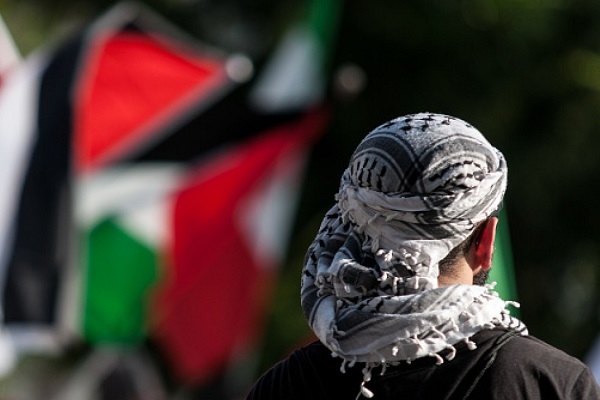
Palestinian Keffiyeh Recognized as Intangible Cultural Heritage by ICESCO: Ministry
Morality

Palestinian Keffiyeh Recognized as Intangible Cultural Heritage by ICESCO: Ministry

by mustafa askari
2024-11-25
Hamas confirms leader Yahya Sinwar martyred in Israeli strike
Morality

Hamas confirms leader Yahya Sinwar martyred in Israeli strike

by mustafa askari
2024-10-20
The Three Ranks of Worship
Morality

The Three Ranks of Worship

by mustafa askari
2024-09-22
Relief that Comes with Hardship
ethics

Relief that Comes with Hardship

by mustafa askari
2023-07-11
Next Post

Why is it Necessary to Utter Allah’s Name at the Time of Slaughtering (Animals)?

Leave a Reply Cancel reply

Your email address will not be published. Required fields are marked *

Latest Post

10 facts about marriage in Islam

10 facts about marriage in Islam

2025-05-26
A Clear Message in Response to the Arrogance of Donald Trump

A Clear Message in Response to the Arrogance of Donald Trump

2025-05-24
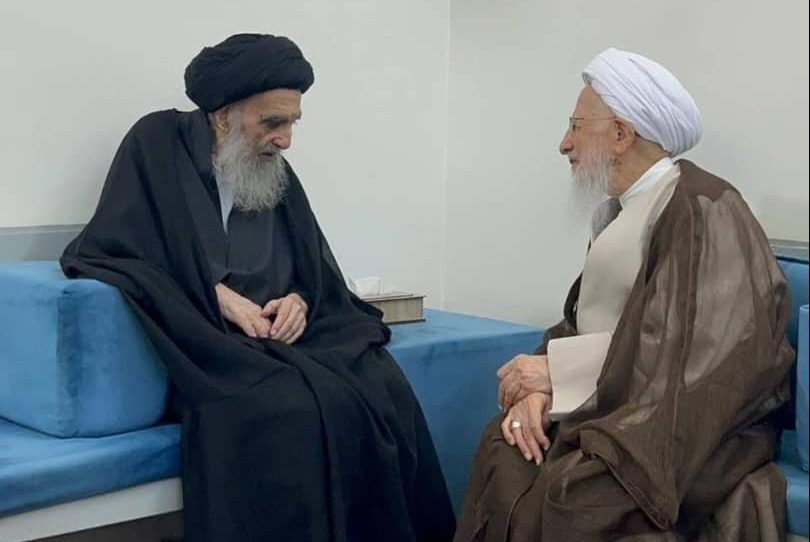
The Grand Ayatollah Sistani & the Grand Ayatollah Javadi Amoli Met in Najaf Ashraf

The Grand Ayatollah Sistani & the Grand Ayatollah Javadi Amoli Met in Najaf Ashraf

2025-05-19
Imam Ali (AS) Did Not Compromise on Unethical Politics

Imam Ali (AS) Did Not Compromise on Unethical Politics

2025-05-11
UK: Reform councillors face allegations of sharing social media Islamophobic content

UK: Reform councillors face allegations of sharing social media Islamophobic content

2025-05-11
How to be just with your children?

How to be just with your children?

2025-05-10
Load More

Browse by Tags

Ahl al-Bayt (A.S.) Ahlul Bayt Al-Mahdi (AS) Allah Ashura Ayatollah Sobhani Ethics faith Fatima fiqh ghadir God History Holy Prophet Imam 'Ali Imam Ali (A.S.) Imam Husain Imams infallibles Islam Islamic Laws Islamic rules Jurisprudence Karbala Martyrdom morality Muhammad Nahj al Balaghah prayer prophet Quran Ramadan Reborn Salat Sayed Moustafa Qazwini shaistudies shia Shia Beliefs Shia Imams Shia Islam Shia Studie's World Assembly shiastudies Sin the differences between Shi’a and Sunni the story of those who converted to Shia Islam

The World Assembly of Shiite Studies was established in 2003 (1382 AH) by a group of scholars from seminaries and universities. The purpose of founding this independent academic institution was to introduce the school of Shi‘ism and defend its legitimacy through education, research, translation and publication, communications, and Islamic promotion. This center has continued its mission with strength and determination and envisions a bright future ahead.

Address: Qom, 45-Meter Ammar Yaser Boulevard, between Alley 4 and 6, World Assembly of Shiite Studies, Secretariat of Religious Scholars

Phone: +982537713773

Fax: +982537713774

All rights of the website are reserved and belong to the World Assembly of Shiite Studies.

Are you sure want to unlock this post?
Unlock left : 0
Are you sure want to cancel subscription?