• Home
  • Bank of Subjects of Articles
    • Bibliography
    • Characters
    • Culture and art
    • Economics
    • Educational sciences
    • ethics
    • Geography of Islamic world
    • History
    • Islamic jurisprudence and principles
    • Kalam (Islamic scholastic theology)
    • Mahdism
    • Philosophy and logic
    • Political science
    • pray and pilgrimage
    • Prophet and Ahl-al bayt
  • Islamic Teachings
  • quran
  • The Infallibles
  • Shia Beliefs
  • Morality
  • Events
    • Media Reflection
    • Muharram
    • News of Shia World
    • News of Worldly Assembly for Shia Studies
  • Home
  • Bank of Subjects of Articles
    • Bibliography
    • Characters
    • Culture and art
    • Economics
    • Educational sciences
    • ethics
    • Geography of Islamic world
    • History
    • Islamic jurisprudence and principles
    • Kalam (Islamic scholastic theology)
    • Mahdism
    • Philosophy and logic
    • Political science
    • pray and pilgrimage
    • Prophet and Ahl-al bayt
  • Islamic Teachings
  • quran
  • The Infallibles
  • Shia Beliefs
  • Morality
  • Events
    • Media Reflection
    • Muharram
    • News of Shia World
    • News of Worldly Assembly for Shia Studies
Home Bank of Subjects of Articles

Imam Musa al Kazims Deep Attachment with the Holy Quran

by شهاب الدین مجتهدی
2020-03-01
in Bank of Subjects of Articles, Prophet and Ahl-al bayt
0
Imam Musa al Kazims Deep Attachment with the Holy Quran
0
SHARES
13
VIEWS
Share on FacebookShare on Twitter

Imam Musa al Kazims Deep Attachment with the Holy Quran

 The Holy Prophet (saww) has said,
“The most distinguished people of my nation are those who are bearers of Quran and keep up the night prayer”. (Meezan al-Hikmah)
Imam Musa ibn Ja’ffar al-Kadhim had this quality. He (as) was:
Hafidhul-Quran: ‘one who had memorised the Quran’
Qaari al-Quran: ‘one who could recite the Quran in the best manner’
‘Aamil bil-Quran: ‘one who acted according to Quran

Aalimul-Quran: ‘one who had the knowledge of Quran’. (Quran-o-‘Itrat)

Explaining the Holy Qur`an
Al-Mahdi – the Abbasid ruler once asked Imam al-Kadhim (as), “Has consumption of Alcohol been forbidden in the Holy Quran? I am asking this because people know that they have been stopped from its consumption but they are unaware of its forbiddance”.
Imam (as) replied, “Ofcourse Alcohol has been made Haraam (forbidden) in the Holy Quran”.
Al-Mahdi asked, “Where in Quran Allah has explicitly forbidden it?”
Imam (as) recited the following verse:
“Say: My Lord has only forbidden indecencies, the outward among them and the inward ones, and sin and undue aggression…” (7:33)
Then the Imam (as) went on to explain:
“The outward indecency refers to Zinaa (Adultery & Fornication). In the days of paganism (pre-Islamic era), the perverts used to raise flags outside places, which served as brothels.
The inward indecency refers to marriage with stepmothers. In the days of paganism, when a woman lost her husband, the stepson would marry her.
And Sin is in reference to consumption of Alcohol”.
Explaining how the word Ithm that means ‘sin’ denotes ‘Alcohol’, Imam (as) pointed out another verse of the Holy Quran in which the stated term refers to Alcohol. He (as) recited this verse: “They ask you concerning wine and gambling. Say: There is a great sin in both of them…” (2:219)
When Al-Mahdi heard such a detailed reply given from the Holy Quran, he said, “This ruling is a ruling of a Hashimite”. (Al-Kaafi)

Imam`s Relation with the Holy Qur`an
Imam Musa ibn Ja’ffar al-Kadhim (as) was extremely attached to the Holy Quran throughout his entire life.
Shaykh Mufeed (a.r.) has reported that:
‘Imam Musa al-Kadhim (as) was the most knowledgeable person in Quran during his days. He (as) was its protector and propagated its teachings to the people. In addition, there was no better recitor of Quran than the Imam (as) and whenever he (as) recited it, the listeners were deeply touched and wept’.(Al-Irshaad)
Hafs has reported that:
‘I have not seen anyone more fearful of Allah (SWT) and most hopeful of His mercy than Imam Musa al-Kadhim (as). He (as) used to recite the Holy Quran in sad and sorrowful tone; and whenever he (as) engaged in its recitation, it appeared as though he (as) was addressing the people’. (Al-Kaafi)
Ayatullah Shaykh Ali Karimi states:
The following are the special characteristics of Imam al-Kadhim (as) in respect to the Holy Quran:
Firstly, he (as) was the greatest Hafidh (one who memorises) and protector of Quran to an extent that no one could match him in this.
Secondly, Imam (as)’s recitation of Quran surpassed everyone else’s recitation and he (as) had the most beautiful voice.
Thirdly, the tone of Imam (as)’s recitation was sad and sorrowful and this is considered as one of the important ethics of reciting the Holy Quran.
And finally, whenever he (as) recited the Holy Quran, the listeners would feel as though he (as) was addressing them. (Quran-o-‘Itrat)
 

Holy Quran on His Shroud
Allah (SWT) blessed Imam al-Kadhim (as) with a shroud that had the whole of Quran written over it.
It is mentioned in ‘Uyoon Akhbaar ar-Ridha’ that when Imam al-Kadhim (as) was martyred, Sulayman bin Ja’ffar provided for him a Kafan ‘shroud’ that contained a Yemeni chador on which the entire Quran was written.
Perhaps it is for this reason why some Shia’h Ulama (Scholars) also have Quran written on their shrouds. Ayatullah Shaykh Ali Karimi states that he had heard Marhum Ayatullah al-‘Udhma Sayyid Gulpaygani saying on the 13th Dhul-Hijjah, ‘I purchased for myself a Kafan fourty years ago from Mashad al-Muqaddas on which Quran is written’. When asked, “The entire Quran or only part of it?” He said, “The entire Quran”. (Quran-o-‘Itrat)

shiastudies.com/en

Tags: Imam Musa al Kazims Deep Attachment with the Holy Quranshaistudies
Previous Post

Holy Prophet Muhammad (SAWA) ordered closure of doors of the houses of those companions that opened into Masjid an-Nabi (SAWA)

Next Post

Hadrat Al Abbas (s) King of Realm of Loyalty

شهاب الدین مجتهدی

Related Posts

10 facts about marriage in Islam
ethics

10 facts about marriage in Islam

by mustafa askari
2025-05-26
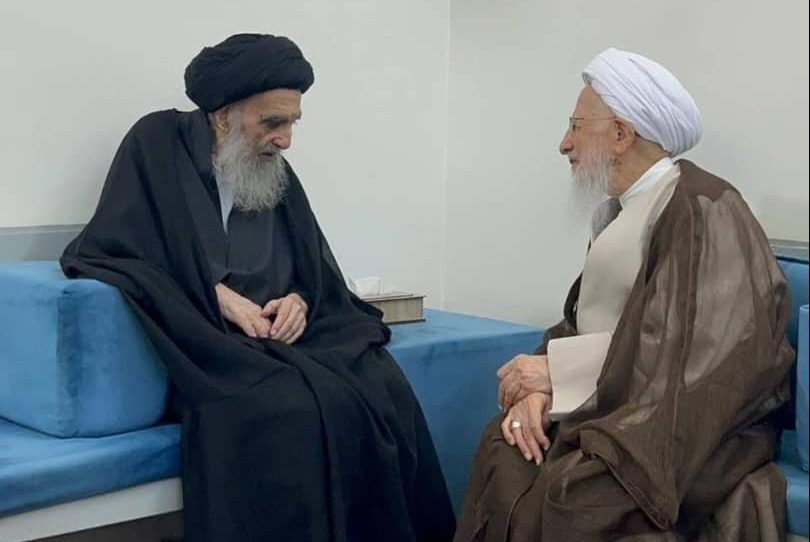
The Grand Ayatollah Sistani & the Grand Ayatollah Javadi Amoli Met in Najaf Ashraf
ethics

The Grand Ayatollah Sistani & the Grand Ayatollah Javadi Amoli Met in Najaf Ashraf

by mustafa askari
2025-05-19
Imam Ali (AS) Did Not Compromise on Unethical Politics
ethics

Imam Ali (AS) Did Not Compromise on Unethical Politics

by mustafa askari
2025-05-11
UK: Reform councillors face allegations of sharing social media Islamophobic content
ethics

UK: Reform councillors face allegations of sharing social media Islamophobic content

by mustafa askari
2025-05-11
How to be just with your children?
ethics

How to be just with your children?

by mustafa askari
2025-05-10
Next Post
Hadrat Al Abbas (s) King of Realm of Loyalty

Hadrat Al Abbas (s) King of Realm of Loyalty

Leave a Reply Cancel reply

Your email address will not be published. Required fields are marked *

Latest Post

10 facts about marriage in Islam

10 facts about marriage in Islam

2025-05-26
A Clear Message in Response to the Arrogance of Donald Trump

A Clear Message in Response to the Arrogance of Donald Trump

2025-05-24
The Grand Ayatollah Sistani & the Grand Ayatollah Javadi Amoli Met in Najaf Ashraf

The Grand Ayatollah Sistani & the Grand Ayatollah Javadi Amoli Met in Najaf Ashraf

2025-05-19
Imam Ali (AS) Did Not Compromise on Unethical Politics

Imam Ali (AS) Did Not Compromise on Unethical Politics

2025-05-11
UK: Reform councillors face allegations of sharing social media Islamophobic content

UK: Reform councillors face allegations of sharing social media Islamophobic content

2025-05-11
How to be just with your children?

How to be just with your children?

2025-05-10
Load More

Browse by Tags

Ahl al-Bayt (A.S.) Ahlul Bayt Al-Mahdi (AS) Allah Ashura Ayatollah Sobhani Ethics faith Fatima fiqh ghadir God History Holy Prophet Imam 'Ali Imam Ali (A.S.) Imam Husain Imams infallibles Islam Islamic Laws Islamic rules Jurisprudence Karbala Martyrdom morality Muhammad Nahj al Balaghah prayer prophet Quran Ramadan Reborn Salat Sayed Moustafa Qazwini shaistudies shia Shia Beliefs Shia Imams Shia Islam Shia Studie's World Assembly shiastudies Sin the differences between Shi’a and Sunni the story of those who converted to Shia Islam

The World Assembly of Shiite Studies was established in 2003 (1382 AH) by a group of scholars from seminaries and universities. The purpose of founding this independent academic institution was to introduce the school of Shi‘ism and defend its legitimacy through education, research, translation and publication, communications, and Islamic promotion. This center has continued its mission with strength and determination and envisions a bright future ahead.

Address: Qom, 45-Meter Ammar Yaser Boulevard, between Alley 4 and 6, World Assembly of Shiite Studies, Secretariat of Religious Scholars

Phone: +982537713773

Fax: +982537713774

All rights of the website are reserved and belong to the World Assembly of Shiite Studies.

Are you sure want to unlock this post?
Unlock left : 0
Are you sure want to cancel subscription?