Answering a question: “Reciting which Surah of the Quran has more thawab (reward)?”
Question
By reciting which of the Quran’s Surahs can one gain the most thawab or have his prayers answered?
Concise answer
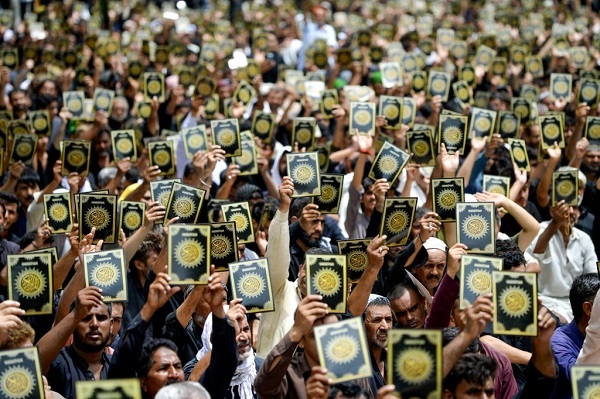
The Quran is a book of practice. From Islam’s perspective, the Quran should be viewed as a guideline to life and a complete set of lessons for man to carry out and reach perfection. Those who are solely after reciting one or a number of its surahs which have more thawab will not benefit from the rest of the surahs. All of the Quran must be recited and all of its guidelines must be practiced. However, the ahadith have mentioned certain benefits for some surahs. For example, there is great emphasis in the ahadith in regard to reciting surah Al-Fatihah as they state that it is equal to two thirds of the Quran. Other examples are Ayat al-Kursi which has many benefits and surah Ikhlas that is equal to one third of the Quran. There are also other surahs which have certain benefits.
Detailed Answer
Reading and reciting all surahs of the Quran has many positive effects in one’s worldly and spiritual life, as many benefits have been mentioned for each of the surahs. However, we must keep in mind that the Quran is a guideline to life and a book whose teaching must be practiced. Reciting it, is the first step towards pondering, believing and practicing its teachings, as the great rewards of the good doers come from their actions and deeds.
Another noteworthy point is that we should not view reciting the Quran as a matter of making profit and solely try to find out which surah has more thawab and deprive ourselves from the benefits of others surahs by always reciting the same surah. The Quran consists of a set of teachings and rulings that must be viewed as a whole and only by practicing all Quranic teachings can man reach perfection.
However, the ahadith have mentioned certain benefits for certain surahs or verses of the Quran. We will mention some examples below:
The advantage of “بسم الله الرحمن الرحیم”: The ahadith greatly emphasize the importance of this verse and say that it is equal to the al-Ism A’dham (The great name of Allah) as Imam Sadiq says: “’ بسم الله الرحمن الرحیم’ is closer to the al-Ism A’dham than the pupil of the eye to its white part.”[1] There are many ahadith that convey a similar meaning in regard to “بسم الله الرحمن الرحیم”.
In other ahadith, certain benefits have been mentioned for each surah of the Quran. For example, the Prophet is narrated to have said in regard to surah Al Fatihah: “Whoever recites surah Al-Fatihah will be granted the reward of reciting two thirds of the Quran and paying charity to all believers.”[2]
Another hadith says: “Whoever recites this surah, will be granted whatever he asks for from God.” Some ahadith have described this surah as the medicine for all sicknesses and diseases. Many ahadith underline the importance of this surah and speak of the great reward of reciting it.
Many benefits have been mentioned for surah Ikhlas such as: being equal to one third of the Quran. Also the Prophet said: “Seventy thousand angels will participate in the funeral of one who has recited this surah. On another occasion he stated: “One who believes in God and the Day of Judgment should not neglect reciting surah Iklhas after each prayer, because whoever does so, God will grant him the good of this and the next world together and will forgive him, his parents and children.”[3]
When the Prophet was asked which surah is the greatest of all, he replied: “Surah Baqarah, and amongst its verses, Ayat al-Kursi.”
The reward of Ayat al-Kursi is so much that both Shi’as and Sunnis have narrated that the Prophet said: “When a believer recites Ayat al-Kursi and sends its reward for those who have passed away, God will create an angel for every letter of this verse that will praise God on his behalf until the Day of Judgment.”
The ahadith pertaining to surah Aal Imran say that whoever recites it, each verse of it will grant him an immunity to pass the bridge that goes over hell (the sirat).[4] It is narrated in regard to surah Nisa’ that whoever recites it will not be punished with the pressure of the grave.[5] Also, it has been narrated that whoever recites surah Ma’idah on Thursday, his belief will not be harmed and he will not associate anything with God.
In a hadith from the Prophet, when addressing one of his companions, he says: “Do you want me to teach you the two best surahs of the Quran?” The companion replied: “Yes, O prophet of God” The Prophet taught him the Ma’udhatayn (surah Falaq and Nas). Then the Prophet recited them in Fajr prayer and advised him to recite them when he goes to bed and wakes up. [6]
In short, every surah of the Quran has its own benefits and no one can easily determine which surah has more thawab. Instead, one should read all of the Quran and benefit from all surahs.
[1] Tafsir Burhan, vol. 1, pg. 41.
[2] Tafsir Majma’ al-Bayan, vol. 1, pp. 14 and 15.
[3] Tafsir Nemooneh, vol. 27, pg. 429.
[4] Majma’ al-Bayan, vol. 1, pg. 693.
[5] Thawab al-A’mal, pg. 133.
[6] Tafsir Nemooneh, vol. 27, pg. 454.
source:shafaqna