Islamic laws reveal a deep and wide concern for human rights. Imam Ali Bin Musa Al- Rida (peace be upon him), when asked about the rights of the brotherhood of faith, said:
“A believer owes his brother affection in his heart and relief through his money. He should not say a word of complaint- otherwise there would be no companionship between them. If one says to the other: ‘You are my enemy’ then he has charged him with blasphemy and once he accuses him, his own faith will dissolve as salt dissolves in water.” [1]
If rights are granted such an importance, then their greatest importance is within the family context in which two human beings live together under a roof for the rest of their lives. Based on this, both men and women have to be completely aware of their own duties and their mutual rights in order to establish a quiet life full of love, peace, and security.
Imam Al-Khamenei says:
“The aim of Islam, as it proclaims, in its defense of women’s rights is for women not to be oppressed and for men not to consider their selves governors over women. In the family there are restrictions and there are rights for both men and women. These rights have been fairly distributed and with careful balance.
We do not propound nor defend wrong views claimed to be Islamic while they [really] are not. Islam wants the Islamic manifest proofs and basic principles which provide balance between the rights of men and women within the family context.
It is inevitable to give importance to the responsibility of men and women toward one another. Both share the responsibility of the establishment of the family, and here is where their happiness lies.
Islam stood against the oppression that was practiced against women in the pre-Islamic era. Islam stated the value of women and the rights they possessed in different domains; spiritual matters, intellectual [matters], Islamic values, political participation, and most importantly within the family context. It is inescapable for men and women to establish their own micro society – the family. However, families established in societies that have not correctly designated values will be the first places where women are oppressed.
The set of Islamic canons and teachings that [govern] the relationship between men and women is very meticulous. Allah, Glorified and Exalted, has assigned these laws taking into account the benefit of both men and women according to the nature of each, as well as taking into account the [overall] interests of the Islamic society.
A man has the right to order his wife and she must obey him only in three conditions. I shall straightforwardly illustrate one of them, and I will avoid [mentioning] the rest. [A husband] may prevent [his wife] from going out of her house without his permission unless there was a [specific] condition in the marriage contract which cancels this right.
This right is one of the profound divine secrets, and it has only been granted to the husband, and not even to the father. A father does not have the right to oblige his daughter to take his permission whenever she wishes to go out [of the house]. A brother [also] does not possess this right. However, a husband possesses this right.
Of course women may list conditions to their advantage in the marriage contract, and both men and women should adhere to these conditions.”
Neither a Maid nor a Slave but a “Rayhanna”[2]
There are a great number of men who think women are their maids – they order and women are expected to obey! They have no right to say “no”, and if they do their husbands get angry and use harsh and severe words. They might even be fiercely beaten! This oppression is not accepted by Islam. It is similar to the oppression of women in the pre Islamic period.
Imam Al-Khamenei refers to this saying:
“Prophet Muhammad (peace be upon him and his Household) says: ‘A woman is a “rayhanna” and not a “kahrumana” ’.
‘Kahrumana’ does not have the same meaning as the Persian word which means power and bravery. It is an Arabic term taken from Persian. In short, it means the one who undertakes matters. Men should not consider women to be the undertakers of their affairs at home. They should not think that they are the bosses over women, and that women are their employees who take care of household affairs and the children. It is not so at all!
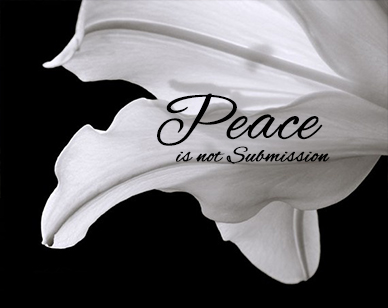
The correct way of dealing with women is through taking her nature into consideration. Islam has entrusted men to take care of women in the family as they would take care of a rose: ‘A woman is a “rayhanna” ’. This is not related to [the presence of women] in the fields of politics, social activities, and education, but in the family context.
‘A woman is a “rayhanna” and not a “kahrumana”.’ This outlook of the Prophet (peace be upon him and his Household) [signifies] that it is wrong to think that women are obliged to solely deliver services at home. In his opinion, a woman is a rose which requires care. This is how women, the beings of delicate souls and bodies, should be looked upon. This is the view of Islam.
No person is allowed to oppress another, to force him to do something, or to exploit him. Some men think that women must accomplish all of their deeds. It is true that when love between a man and a woman prevails in the atmosphere of the family, then each one of them serves the other with eagerness and interest. But fulfilling an act of service with eagerness and interest differs from considering a woman as a maid who should serve her husband! There is nothing in Islam such as this.”
[1] Al- Madrisi, the Seas of Light, Volume 4, Page 333
[2] A Rayhanna in Arabic means a sweet smelling plant
source:english.almaaref