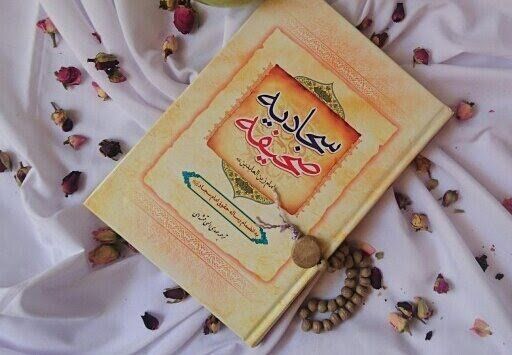
Al-Sahifa al-Sajjadiyya: The Psalms of the Household of Prophet Muhammad (PBUH)
1. Supplication: A Source of Religious Knowledge
Studying Al-Sahifa al-Sajjadiyya can be considered an important step toward gaining a deeper understanding of Islamic teachings. This remarkable collection can serve as a valuable reference for exploring Islamic beliefs, ethics, and religious knowledge.
There are several sources for understanding religion that possess a high degree of reliability, authenticity, and authority because they originate from divine revelation and divinely bestowed knowledge. These sources include:
- The Holy Qur’an;
- The hadiths of the Prophet Muhammad and the Imams (peace be upon them);
- Supplications transmitted from the Infallibles (peace be upon them);
- Transmitted and authenticated texts of visitation (ziyarat).
Our discussion focuses on one of these sources: the supplications narrated from Imam Zayn al-Abidin (peace be upon him), which have been preserved and passed down to us. These prayers contain some of the most subtle and profound religious teachings. We should therefore recognize the value of this extraordinary collection, cultivate a close relationship with it, and fill the moments of our days and nights with the spirituality of its supplications.
The Ahl al-Bayt (peace be upon them) were devoted to supplication, night worship, and the remembrance of God. The Holy Qur’an also strongly encourages believers to call upon God. Accordingly, the followers of the Imams should be people of prayer, humble devotion, and earnest supplication.
Perhaps our understanding is too limited for us to know precisely what we should ask of Almighty God or what our most worthy requests ought to be. In this regard, however, the divinely guided leaders of religion serve as our teachers. By presenting fundamental and elevated requests related to our happiness and well-being in this world and the Hereafter, they raise the level of our understanding and aspirations.
When we recite these supplications, we join our voices with those of the pure Infallibles, the devoted servants of God, and those who enjoy a special nearness to Him. We call upon God through the words of His divinely appointed proof, and even in the practice of supplication, we become students of the school of the Ahl al-Bayt (peace be upon them).
The subject of supplication encompasses numerous important topics, including:
- The meaning of supplication and its significance;
- The necessity of supplication and humanity’s need for prayer;
- The spiritual, individual, and social effects of supplication;
- The proper etiquette and practices of prayer;
- The conditions for the acceptance of supplications and the obstacles that prevent their acceptance;
- Supplication and its fulfillment, including the reasons why some prayers are not answered;
- The supplications of the Imams and the divinely guided figures, known as al-ad‘iya al-ma’thura;
- The content of supplications and the requests expressed in them;
- The example set by the Infallibles, as well as the spiritual states of scholars and mystics during supplication and night worship;
- The special position of Imam Zayn al-Abidin (peace be upon him), whose title means “the adornment of the worshippers”;
- The relationship between supplication and action, emphasizing the need to combine prayer with practical effort;
- Supplication, destiny, divine decree, and the benefits of prayer;
- Those whose supplications are not accepted;
- Those whose prayers are answered;
- Supplication and imprecation, including prayers for someone’s benefit or against someone;
- Praying for oneself and praying for others;
- Supplications found in the Holy Qur’an.
2. The Significance of Al-Sahifa al-Sajjadiyya
The importance of Al-Sahifa al-Sajjadiyya lies in the fact that it contains the supplications through which an Infallible Imam, Imam Zayn al-Abidin (peace be upon him), would communicate intimately with his Lord.
This collection is also known as Zabur Al Muhammad, meaning “The Psalms of the Household of Muhammad.” It holds a distinctive position because of both the speaker—the Imam—and the One to whom the prayers are addressed: Almighty God.
In addition to the profound content and elevated spiritual meanings contained in these supplications, the collection is distinguished by the strength and reliability of its chain of transmission.
There are numerous books of supplications, and many prayers have been widely circulated and transmitted throughout Islamic history. However, supplications supported by reliable chains of transmission and confidently attributed to the Infallibles possess greater scholarly authority. Their profound meanings also make them especially moving and spiritually enriching.
Over the centuries, Shi‘a scholars have authored numerous works containing supplications for different hours, days, occasions, and circumstances. Among these works are:
- Iqbal al-A‘mal by Sayyid Ibn Tawus;
- Al-Balad al-Amin by al-Kaf‘ami;
- Jamal al-Usbu‘ by Sayyid Ibn Tawus;
- Al-Da‘awat by Qutb al-Rawandi;
- ‘Uddat al-Da‘i by Ibn Fahd al-Hilli;
- Al-Misbah by al-Kaf‘ami;
- Miftah al-Falah by Shaykh Baha’i;
- Mafatih al-Jinan by Shaykh Abbas Qummi.
Among these works, however, Al-Sahifa al-Sajjadiyya occupies a particularly distinguished position. Its eloquence, rhetorical excellence, and depth of meaning deserve careful study. Its chain of transmission is regarded as highly reliable, and the members of the Ahl al-Bayt (peace be upon them) consistently encouraged others to preserve and carefully safeguard this precious legacy of Imam Zayn al-Abidin (peace be upon him).
Extensive scholarly studies have examined the chains of transmission of these supplications in considerable detail. A comprehensive discussion of this research, however, falls beyond the scope of this brief article.
3. An Overview of the Contents of Al-Sahifa al-Sajjadiyya
The lifetime of Imam Zayn al-Abidin (peace be upon him) was one of the most difficult and oppressive periods for the Ahl al-Bayt and the Imams (peace be upon them). The Umayyad authorities imposed severe restrictions on the Shi‘a Imams. As a result, Imam Zayn al-Abidin had limited opportunities to hold public gatherings devoted to discussions of theology, Qur’anic exegesis, jurisprudence, and other religious sciences.
The Imam therefore conveyed many of the pure and profound teachings of Islam through the supplications preserved in Al-Sahifa al-Sajjadiyya.
Consequently, this collection addresses an extraordinary range of subjects, including the most subtle aspects of the knowledge of God, the nature of existence, the unseen world and the angels, the mission of the prophets, the status of the Prophet Muhammad and the Ahl al-Bayt (peace be upon them), moral virtues and vices, the various spiritual and psychological states of human beings, and the methods Satan uses to lead people astray.
It also discusses the significance of religious festivals and momentous days in Islamic history, social and economic issues, historical references and exemplary conduct, the manifestations of God’s power, the remembrance of His countless blessings and the duty of gratitude, the signs of God in the universe and within the human soul, and the etiquette of supplication, Qur’anic recitation, remembrance of God, prayer, and worship.
These are only some of the many important subjects addressed in the collection. Although its literary form is that of prayer and supplication, its content provides an explanation of religion, moral values, Qur’anic teachings, religious duties, and the proper conduct of a devoted servant of God.
Al-Sahifa al-Sajjadiyya contains 54 supplications. Some are lengthy and detailed, while others are comparatively brief.
The collection also identifies the occasions, circumstances, and situations for which these supplications are intended. Readers can consult its table of contents for further details. Some of the subjects covered by these prayers include:
- Supplications praising Almighty God;
- Prayers for the bearers of the Divine Throne and the angels;
- Prayers for oneself and one’s relatives;
- Supplications during hardship, suffering, and distress;
- Prayers seeking refuge in God;
- Prayers for forgiveness;
- Confessions of sin before God;
- Supplications for the fulfillment of one’s needs;
- Prayers during illness;
- Seeking God’s protection against Satan;
- Prayers for the attainment of noble moral character;
- Supplications for health and well-being;
- Prayers for parents and children;
- Prayers for neighbors and friends;
- Supplications for those guarding the frontiers of Muslim lands;
- Prayers for repentance;
- Supplications during financial hardship and scarcity of provision;
- Prayers upon hearing thunder;
- Supplications upon sighting the new moon;
- Prayers at the beginning and end of the month of Ramadan;
- Supplications for Eid al-Fitr and the Day of Arafah;
- The supplication upon completing the recitation of the Holy Qur’an.
This use of prayers tailored to different occasions allows supplication to become an integral part of a Muslim’s life, filling one’s time and opportunities with remembrance and intimate communion with God. For virtually every moment and circumstance, there is guidance on how to turn toward Almighty God in prayer.
Source
Farhang-e Kowsar magazine, Spring 2003 (1382 AH in the Iranian calendar), Issue 57.