Hawzah / Hawzah — “The Geopolitics of Shiism” points to capacities, a significant portion of which remains largely unknown to the public. These include well-organized Shiite associations, as well as academic and cultural capacities in various countries, and the influential presence of Shiites in North America, Europe, and Africa. A precise understanding of these capacities and their purposeful utilization could open new horizons for academic, cultural, and religious outreach on the international stage.
According to Hawzah News Agency, understanding Shiism in today’s world is no longer limited merely to identifying the historical geography of Shiism or examining its traditional centers. Shiism has established an extensive network of academic, cultural, social, and even economic capacities in different parts of the world—capacities, a significant portion of which has yet to be properly recognized.
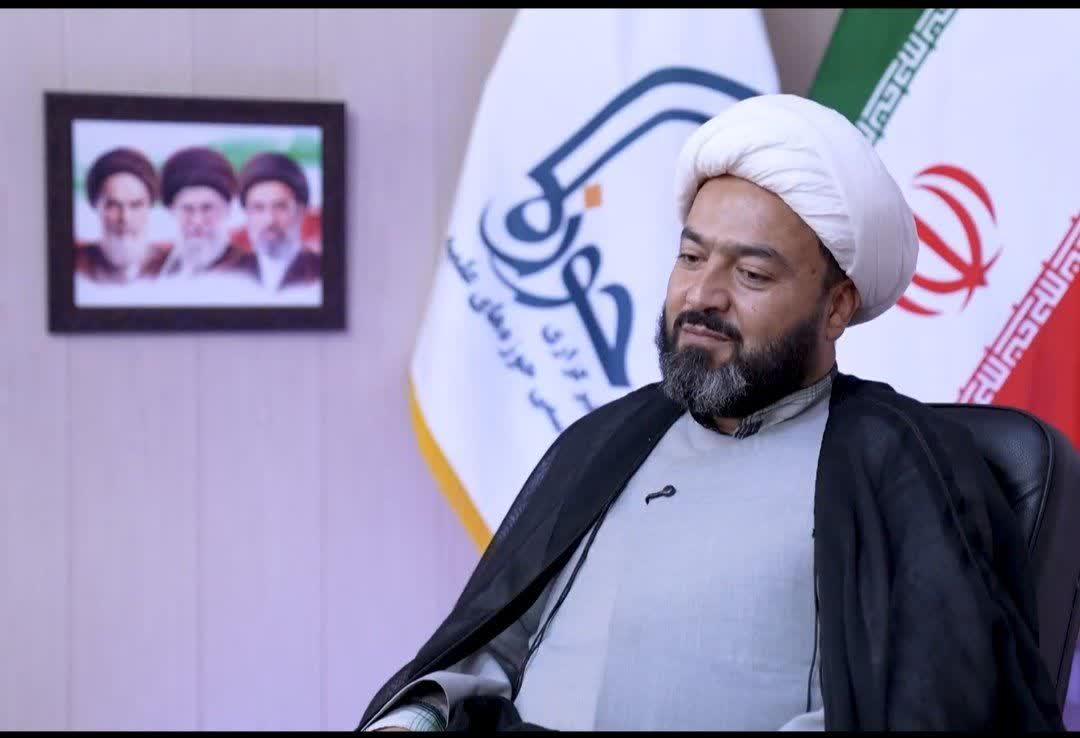
In this regard, we conducted an interview with Hojjat al-Islam and al-Muslimin Karimi, Deputy for Education at the World Assembly of Shiite Studies, to explore this subject in greater depth.
What follows is the full text of the interview:
Question: Given that we are at the beginning of the new academic year of the seminaries, and considering that you are also serving as Deputy for Education at the World Assembly of Shiite Studies, we would first like you to tell us about the Assembly’s educational activities. What programs did you have last year? What are the most important programs for this year, and what will your future approaches be?
Answer: In the Name of God, the Most Compassionate, the Most Merciful.
I am also very pleased that God has granted me the opportunity to be with you and with the distinguished and highly respected team at Hawzah News Agency. One of the institutions whose absence was strongly felt in the past was precisely an organization of this kind. Since its establishment, it has had a very positive impact and has generated considerable public attention.
Praise be to God, I regularly follow the news, programs, website, and channels of Hawzah News Agency. Its activities, both in the provinces and in Qom, have been highly successful. I congratulate you and your colleagues on these achievements, and I pray that these successes will continue to grow day by day.
In particular, in the international arena, it seems necessary for the agency to invest more heavily so that we can increase the influence of the seminary as a religious news agency. Just as some news agencies around the world operate with a religious orientation, we too can represent and give voice to the Shiite school of thought in this arena.
As for our activities at the World Assembly of Shiite Studies, I should say that we are honored to have the opportunity to serve in this institution. The Assembly takes pride in the fact that both its establishment and its name were based on the directives and guidance of our martyred leader, Imam Khamenei.
The institution was established in a year in which Eid al-Ghadir occurred twice, and that year was named after Amir al-Mu’minin (peace be upon him). The term “Shiite Studies” was also used for the first time by the martyred leader. Before that, neither in the seminary environment nor in the university environment was there an independent institution specifically devoted to Shiite Studies. He was the first to use the term “Shiite Studies” in 2004. This institution, taking inspiration from that designation, adopted the name “World Assembly of Shiite Studies.”
Shiite Studies: A Field with a Significant Gap in the Seminaries
With regard to education, what has been important to us over the years began with our own experience as a young seminary student studying under prominent scholars and teachers. Whether we were in the provinces or in Qom, God granted us the opportunity to benefit from some of the finest teachers in every place we were, and to become their students.
This experience led us to seek knowledge in every field and discipline directly from its primary sources and from those who were leading authorities in that field. As a result, our perspective became quite different from what had traditionally been practiced in the seminaries.
At the same time, by divine grace, during our master’s and doctoral studies we moved toward the field of Shiite Studies and pursued academic work in this area. For years, we privately studied under Ayatollah Jafar Subhani and other prominent scholars in the field, conducted research, and from the very beginning strongly recognized the necessity of this discipline and the serious gap it represented within Shiite seminaries.
Unfortunately, either very little had been done in this area or virtually no work had been carried out at all. Meanwhile, for many years, Western countries had been conducting highly detailed and scholarly research on this subject and publishing numerous works.
Identifying Shiite Capacities Around the World
Question: If you wanted to identify a religious association in Qom itself with these characteristics—one in which most of its members are Qur’an memorizers—could you name such an association?
Answer: I personally do not have precise information about one, and even considering my experience and my connections with the Qur’an Society, I do not think such a Qur’anic association has been established.
But imagine that such an association exists in Toronto, Canada: an association consisting of around 500 young people with this level of religious commitment—people who perform the night prayer and observe the prayer at its earliest prescribed time—even in an environment and under circumstances whose realities we all know.
Such a powerful Shiite organization has been established there. On the other hand, around 1,000 Muslim physicians who observe their prayers at the earliest prescribed time are active in North America. This is also highly significant and remarkable.
When you enter some of these organizations, you see several thousand Shiites gathering there. Sometimes several hotels are rented out completely and simultaneously for a large gathering.
These gatherings contain a variety of capacities and involve diverse activities—from charitable work and assistance with young people’s marriages to intellectual, cultural, social, and philanthropic activities.
Such capacities exist among Shiites living abroad, but unfortunately a significant number of us are unaware of them. This makes it all the more important to gain a precise understanding of the global capacities of Shiism.
Question: So what kind of relationship do we, as the Qom seminary, have with these communities, and what kind of presence do we have there? It seems that this is truly a major capacity.
As you mentioned at the beginning, we still have a great deal of work to do internationally. We need to make greater use of international media and the media resources available to us and give greater visibility to their activities on the international stage. There is clearly a gap in this area.
For example, regarding the point you made about Toronto, perhaps many people in our own country do not even know that such capacities exist there. I think many people assume that Shiites or Muslims in such places live in a particular environment and are not very active.
These capacities need to receive media coverage. The Assembly itself can also, together with other institutions, lay the groundwork for many such initiatives.
Answer: Absolutely. We actually launched the series of meetings entitled “The Geopolitics of Shiism” for precisely this purpose.
For example, someone from Canada who was responsible for that particular religious association and Husayniyah once visited our institute. We received a report from him and realized that despite having extensive international connections at the institute, we were unaware of the existence of such a capacity.
We were even unaware of the physicians’ organization I mentioned. Therefore, what is necessary is for people from different countries themselves to come and present reports about these communities.
Ultimately, these reports can be turned into an information package. Taken together, they could constitute an extremely valuable and comprehensive database. This information should be made available to seminary students and to those who are committed to serving the school of Amir al-Mu’minin (peace be upon him).
Connecting International Capacities with the Seminary’s Academic Potential
People living in these communities may never have encountered an advanced-level seminary scholar or had contact with someone who has worked extensively in theology and matters of faith.
Once communication has been established and introductions have been made, the next step should be to create opportunities for academic and scholarly interaction. For example, we ourselves have individual relationships with some people. They send us their questions, doubts, and concerns, and we respond to them.
But if this process is pursued on a broader scale, and a group of seminary scholars become involved and establish relationships with these individuals, they can play an effective role in the intellectual and religious development of young people in those regions.
Such an initiative could bring about a major transformation. This kind of relationship could contribute to the development of a valuable sense of identity and generate an international sense of responsibility and concern. We must prepare our school of thought for a global savior and engage in global activities, and all of this requires an accurate understanding of the capacities that already exist around the world.
A Lesser-Known Capacity in the Shiite World
Another major capacity within the Shiite world is the Khoja Ithna-Asharis, who have received relatively little attention and, in some cases, have even been treated with neglect.
They are a Shiite community that was originally Ismaili. Around a century ago, they made a pilgrimage to Karbala, after which they gradually became inclined toward Twelver Shiism and ultimately became Twelver Shiites.
Establishing the Shiite Studies Website
Accordingly, the first thing we did after entering this field was establish the Shiite Studies website. The website, Shiite Studies dot IR, is the only specialized website devoted to Shiite Studies that operates in Persian, English, Arabic, and Spanish.
Question: So it is the only website that specifically covers the academic curriculum and subjects of Shiite Studies?
Answer: Yes. In a specialized sense, this is the website that supports the academic subjects and curriculum of Shiite Studies. Of course, there are many websites bearing the title “Shiite Studies,” but many of them are organizational websites or affiliated with institutions and pursue different approaches. What distinguishes this website is that it academically and systematically supports the curriculum of the discipline.
We tried to address the urgent need in this field by conducting our studies from the ground up and in the manner emphasized by the martyred leader.
In a speech in 2007, he emphasized the study of the identity and reality of Shiism, the emergence and establishment of Shiism, the historical development of Shiism from its origins to the present day, and the manner in which Shiism spread among different communities, organizations, and countries. This requires highly detailed research.
Elsewhere in the world, considerable work has been done in this area, particularly regarding Shiite thought and intellectual traditions. These ideas have distinctive characteristics, including the principles of Imamate and Wilayah, infallibility, and the divine knowledge possessed by the Imam and the Prophet. These are among the distinctive teachings of Shiism.
At the same time, more fundamental issues must also be examined, including the distinctive Shiite understanding of God, monotheism, and prophethood. We must also address broader and more fundamental epistemological questions, because human beings and all sciences and fields of knowledge are oriented according to epistemological foundations. Therefore, we must examine what our epistemological foundation is as Shiites.
Unfortunately, these subjects had not received the attention they deserved. Yet when we examine the scholarly works of the earliest Shiites—those who had the honor of being direct students of the Ahl al-Bayt—we find that they wrote specialized works on these subjects. For example, some of them wrote books entitled al-Ma‘rifah (“Knowledge” or “Epistemology”).
Today, we also see that such subjects, including concepts that were once present within the seminary tradition, are gradually being forgotten.
Another important subject is the human being himself and the nature of humanity. This issue, too, is not being seriously examined, even though, as followers of a sophisticated intellectual school, we must understand how Shiism views the human being.
Anthropology as the Foundation of Political, Economic, and Cultural Systems
Given our understanding of the human being and his existential purpose, one can say that political systems are formed and structured according to a particular definition of human nature, while economic systems are likewise defined on the same basis.
For example, in the West we see the emergence of something called humanism, through which the human being is defined in a particular way. It is argued that human beings possess a certain nature, essence, structure, needs, and purpose in life. Political, economic, cultural, and other related systems are then developed to advance this conception of humanity.
But for us, who consider ourselves followers of a divine and elevated school of thought and claim to uphold authentic Muhammadan Islam, the question is: What theory or idea do we have in this regard?
What is our understanding of the human being—the foundation underlying all the different sciences and disciplines in economics, politics, culture, and society?
The structure of society and, ultimately, a civilization is formed on the basis of these foundations.
We can observe these concerns even in the earliest periods of Islam. They were among the concerns of the Ahl al-Bayt and their direct disciples. Numerous books were written on these subjects, and even our earliest collections of hadith contain dedicated chapters addressing them.
Of course, for various reasons, Shiites throughout history have continually lived under oppression and persecution. They have often existed under conditions of repression and constraint. These pressures were imposed upon Shiites by the dominant powers of the world in different ways, geographical settings, and historical periods.
Despite all these circumstances, Shiism has managed to preserve its fundamental identity throughout history. Despite all the ups and downs, it has preserved its existence and has even continued to grow and expand, both socially and intellectually.
This has even astonished many Orientalists, who have wondered what Shiism is and what kind of school it is that, despite all these pressures and difficulties, has managed to preserve itself and continue its existence.
Developing a Comprehensive Plan for Shiite Studies Courses and Workshops
Based on these broad studies, we spent many hours consulting and discussing the subject with various specialists and scholars. Ultimately, we developed a comprehensive plan for Shiite Studies courses and workshops.
We offered these courses to different segments of society. The initiative began approximately ten years ago, and for about a decade I have had the honor of serving as Deputy for Education at the World Assembly of Shiite Studies. From the outset, we began implementing this plan within the institution.
Question: If we speak about these activities in quantitative terms as well, how many workshops have you held so far, and which groups have primarily attended these courses? In other words, who are your target audiences?
Answer: We did not limit ourselves to any particular social group. Today, our curriculum has been designed in such a way that we believe every Shiite should know these concepts and subjects.
These courses address issues such as the reality and identity of Shiism, the meaning, origins, and emergence of Shiism, and Shiite intellectual thought throughout history.
We have examined the intellectual schools and major centers of learning that existed throughout history—from the School of Medina and the School of Kufa to the early School of Qom, Baghdad, Hillah, Najaf, and contemporary Qom. The historical development of Shiite Studies is also included in these subjects.
We have also examined the contemporary situation—where we stand today in terms of social influence and intellectual and epistemological development. We believe every Shiite should understand this situation.
Condensing Specialized Subjects for General Audiences
The introductory section of the Shiite Studies educational course presents basic concepts, after which we move into the core content. One of the subjects in this section is “What is knowledge?” Of course, it is presented briefly because we also offer specialized courses devoted to such subjects.
We extracted the essential material taught in master’s and doctoral programs and presented the core substance of those subjects. We completely removed peripheral material so that the course content would be practical and accessible to its audience.
Those who participate in these courses become capable, by God’s grace, of engaging in substantive discussion and dialogue with university professors and even seminary scholars.
Seminary Students: The Primary Target Group
In terms of identifying our audiences, we focused on people who have the greatest intellectual and cultural influence in society—in other words, the cultural elite.
From a religious perspective, seminary students occupy the first position. For this reason, we held several courses for seminary students in different areas of Tehran, Hamadan, and Qom, including at Feiziyeh Seminary, as well as in cooperation with the Holy Shrine of Lady Fatima al-Ma‘suma.
Therefore, seminary students were our first priority.
Remarkable Interest among Teachers in Shiite Studies Education
The next group consisted of those with the greatest intellectual, religious, and cultural influence: teachers and educators within the education system.
We held these courses in several locations. One of the places where we were able to conduct the course on a centralized basis was among the educators of Hamadan Province.
Around 2,000 teachers participated in our courses, and the feedback was exceptionally positive.
For us, this was truly a divine blessing and opportunity. The person who was the director of the provincial department and responsible for educational and cultural affairs told us:
“I have been a director here for twenty years, and during these twenty years I have organized various religious and cultural courses with different scholars, prominent figures, and media personalities.”
He continued:
“None of these courses received this level of interest from teachers and educators. None of them led participants to enjoy the course to such an extent or insist so strongly on its continuation.”
Expanding Shiite Studies Education to Different Groups
We also held several workshops in Qom for medical sciences students.
In recent years, particularly following the COVID-19 pandemic, circumstances changed in such a way that many activities moved away from physical, in-person settings and toward virtual platforms. We also entered this field and began offering courses online, asynchronously, and through various virtual formats.
The Global Organizational Structure of the Khoja Ithna-Asharis
This community has offices in approximately 50 to 60 countries around the world and operates under a highly organized management system, somewhat similar to what we see in the structure of the international football federation.
Just as there is a confederation on each continent and a federation in each country, with national federations and the central confederation managing the overall structure, this community has developed a similar system.
They use the term “federation” for their organizations in different regions and countries, and the overall management of the community is conducted through this structure.
These people are highly religious and have a strong commitment to religious and Islamic laws. They are deeply observant of matters such as prayer, fasting, and other religious obligations. Most of them live in Europe and North America, while some live in central or eastern parts of Africa.
Significant Economic Capacity for Religious Activities
This community has also developed a particular economic system. The federations under its umbrella have defined economic structures, and it is said that approximately four percent of the world’s wealth is controlled by this community, which is an extremely substantial figure.
This demonstrates the extent of the community’s capacity and the degree to which it is willing to spend on religious activities and other initiatives that can be undertaken in this field.
The Need to Utilize Global Capacities to Counter Negative Portrayals of Shiism
We must utilize these capacities to help Shiism move beyond the historical marginalization and oppression it has experienced and the atmosphere of repression that has surrounded discussions of Shiism.
We must also confront the accusations directed against Shiism and the inaccurate image that has sometimes been presented of it.
Today, some Orientalist books attempt to construct a Jewish identity for Shiism and claim, for example, that a Jewish individual named Abdullah founded Shiism.
Various labels and accusations have been attached to Shiism, with attempts made to portray it as a fabricated, deviant school created artificially.
Hawzah News Agency: Potential to Become a Global Scholarly Media Platform for Shiism
Under such circumstances, precise scholarly and media work is extremely important.
We must be able to introduce the teachings of the Shiite school, in all their dimensions, to global audiences by using modern methods of journalism and the capacities of contemporary media.
This could help correct the negative and inaccurate perceptions of Shiism that have emerged in some parts of the world and introduce the authentic face of the school of the Ahl al-Bayt to the global community.
God willing, these efforts can also help prepare the way for the advent of Imam al-Mahdi (may God hasten his reappearance).
Final Point
The Experience of the School of Hillah: A Historical Model for Intellectual Transformation
We have an important historical experience associated with the School of Hillah.
Initially, the School of Hillah was primarily a school of jurisprudence. On the other hand, we had the Ash‘ari schools, where major figures such as al-Ghazali, Fakhr al-Din al-Razi, al-Shahrastani, and many other prominent Ash‘ari scholars and intellectuals conducted their scholarly activities.
In practice, we can see that within the Islamic world, Ash‘ari thought gained a kind of intellectual dominance through the initiatives of Nizam al-Mulk and the establishment of the Nizamiyyah schools.
However, an important intellectual movement took place in the School of Hillah.
Sadr al-Din al-Himsi had traveled from Rayy on a pilgrimage to Mecca and, on his return journey, arrived in Hillah. He was a prominent theologian and philosopher.
The School of Hillah was primarily a school of jurisprudence and was to some extent lacking in theological studies. Therefore, after considerable insistence, they persuaded him to remain in Hillah for approximately two years so that he could teach a comprehensive course in Islamic theology there.
The outcome of this initiative included figures such as Allamah al-Hilli, Muhaqqiq al-Hilli, and other major scholars in Islamic theology. This intellectual current subsequently led to works such as Tajrid al-I‘tiqad.
Tajrid al-I‘tiqad and the Restoration of Shiite Intellectual Leadership
This intellectual and scholarly movement was subsequently completed by the eminent Allamah al-Hilli. With the writing of Tajrid and the subsequent completion of this intellectual and scholarly project, the situation changed dramatically.
The Shiite intellectual and theological school became a leading force in Islamic theological thought, and its intellectual development and scholarly influence spread throughout the Islamic world to such an extent that prominent Sunni scholars came and wrote commentaries and glosses on these works.
What does it mean to write a commentary on a work? It means that the scholar has accepted the work as a significant intellectual contribution and has engaged in scholarly activity on its basis—essentially drawing from its ideas and building further academic work upon them.
This was a fundamental intellectual movement that took place there, and it produced extraordinary results.
The Qom Seminary Needs a Major Intellectual Transformation
This is an extraordinary historical experience. Today, we need a similar transformation—a transformation capable of once again laying the groundwork for a major intellectual and scholarly movement.
Continuing and Expanding the Educational Programs
At present, these courses are being offered to various groups, including Iranian and non-Iranian seminary students as well as educators.
Sometimes educators request dedicated courses, while at other times they participate in our general programs. Cultural activists from across the country and even from outside Iran also participate in our courses.
Question: Apart from the workshops, do you have other programs and subjects planned for this year and next year, or will you continue with the existing programs?
Answer: In the field of education, we intend to gradually move toward shorter courses. As society progresses, it seems that people have less patience for long-term courses, while interest in intensive and short-term programs is likely to increase.
Utilizing Jamkaran Mosque for Short-Term Educational Programs
In this regard, we held an initial meeting with the custodian of Jamkaran Mosque, who welcomed the proposal. A second meeting is scheduled to take place so that we can make use of Wednesday nights and days at the Holy Mosque of Jamkaran and offer one- to two-hour workshops for visitors and pilgrims.
We are also holding individual sessions and standalone seminars at the institute itself, an initiative that we began approximately two years ago.
The Need to Understand the Global Capacities of Shiism
This issue is particularly important to us because today we are a global school of thought and are awaiting a global savior. Yet when it comes to understanding the international environment, our perspective is sometimes limited to a few streets around us.
Our understanding of the enormous capacities that Shiites possess around the world remains limited.
It would not be correct to say that there is no awareness at all. However, our knowledge remains minimal compared with the enormous scope of Shiite capacities worldwide.
If we can provide accurate information in this area and introduce the capacities and potential that Shiites possess across the world, we will gain a very different picture of the geographical and social reach of Shiism.
From East to West, we find Shiite communities, and what is particularly interesting is that in many places we see a strong and influential Shiite presence.
Wherever Shiites are present, we see the emergence of communities and social groups that are influential intellectually, culturally, and economically—particularly since the Islamic Revolution, after which this phenomenon expanded considerably.
The Relationship between Contemporary Shiite Life and the Islamic Revolution
In fact, the contemporary life of Shiism has become closely intertwined with the Islamic Revolution and the leadership of the two Imams of the Revolution.
The Islamic Revolution has had a significant impact on the growth, expansion, and strengthening of Shiism around the world.
For this process to continue and become broader and deeper, we need accurate knowledge.
In this regard, we have made use of individuals from different countries who are currently in Iran.
There is a significant difference between an Iranian studying a particular country and preparing a report about it, and someone who was born, raised, and lived in that country speaking about the situation of its Shiite community.
My information may be limited to material published in the media and books, whereas someone who actually grew up in that country has far more detailed and firsthand information.
The information such individuals possess is fundamentally different, and naturally, those of us here do not have access to much of it.
For this reason, we have worked with scholars who have come from different countries, studied these issues, and, in many cases, even written books about the situation of Shiism in their own countries and regions.
“The Geopolitics of Shiism”: A Look at Lesser-Known Shiite Capacities Around the World
Over the past two years, we have organized meetings under the title “The Geopolitics of Shiism.” Through these meetings, we have encountered facts and realities that are truly remarkable.
For example, imagine encountering