• Home
  • Bank of Subjects of Articles
    • Bibliography
    • Characters
    • Culture and art
    • Economics
    • Educational sciences
    • ethics
    • Geography of Islamic world
    • History
    • Islamic jurisprudence and principles
    • Kalam (Islamic scholastic theology)
    • Mahdism
    • Philosophy and logic
    • Political science
    • pray and pilgrimage
    • Prophet and Ahl-al bayt
  • Islamic Teachings
  • quran
  • The Infallibles
  • Shia Beliefs
  • Morality
  • Events
    • Media Reflection
    • Muharram
    • News of Shia World
    • News of Worldly Assembly for Shia Studies
  • Home
  • Bank of Subjects of Articles
    • Bibliography
    • Characters
    • Culture and art
    • Economics
    • Educational sciences
    • ethics
    • Geography of Islamic world
    • History
    • Islamic jurisprudence and principles
    • Kalam (Islamic scholastic theology)
    • Mahdism
    • Philosophy and logic
    • Political science
    • pray and pilgrimage
    • Prophet and Ahl-al bayt
  • Islamic Teachings
  • quran
  • The Infallibles
  • Shia Beliefs
  • Morality
  • Events
    • Media Reflection
    • Muharram
    • News of Shia World
    • News of Worldly Assembly for Shia Studies
Home Bank of Subjects of Articles

The constitution of the first Islamic community

by شهاب الدین مجتهدی
2019-09-16
in Bank of Subjects of Articles, Political science
0
The constitution of the first Islamic community
0
SHARES
26
VIEWS
Share on FacebookShare on Twitter

The formation of the Islamic community dates from the time of the Prophet in Madina. He created a new community there shortly after arriving in this first city-state of Islam. Ibn Ishaq in his Sirat Rasul Allah relates the following passage which is translated by A. Guillaume: The apostle wrote a document concerning the emigrants and the helpers in which he made a friendly agreement with the Jews and established them in their religion and their property, and stated the reciprocal obligations, as follows: This is a document from Muhammad the prophet [governing the relations] between the believers and Muslims of Quraysh and Yathrib, and those who followed them and joined them and laboured with them. They are one community (ummah) to the exclusion of all men. [42]
The broad outlines of an Islamic state were established within this first constitution of the city-state of Madina. Through this constitution, the Prophet declared Madina to be a political unit. As depicted in article 2 of the constitution, Muslims established a “unique communication” (ummah wahida) as “distinct from all the people of the world.” [43]
The Prophet “went beyond the circle of Muslims proper and included those citizens of Madina who had not yet heeded his religious appeal in one political combination.” [44] Within the framework of the constitution it is expressly stated that all citizens, including the Jews and other non-Muslim minorities, lived under the protection of the Islamic state.
At any rate, this single ummah constituted by the Prophet was a Muslim ummah under whose political aegis many non-Muslim minorities had been given protection. [45] In short, as Khadduri states: “The conception of the ummah or brotherhood constituted the basis of the Islamic community in whose membership alone the believer obtains prosperity in this world and salvation in the next.” [46]
The Qur’an, appreciating the wise act of the Prophet, says: “It is the milla (cult, nation) of your father Ibrahim. It is He (God) Who has named you Muslims, both before and in this revelation.” [47]
Furthermore, the Prophet, in order to reinforce the position of the newly born ummah, “instituted brotherhood between his fellow emigrants and the helpers, and he said, … ‘Let each of you take a brother in God.’”
One of the aspects of the Prophet’s conduct (sirah) that discourages nationalism and focuses on faith as the key-element of Muslim unity is this brotherhood between people of several nations and tribes. One may go further and say that even the wars that occurred between the Qurayshi Prophet and the infidel tribesmen of the Quraysh were intended to discourage tribalism as well as nationalism.
The Prophet and Muslims, as depicted in the Qur’an, [48] were allowed to defend themselves and fight against the Quraysh since he and his followers had been unjustly treated by the Quraysh simply because of their faith in Allah. [49]
In this case, the nationalist and tribalist interests were disregarded for the sake of the monotheistic faith of Muslims in contrast to the idol-worship of the Quraysh. This means that the faith of the ummah at that time overshadowed all other elements and aspects of life.

shiastudies.com

Tags: shiastudiesThe constitution
Previous Post

Fatema al-Ma\’asumah (S.A.), the daughter of Imam Musa al-Kazem (A.S.)

Next Post

Social Dimensions of Hajj

شهاب الدین مجتهدی

Related Posts

10 facts about marriage in Islam
ethics

10 facts about marriage in Islam

by mustafa askari
2025-05-26
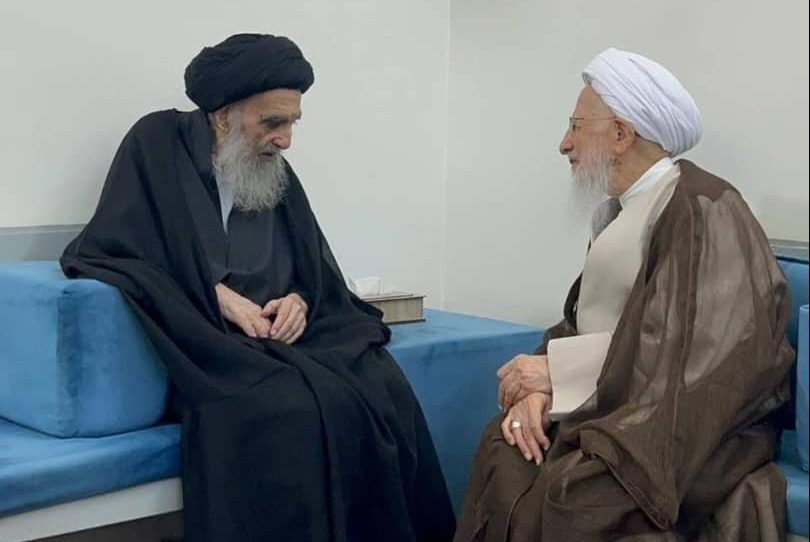
The Grand Ayatollah Sistani & the Grand Ayatollah Javadi Amoli Met in Najaf Ashraf
ethics

The Grand Ayatollah Sistani & the Grand Ayatollah Javadi Amoli Met in Najaf Ashraf

by mustafa askari
2025-05-19
Imam Ali (AS) Did Not Compromise on Unethical Politics
ethics

Imam Ali (AS) Did Not Compromise on Unethical Politics

by mustafa askari
2025-05-11
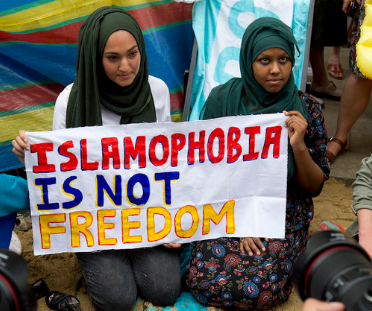
UK: Reform councillors face allegations of sharing social media Islamophobic content
ethics

UK: Reform councillors face allegations of sharing social media Islamophobic content

by mustafa askari
2025-05-11
How to be just with your children?
ethics

How to be just with your children?

by mustafa askari
2025-05-10
Next Post
Social Dimensions of Hajj

Social Dimensions of Hajj

Leave a Reply Cancel reply

Your email address will not be published. Required fields are marked *

Latest Post

10 facts about marriage in Islam

10 facts about marriage in Islam

2025-05-26
A Clear Message in Response to the Arrogance of Donald Trump

A Clear Message in Response to the Arrogance of Donald Trump

2025-05-24
The Grand Ayatollah Sistani & the Grand Ayatollah Javadi Amoli Met in Najaf Ashraf

The Grand Ayatollah Sistani & the Grand Ayatollah Javadi Amoli Met in Najaf Ashraf

2025-05-19
Imam Ali (AS) Did Not Compromise on Unethical Politics

Imam Ali (AS) Did Not Compromise on Unethical Politics

2025-05-11
UK: Reform councillors face allegations of sharing social media Islamophobic content

UK: Reform councillors face allegations of sharing social media Islamophobic content

2025-05-11
How to be just with your children?

How to be just with your children?

2025-05-10
Load More

Browse by Tags

Ahl al-Bayt (A.S.) Ahlul Bayt Al-Mahdi (AS) Allah Ashura Ayatollah Sobhani Ethics faith Fatima fiqh ghadir God History Holy Prophet Imam 'Ali Imam Ali (A.S.) Imam Husain Imams infallibles Islam Islamic Laws Islamic rules Jurisprudence Karbala Martyrdom morality Muhammad Nahj al Balaghah prayer prophet Quran Ramadan Reborn Salat Sayed Moustafa Qazwini shaistudies shia Shia Beliefs Shia Imams Shia Islam Shia Studie's World Assembly shiastudies Sin the differences between Shi’a and Sunni the story of those who converted to Shia Islam

The World Assembly of Shiite Studies was established in 2003 (1382 AH) by a group of scholars from seminaries and universities. The purpose of founding this independent academic institution was to introduce the school of Shi‘ism and defend its legitimacy through education, research, translation and publication, communications, and Islamic promotion. This center has continued its mission with strength and determination and envisions a bright future ahead.

Address: Qom, 45-Meter Ammar Yaser Boulevard, between Alley 4 and 6, World Assembly of Shiite Studies, Secretariat of Religious Scholars

Phone: +982537713773

Fax: +982537713774

All rights of the website are reserved and belong to the World Assembly of Shiite Studies.

Are you sure want to unlock this post?
Unlock left : 0
Are you sure want to cancel subscription?