Controversy Regarding the Date of Birth of Imam Mahdi (may Allah hasten his return)
QUESTION: How can the controversy about the date of birth of Imam Mahdi (may Allah hasten his return), which some say corresponds to the number of the letters of the word نور (“nur,” light) – 256 – while according to some traditions, it took place in the year 255 A.H., be explained. In what year did the occultation of that personage take place?
ANSWER: Dispute about such matters does not harm the basic topic or cause an enigma.
Such disagreement exists with regard to the date of birth of most historical personalities; in fact in many cases their dates of birth and death are unknown.
The disagreement about the date of birth of Imam Sahib al-‘Amr (may Allah hasten his return) is less than the disagreement existing about the date of birth of some of the Imams and the Prophet (peace be upon him and his family) himself.
The reliable opinion is 255 A.H., which Fadl ibn Sha¤han al-Nayshapuri—who is one of the major traditionists and a contemporary of Imam Hasan al-‘Askari (peace be upon him) – has related, and his intermediary is a person like Muhammad ibn ‘Ali ibn Hamza ibn Husayn ibn ‘Ubaydullah ibn ‘Abbas ibn ‘Ali ibn Abi Talib (peace be upon him).
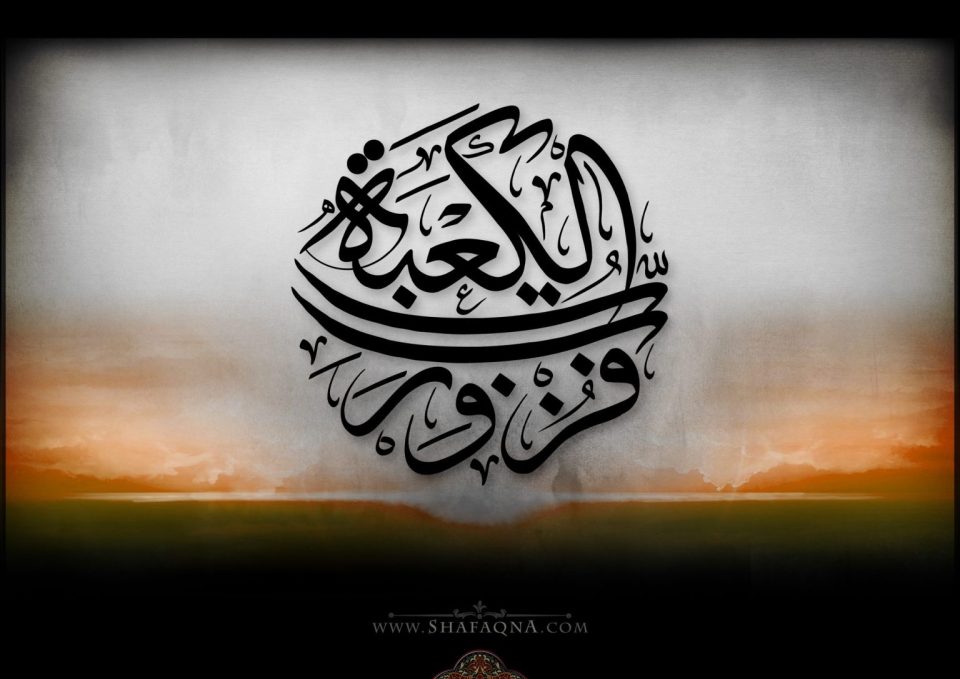
As for the occultation of Imam Sahib al-‘Amr (may Allah hasten his return): From the very time of birth the public did not have permission to visit him in the usual manner, and his venerable father would only grant special companions and Shi‘a the felicity of visiting his peerless son and كلمة الله باقية(Allah’s remaining word). The commencement of the minor occultation, which was also the beginning of that personage’s Imamah, took place on the day of martyrdom of Imam Hasan al-‘Askari (peace be upon him), that is in the year 260 A.H.
A point which must be mentioned here is that the coming up of the issue of the occultation of the Imam was not unexpected for the Shi‘a and believers in Imamah when it occurred, since it had been referred to before that time in many traditions, and the people knew that Imam Sahib al-‘Amr (may Allah hasten his return) will have to occultations—a short occultation called “sughra” and “qusra” and a long occultation called “kubra” and “tula”.
The detailed report of that has been mentioned completely in the books and usul (books of principles) of the Shi‘a which were written before the birth of Imam Sahib al-Zaman (may Allah hasten his return).
Consensus of the Shi‘a Regarding the Imamah of Imam Sahib al-Amr (may Allah hasten his return) after the Demise of Imam Hasan al-‘Askari (peace be upon him)
QUESTION: According to what Nawbakhti has written the books of Shi‘a sects, the Shi‘a after Imam Hasan al-‘Askari (peace be upon him) split up into fourteen sects. To what extent is this statement correct and until what time were these sects extant?
ANSWER: As has passed, Nawbakhti writes: The Shi‘a after the demise of Imam Hasan al-‘Askari (peace be upon him) were divided into fourteen sects. However, it appears that there has been some exaggeration in this view, since he and the remaining writers of books pertaining to sects have collected all the views that have been forwarded—even if held by only one person who himself did not remain firm in that opinion until the end. It may very well be that they have mentioned “sects” about which using the word “sect” or “group” would not be correct.
This is because the number of their believers, if they had more than one individual, is not known. It does not appear that they exceeded a few people. Or it is not known until what time and to what extent they were firm in their opinion; thus, they should not be counted as sects, or else the number of sects would reach the hundreds or thousands.
Shaykh Mufid and Shaykh Tusi, may Allah have mercy on them, have also forwarded this same view.
Shaykh Mufid in the second volume of Al-Fusul al-Mukhtara, narrating from al-Nawbakhti, mentions the names of these sects and says: None of these sects except the Shi‘a exist in our time – 372 A.H.
Thus, it becomes known that these sects have not existed to an extent that they be worthy of being pointed out at all.
Of course, if an opinion is attributed to them, even if it has no clear follower, it is necessary to research it, as Shaykh Mufid and Shaykh Tusi have performed, and they have proven the falsity of the views of all of these sects except the Twelver Shi‘a.
In summary, books of sects and schools of thought have been involved in carelessness and exaggeration in counting groups and sects.
Thus, such material in books cannot be relied upon – except in case of sects that exists even today or whose existence as a group is affirmed by reliable histories and references.
QUESTION: Is the abundance the titles of the Imam of the Age because of the profusion of his personal, spiritual, and physical characteristics, or is it on account of the vastness of his reformative actions?
ANSWER: It is understood from the traditions that the blessed names of the twelfth Imam (may Allah hasten his return) are: Qa’im (The Riser), Mahdi (The Guided), Gha’ib (The Absent), and Hujjat (The Proof). In addition, various traditions mention him with titles such as Hujjatullah (The Proof of Allah), Khalifatullah (Caliph of Allah), and al-Qa’im (The Riser). The reason for the abundance of his titles is the same two factors mentioned above. Of course, out of these titles, some are more well known than others.
It is possible that conditions in a particular time cause people to pay greater attention to one of these titles or qualities or that a particular aspect of the issue be discussed more, and consequently speakers, writers, and poets give more attention to that title or aspect. This is similar to the “most beautiful names” (al-asma’ al-husna) of Allah, in which individual circumstances or prevailing conditions cause people to give more attention to one of those names and call Him by it, such as “Al-Shafi” (The Healer), “Al-Salam” (The Security), “Al-Hafiz” (The Protector), or “Al-Raziq” (The Sustainer). And this is not to mean that the remaining “most beautiful names” do not have a reason for being attributed to Allah.
Thus, each of the names and titles of the Imam of the Time (may Allah hasten his return) refer to one of his qualities or actions, and most of them have been mentioned in traditions that broach the actual issue of the twelfth Imam and his reappearance. That is, that personage was well known by these names and titles years before he himself or his father were even born.
Regarding the fact that the twelfth Imam is the same as the Mahdi and the Mahdi is no different from the twelfth Imam, eminent Sunni scholars agree with the Shi‘a. For this very reason individuals like Abu Dawud – author of the book Sunan (prophetic character) – have narrated traditions of the twelve Imams, and among his titles, his being promised by the prophets and his personal excellencies and genealogy are referred to.