• Home
  • Bank of Subjects of Articles
    • Bibliography
    • Characters
    • Culture and art
    • Economics
    • Educational sciences
    • ethics
    • Geography of Islamic world
    • History
    • Islamic jurisprudence and principles
    • Kalam (Islamic scholastic theology)
    • Mahdism
    • Philosophy and logic
    • Political science
    • pray and pilgrimage
    • Prophet and Ahl-al bayt
  • Islamic Teachings
  • quran
  • The Infallibles
  • Shia Beliefs
  • Morality
  • Events
    • Media Reflection
    • Muharram
    • News of Shia World
    • News of Worldly Assembly for Shia Studies
  • Home
  • Bank of Subjects of Articles
    • Bibliography
    • Characters
    • Culture and art
    • Economics
    • Educational sciences
    • ethics
    • Geography of Islamic world
    • History
    • Islamic jurisprudence and principles
    • Kalam (Islamic scholastic theology)
    • Mahdism
    • Philosophy and logic
    • Political science
    • pray and pilgrimage
    • Prophet and Ahl-al bayt
  • Islamic Teachings
  • quran
  • The Infallibles
  • Shia Beliefs
  • Morality
  • Events
    • Media Reflection
    • Muharram
    • News of Shia World
    • News of Worldly Assembly for Shia Studies
Home Jurisprudence

The Literal and Figurative Definition of Jurisprudence

by javad
2021-05-29
in Jurisprudence
0
0
SHARES
20
VIEWS
Share on FacebookShare on Twitter

The Literal and Figurative Definition of Jurisprudence

The Literal and Figurative Definition of Jurisprudence: The Arabic term for jurisprudence (fiqh) literally means: knowledge about something and understanding it; being clever.[2] Fiqh’s literal definition does not only mean understanding a word, instead it is a deep knowledge about it. Fiqh has been used in the Qurān in this meaning:

لَهُمْ قُلُوبٌ لاَّ يَفْقَهُونَ بِهَا
They have hearts wherewith they understand not.[3]

Figuratively, fiqh means: knowledge about Islamic legal rulings from their sources. So, fiqh\’s figurative definition is taken from its literal one in the sense that deriving religious rulings from their sources necessitates the mujtahed[4] to have a deep understanding in the different discussions of jurisprudence. He must look deep down into a matter and not suffice himself with just the apparent meaning. A person who only knows the appearance of a matter is not a faqīh.[5]
The subject of thinking deeply (tafaquh) about religion has been repeatedly mentioned in the Qurān and traditions transmitted from the prophet (s) and the Imāms (a). What is taken from them, on a whole, is that Islam wants man to deeply understand religion. Of course, this understanding covers such subjects as Islamic theology, Islamic ideology, ethics, Islamic upbringing, the Islamic social system, worship, religious rulings and manners that one must have in his individual and social life. The term \’fiqh\’ has become popular amongst Muslims since the second century after the great migration to mean Islamic jurisprudence or the art of deriving religious rulings from their sources. It has obtained the following meaning: a precise and deep understanding and ability to derive religious rulings from their sources.[6]

The Meaning of Fiqh
Nowadays, the term fiqh is generalized to mean Islamic sciences or Islamic rulings in the broad sense. The broad meaning of Islamic rulings is broken up into three fundamental categories:
1. Theology; what is obligatory for a mukalaf to believe about Allah, his angels, books, messengers and the Day of Judgment.
2. Ethics; the positive traits that a mukalaf must obtain and the negative traits that he must stay away from.
3. Actions; the actions that a mukalaf must perform.
This is proved by the tradition from the prophet (s) who said: “Whoever wants Allah to treat him favorably must have a deep understanding (yafaqahu) in religion.”[7])
Here, the word fiqh is used in its general sense, synonymous of Islam.
When the different sciences are categorized the term fiqh is used to mean the Islamic rulings regarding one\’s actions.
Fiqh, in its specific meaning and what is discussed in books of fiqh, includes everything that has to do with all aspects of man\’s life. Everything that is studied today including foundational laws, city management, family relations, individual actions, management, politics, etc is found in the different sections of fiqh.[8]

Shari\’ah And Fiqh
Sharī‛ah encompasses what was decreed in the time of prophethood found in the Qurān and prophetic traditions.
Fiqh is what has been gained from the efforts of scholars after the prophet\’s (s) demise.[9]
Notes:
[2] Ibn Manz)ūr, Lisān al-‛Arab
[3] 7:179
[4] To be discussed later.
[5] Tafsīr al-Manār, volume 9, page 420
[6] Shahīd Mut)t)aharī, Makhul Ila al-‛Ulūm al-Islamīyyah, page 3
[7] Muslim, S)ah)īh), volume 3, page 95 (Nayshāpūrī print
[8] Shahīd Mut)t)aharī, Makhul Ila al-‛Ulūm al-Islamīyyah, page 45
[9] Ayatollah Ja‛far Subh)ānī, Tārīkh al-Fiqh al-Islamī wa Adwārihi, page 6
Tags: fiqhIslamic JurisprudenceJurisprudenceShia IslamShia Studie's World Assembly
Previous Post

Marriage in Islam

Next Post

The Jurisprudential sects of Islam

javad

Related Posts

Senior Scholar: Quran and Ahl al-Bayt Are Pillars of Muslim Solidarity
Jurisprudence

Senior Scholar: Quran and Ahl al-Bayt Are Pillars of Muslim Solidarity

by mustafa askari
2025-05-10
The Grand Ayatollah Sistani Fatwas About “Male and Female Relations”
Jurisprudence

The Grand Ayatollah Sistani Fatwas About “Male and Female Relations”

by mustafa askari
2024-10-02
All NewsFeaturedMiddle EastOther News Aljazeera: Nasrallah says Israel is pursuing goal it cannot achieve
Islamic Teachings

All NewsFeaturedMiddle EastOther News Aljazeera: Nasrallah says Israel is pursuing goal it cannot achieve

by mustafa askari
2023-11-04
Imam Khamenei: “Propaganda” at core of enemy’s schemes in recent riots & “jihad of clarification” the way to fight it
Jurisprudence

Imam Khamenei: “Propaganda” at core of enemy’s schemes in recent riots & “jihad of clarification” the way to fight it

by mustafa askari
2023-01-10
How Small Sins Turn into Big Ones
Islamic Teachings

How Small Sins Turn into Big Ones

by mustafa askari
2022-10-15
Next Post
Subjects of Jurisprudence

The Jurisprudential sects of Islam

Leave a Reply Cancel reply

Your email address will not be published. Required fields are marked *

Latest Post

10 facts about marriage in Islam

10 facts about marriage in Islam

2025-05-26
A Clear Message in Response to the Arrogance of Donald Trump

A Clear Message in Response to the Arrogance of Donald Trump

2025-05-24
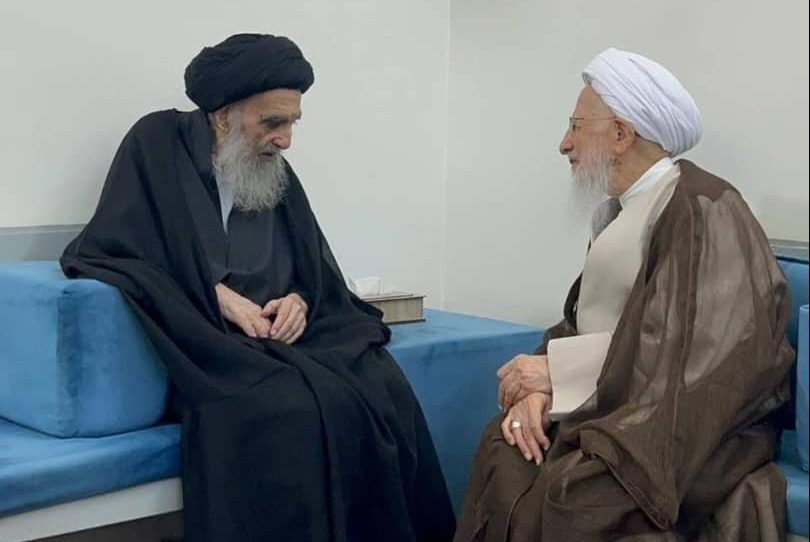
The Grand Ayatollah Sistani & the Grand Ayatollah Javadi Amoli Met in Najaf Ashraf

The Grand Ayatollah Sistani & the Grand Ayatollah Javadi Amoli Met in Najaf Ashraf

2025-05-19
Imam Ali (AS) Did Not Compromise on Unethical Politics

Imam Ali (AS) Did Not Compromise on Unethical Politics

2025-05-11
UK: Reform councillors face allegations of sharing social media Islamophobic content

UK: Reform councillors face allegations of sharing social media Islamophobic content

2025-05-11
How to be just with your children?

How to be just with your children?

2025-05-10
Load More

Browse by Tags

Ahl al-Bayt (A.S.) Ahlul Bayt Al-Mahdi (AS) Allah Ashura Ayatollah Sobhani Ethics faith Fatima fiqh ghadir God History Holy Prophet Imam 'Ali Imam Ali (A.S.) Imam Husain Imams infallibles Islam Islamic Laws Islamic rules Jurisprudence Karbala Martyrdom morality Muhammad Nahj al Balaghah prayer prophet Quran Ramadan Reborn Salat Sayed Moustafa Qazwini shaistudies shia Shia Beliefs Shia Imams Shia Islam Shia Studie's World Assembly shiastudies Sin the differences between Shi’a and Sunni the story of those who converted to Shia Islam

The World Assembly of Shiite Studies was established in 2003 (1382 AH) by a group of scholars from seminaries and universities. The purpose of founding this independent academic institution was to introduce the school of Shi‘ism and defend its legitimacy through education, research, translation and publication, communications, and Islamic promotion. This center has continued its mission with strength and determination and envisions a bright future ahead.

Address: Qom, 45-Meter Ammar Yaser Boulevard, between Alley 4 and 6, World Assembly of Shiite Studies, Secretariat of Religious Scholars

Phone: +982537713773

Fax: +982537713774

All rights of the website are reserved and belong to the World Assembly of Shiite Studies.

Are you sure want to unlock this post?
Unlock left : 0
Are you sure want to cancel subscription?