• Home
  • Bank of Subjects of Articles
    • Bibliography
    • Characters
    • Culture and art
    • Economics
    • Educational sciences
    • ethics
    • Geography of Islamic world
    • History
    • Islamic jurisprudence and principles
    • Kalam (Islamic scholastic theology)
    • Mahdism
    • Philosophy and logic
    • Political science
    • pray and pilgrimage
    • Prophet and Ahl-al bayt
  • Islamic Teachings
  • quran
  • The Infallibles
  • Shia Beliefs
  • Morality
  • Events
    • Media Reflection
    • Muharram
    • News of Shia World
    • News of Worldly Assembly for Shia Studies
  • Home
  • Bank of Subjects of Articles
    • Bibliography
    • Characters
    • Culture and art
    • Economics
    • Educational sciences
    • ethics
    • Geography of Islamic world
    • History
    • Islamic jurisprudence and principles
    • Kalam (Islamic scholastic theology)
    • Mahdism
    • Philosophy and logic
    • Political science
    • pray and pilgrimage
    • Prophet and Ahl-al bayt
  • Islamic Teachings
  • quran
  • The Infallibles
  • Shia Beliefs
  • Morality
  • Events
    • Media Reflection
    • Muharram
    • News of Shia World
    • News of Worldly Assembly for Shia Studies
Home Bank of Subjects of Articles

Moderation- The Way of the Prophet S.A.W

by شهاب الدین مجتهدی
2019-11-16
in Bank of Subjects of Articles, Educational sciences
0
0
SHARES
40
VIEWS
Share on FacebookShare on Twitter

Moderation is one of the most important moral issues. It is such that a person should choose the middle path and it can be said that moderation is one of Allah’s general laws which has been observed in the entire creative process, from the revolution of the earth to the human body to the smallest of creations. Moderation constitutes one of the most important directives in the training system of the religion of Islam. One of the aims of Islam is to make a person moderate. What exactly is moderation? The issue of moderation in Islamic training has been given special attention in all personal and social affairs. Islam wants to shape the Muslim personality such that the individual chooses the middle path and the ‘Ummah’ a moderate ‘Ummah’. Thus the Holy Qur’an says:
“And thus We have made you of medium (just) nation that you may be the bearers of witness ton the people…” (2:143)
And in another verse Loqman says to his son: “ And pursue the right course in your going about and lower your voice; surely the most hateful of voices is braying of the asses.” (31:19). Meaning that he should be moderate in his actions and behavior.
Imam Ali (AS) explaining the way of the Prophet (SAW), says: “His method and behavior was moderate.” And also in his description of the righteous ones, says: “the clothing of the righteous ones is moderation, (Nahjul Balagha, Sermon No. 193). By clothing he meant that their method was a moderate one.
A Muslim must be moderate even as relates to fear of Allah’s punishment and also hope in His mercy. Imam Ali (AS) says: “The best of actions is moderation in hope and in fear.”
According to the Qur’anic verses, traditions, way of the Prophet (SAW) and the Infallible Imams excessiveness and extremism is undesirable, and a true Muslim needs to observe the limits of moderation.
Imam Ali (AS) said: “Excessiveness in any form isn’t an acceptable practice; whether in the loving of one’s children, and family, or generally in relation to all affairs. It also applies to ignorance about Allah which results in extreme love of worldly things, and in the same way to a lack of attentiveness to children and family. Excessiveness at both ends of the scale may have destructive results.
If we see in the traditions that poverty is closer to disbelief, extreme wealth is also seen as a basis for insurgence. In Islam there exists so much emphasis on moderation that it is said that one should be moderate and follow the middle path in one’s behavior even to one’s enemies. The Holy Qur’an says:
“… and let not the hatred of a people incite you not to act equitably, act equitably, that is nearer to piety, and be careful of (your duty to) Allah, surely Allah is Aware of what you do.” (5:8)
In another Qur’anic verse, it says:
“… eat and drink and be not extravagant.” (7:31)
Another Verse also says:
“And don’t make your hand to be shackled to your neck nor stretch it forth to the utmost (limit) of its stretching forth, lest you should (afterwards) sit down blamed, stripped off.” (17:29)
In all personal and social behavior moderation must be observed, and this is obviously the logical way of behaving and any type of extremism will result only in destruction. All that is needed is to take a look at history and the evidence of communities and individuals who left that middle path and soon came to disastrous ends.


shiastudies.com

Tags: shiastudiesthe Prophet (s)
Previous Post

Imam Jafar Sadiq (A.S) on Knowledge

Next Post

Hadrat Zainab (S.A.) the Infallible

شهاب الدین مجتهدی

Related Posts

10 facts about marriage in Islam
ethics

10 facts about marriage in Islam

by mustafa askari
2025-05-26
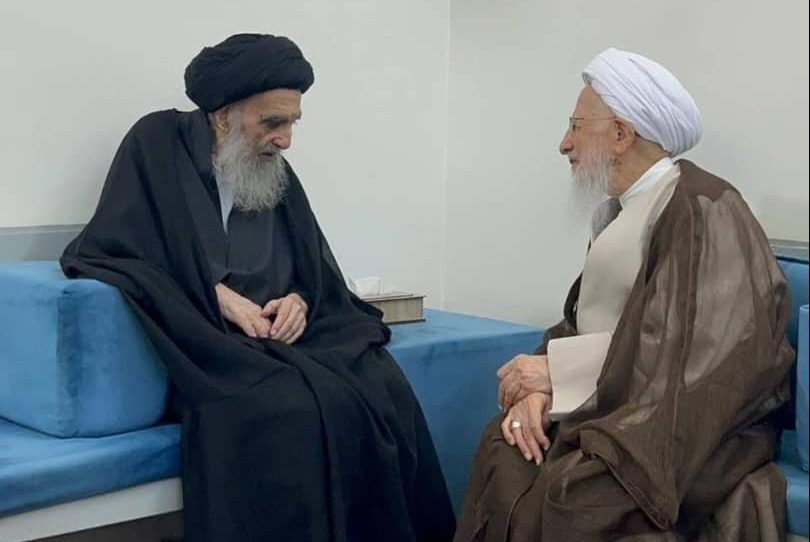
The Grand Ayatollah Sistani & the Grand Ayatollah Javadi Amoli Met in Najaf Ashraf
ethics

The Grand Ayatollah Sistani & the Grand Ayatollah Javadi Amoli Met in Najaf Ashraf

by mustafa askari
2025-05-19
Imam Ali (AS) Did Not Compromise on Unethical Politics
ethics

Imam Ali (AS) Did Not Compromise on Unethical Politics

by mustafa askari
2025-05-11
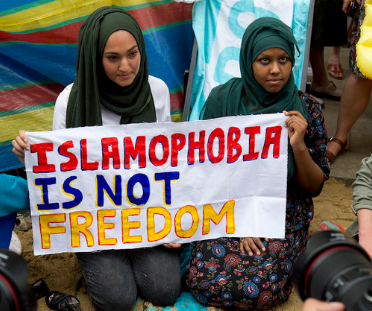
UK: Reform councillors face allegations of sharing social media Islamophobic content
ethics

UK: Reform councillors face allegations of sharing social media Islamophobic content

by mustafa askari
2025-05-11
How to be just with your children?
ethics

How to be just with your children?

by mustafa askari
2025-05-10
Next Post

Hadrat Zainab (S.A.) the Infallible

Leave a Reply Cancel reply

Your email address will not be published. Required fields are marked *

Latest Post

10 facts about marriage in Islam

10 facts about marriage in Islam

2025-05-26
A Clear Message in Response to the Arrogance of Donald Trump

A Clear Message in Response to the Arrogance of Donald Trump

2025-05-24
The Grand Ayatollah Sistani & the Grand Ayatollah Javadi Amoli Met in Najaf Ashraf

The Grand Ayatollah Sistani & the Grand Ayatollah Javadi Amoli Met in Najaf Ashraf

2025-05-19
Imam Ali (AS) Did Not Compromise on Unethical Politics

Imam Ali (AS) Did Not Compromise on Unethical Politics

2025-05-11
UK: Reform councillors face allegations of sharing social media Islamophobic content

UK: Reform councillors face allegations of sharing social media Islamophobic content

2025-05-11
How to be just with your children?

How to be just with your children?

2025-05-10
Load More

Browse by Tags

Ahl al-Bayt (A.S.) Ahlul Bayt Al-Mahdi (AS) Allah Ashura Ayatollah Sobhani Ethics faith Fatima fiqh ghadir God History Holy Prophet Imam 'Ali Imam Ali (A.S.) Imam Husain Imams infallibles Islam Islamic Laws Islamic rules Jurisprudence Karbala Martyrdom morality Muhammad Nahj al Balaghah prayer prophet Quran Ramadan Reborn Salat Sayed Moustafa Qazwini shaistudies shia Shia Beliefs Shia Imams Shia Islam Shia Studie's World Assembly shiastudies Sin the differences between Shi’a and Sunni the story of those who converted to Shia Islam

The World Assembly of Shiite Studies was established in 2003 (1382 AH) by a group of scholars from seminaries and universities. The purpose of founding this independent academic institution was to introduce the school of Shi‘ism and defend its legitimacy through education, research, translation and publication, communications, and Islamic promotion. This center has continued its mission with strength and determination and envisions a bright future ahead.

Address: Qom, 45-Meter Ammar Yaser Boulevard, between Alley 4 and 6, World Assembly of Shiite Studies, Secretariat of Religious Scholars

Phone: +982537713773

Fax: +982537713774

All rights of the website are reserved and belong to the World Assembly of Shiite Studies.

Are you sure want to unlock this post?
Unlock left : 0
Are you sure want to cancel subscription?