• Home
  • Bank of Subjects of Articles
    • Bibliography
    • Characters
    • Culture and art
    • Economics
    • Educational sciences
    • ethics
    • Geography of Islamic world
    • History
    • Islamic jurisprudence and principles
    • Kalam (Islamic scholastic theology)
    • Mahdism
    • Philosophy and logic
    • Political science
    • pray and pilgrimage
    • Prophet and Ahl-al bayt
  • Islamic Teachings
  • quran
  • The Infallibles
  • Shia Beliefs
  • Morality
  • Events
    • Media Reflection
    • Muharram
    • News of Shia World
    • News of Worldly Assembly for Shia Studies
  • Home
  • Bank of Subjects of Articles
    • Bibliography
    • Characters
    • Culture and art
    • Economics
    • Educational sciences
    • ethics
    • Geography of Islamic world
    • History
    • Islamic jurisprudence and principles
    • Kalam (Islamic scholastic theology)
    • Mahdism
    • Philosophy and logic
    • Political science
    • pray and pilgrimage
    • Prophet and Ahl-al bayt
  • Islamic Teachings
  • quran
  • The Infallibles
  • Shia Beliefs
  • Morality
  • Events
    • Media Reflection
    • Muharram
    • News of Shia World
    • News of Worldly Assembly for Shia Studies
Home ghadir Contention of Religious scholar to ghadir

the Holy Prophet (s) mean political authority or religious and mystical authority did in the event of Ghadir Khum

by شهاب الدین مجتهدی
2019-08-24
in Contention of Religious scholar to ghadir, ghadir
0
the Holy Prophet (s) mean political authority or religious and mystical authority did in the event of Ghadir Khum
0
SHARES
16
VIEWS
Share on FacebookShare on Twitter

the Holy Prophet (s) mean political authority or religious and mystical authority did in the event of Ghadir Khum

According to Shiites, there is no doubt that the Wilayah (guardianship/authority) of the Commander of the Faithful that was announced and stressed by the Holy Prophet (s) in the event of Ghadir and on many other occasions before and after Ghadir[1] includes all the cases where the Messenger of Allah (s) maintained wilayah (authority). Considering that the Prophet (s) established and led a government, we entertain no doubt that political authority or discretion over political affairs was one of the main aspects of his authority.

If we are to deal with your question in a more elaborate and detailed manner, we must say that in view of what happened after the Messenger of Allah (s) with the caliphate being denied to its principal owner, it was not justifiable for the general public in the succeeding generations to see the reign of government given to someone else in spite of all the explicit and implicit evidence which proved the right of the Commander of the Faithful, Ali (a.s.) to the caliphate. For this reason, the authors who were inclined to the predominant intellectual cult tried, as far as they could, to avoid mentioning the merits and privileges of the Commander of the Faithful, Ali (a.s) in their works. At times, they have sufficed to mentioning the selected parts, and if there was a mutawatir (narrator by many reporters) tradition which they could not deny, they would embark on justifying and interpreting them in a way such that would fit their own theological dogmas.  The Ghadir tradition is one of the traditions mentioned partially in the authentic Sunni books because it was not possible for them to sensor it completely.[2] The explicit statements by the Holy Prophet (s) with reference to the wilayah of Imam Ali (a.s.) are some of the proofs that have been authenticated in most of these books. Obviously, studying a narration with such explicitness and clarity begs the question: Why was Imam Ali (a.s.) denied political leadership despite the Prophet’s sayings? That is where the justification comes to the scene with the wilayah in hadith interpreted as mystical authority or just as mere friendship and love. Such justifications have also been used in regards to other similar traditions. For instance, they say that the Prophet (s) introduced Ali (a.s) like Harun (Aeron). That is to say, Ali (a.s) is the Prophet’s vizier and there is a difference between vizier and successor! Therefore, Ali (a.s) is not the Prophet’s successor, rather he was his vizier during his lifetime and his viziership came to an end with the demise of the Prophet (s)!

Now, regardless of what Shiites believe, we shall, with reliance on Sunni books, discuss the Ghadir issue. In the event of Ghadir Khum, the Prophet (s) first asked Muslims: “Who is more appropriate for authority (awla) over you than yourselves?”

They replied: “God and His Messenger.”

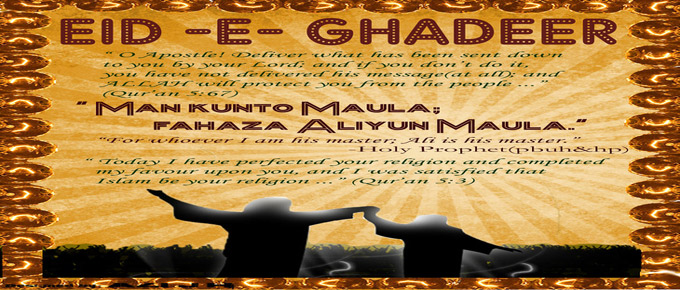
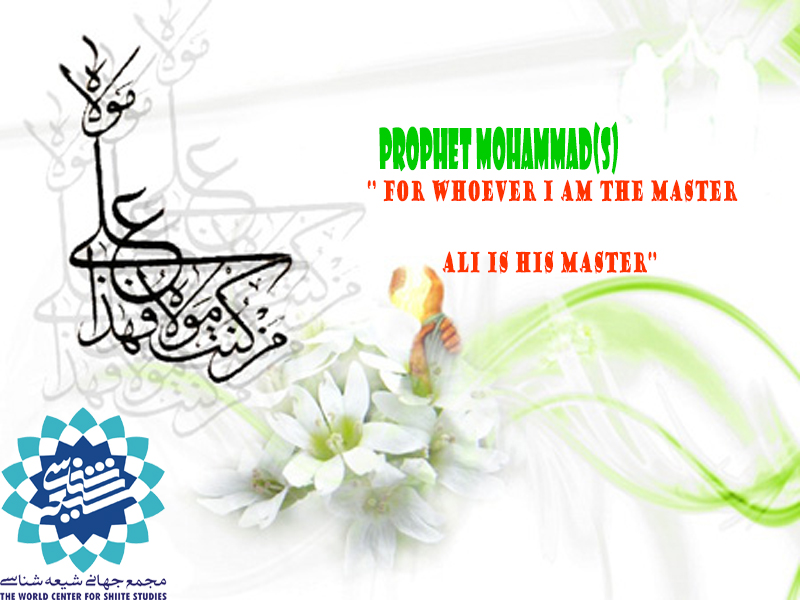
Thereupon, the Prophet (s) declared that Ali (a.s) was like him in all terms. In other words, Ali had the same trait and authority that the Prophet (s) had. He addressed the Muslim gathering as such: “Of whomsoever I am a master, this Ali is his master.” It is interesting to know that following this event, Umar, the second caliph, came forward and said to Ali (a.s.): “Congratulations! You have become our master and the master of every believing man and every believing woman.[3]

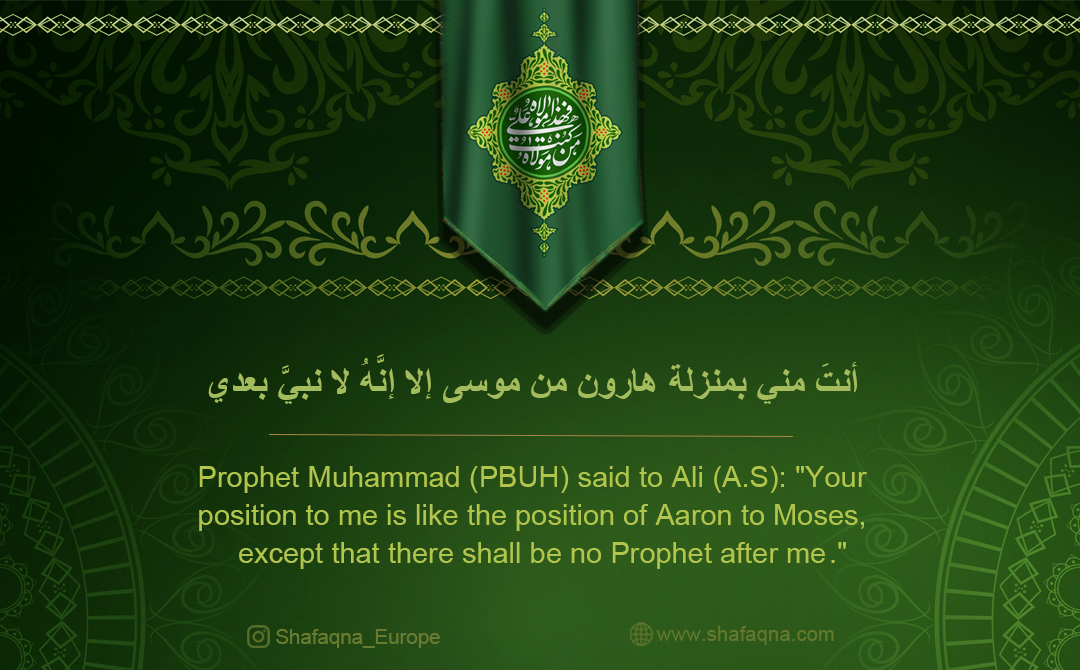
Another incident that is also endorsed by Sunni scholars and has been related in their reliable books is the story related to the Battle of Tabook. “The Messenger of God took a journey to Tabook, and he appointed Ali to succeed him in Medina. Ali said to the Prophet: `Do you leave me with the children and the women (and deprive me of taking part in the Jihad)?’ The Messenger replied: `Are you not satisfied to be to me like Aaron to Moses, except that there shall be no Prophet after me?[4] In fact, if the Prophet intended mystical wilayah (authority) in Ghadir, he could not have meant anything but political wilayah.


[1] On Yawm al-Dar, the Day of Mubahalah, the Battle of Tabook, when some individuals objected to the way he led the contingent led to Yemen etc.

[2] See: Ahmad bin Hanbal, Al-Musnad, vol.1, pg. 118 – 119, Dar Sadir, Beirut, Ibn Majah Qazvini, Al-Sunan, vol.1, pp.43-45, Dar al-Fikr, Beirut and Sahih Tirmidhi, 1403 A.H., vol.5, pg. 297, Dar al-Fikr, Beirut.

[3] Ahmad bin Hanbal, Musnad, vol.4, pg. 281, Dar Sadir, Beirut.

[4] Bukhari, Sahih, 1401, A.H., vol.5, pg. 129, Dar al-Fikr, Beirut.

shiastudies.com

Tags: event of Ghadir Khumghadirpolitical wilayahshiastudies
Previous Post

Succession of Ali

Next Post

the third ayah of Surah Al-Ma’idah cannot be about the event of Ghadir

شهاب الدین مجتهدی

Related Posts

Hadith Graph: “We are not neglecting to consider you and not forgetting to remember you…”
Hadiths

Hadith Graph: “We are not neglecting to consider you and not forgetting to remember you…”

by mustafa askari
2024-03-02
Twelve Imams Hadith and the Birth of Sahib Al Amr (ajtf)
Hadiths

Twelve Imams Hadith and the Birth of Sahib Al Amr (ajtf)

by mustafa askari
2022-10-10
Religious Scholar: Ghadir is the “Essence of Islam”
Contention of Religious scholar to ghadir

Religious Scholar: Ghadir is the “Essence of Islam”

by mustafa askari
2022-07-26
Successor of the Prophet Muhammad (PBUH) & Ghadir Khumm
Contention Ahl al-Bayt to ghadir

Successor of the Prophet Muhammad (PBUH) & Ghadir Khumm

by mustafa askari
2022-07-23
The Historical Speech of the Holy Prophet (S.A.W.) in Ghadir Khum
ghadir

The Historical Speech of the Holy Prophet (S.A.W.) in Ghadir Khum

by mustafa askari
2022-07-19
Next Post
the third ayah of Surah Al-Ma’idah cannot be about the event of Ghadir

the third ayah of Surah Al-Ma’idah cannot be about the event of Ghadir

Leave a Reply Cancel reply

Your email address will not be published. Required fields are marked *

Latest Post

10 facts about marriage in Islam

10 facts about marriage in Islam

2025-05-26
A Clear Message in Response to the Arrogance of Donald Trump

A Clear Message in Response to the Arrogance of Donald Trump

2025-05-24
The Grand Ayatollah Sistani & the Grand Ayatollah Javadi Amoli Met in Najaf Ashraf

The Grand Ayatollah Sistani & the Grand Ayatollah Javadi Amoli Met in Najaf Ashraf

2025-05-19
Imam Ali (AS) Did Not Compromise on Unethical Politics

Imam Ali (AS) Did Not Compromise on Unethical Politics

2025-05-11
UK: Reform councillors face allegations of sharing social media Islamophobic content

UK: Reform councillors face allegations of sharing social media Islamophobic content

2025-05-11
How to be just with your children?

How to be just with your children?

2025-05-10
Load More

Browse by Tags

Ahl al-Bayt (A.S.) Ahlul Bayt Al-Mahdi (AS) Allah Ashura Ayatollah Sobhani Ethics faith Fatima fiqh ghadir God History Holy Prophet Imam 'Ali Imam Ali (A.S.) Imam Husain Imams infallibles Islam Islamic Laws Islamic rules Jurisprudence Karbala Martyrdom morality Muhammad Nahj al Balaghah prayer prophet Quran Ramadan Reborn Salat Sayed Moustafa Qazwini shaistudies shia Shia Beliefs Shia Imams Shia Islam Shia Studie's World Assembly shiastudies Sin the differences between Shi’a and Sunni the story of those who converted to Shia Islam

The World Assembly of Shiite Studies was established in 2003 (1382 AH) by a group of scholars from seminaries and universities. The purpose of founding this independent academic institution was to introduce the school of Shi‘ism and defend its legitimacy through education, research, translation and publication, communications, and Islamic promotion. This center has continued its mission with strength and determination and envisions a bright future ahead.

Address: Qom, 45-Meter Ammar Yaser Boulevard, between Alley 4 and 6, World Assembly of Shiite Studies, Secretariat of Religious Scholars

Phone: +982537713773

Fax: +982537713774

All rights of the website are reserved and belong to the World Assembly of Shiite Studies.

Are you sure want to unlock this post?
Unlock left : 0
Are you sure want to cancel subscription?