Parents, Birth & Childhood
Imam Ali un Naqi (a.s.)’s mother was a very pious lady who spent her whole life fasting. The 10th Imam has said that his mother was one of the ladies of paradise and one of those from ‘Ahlul Haqq’ (people of truth).
Imam Ali un Naqi (a.s.) became an Imam at the age of 8 years. The khalifa wrote to the governor of Medina asking him to send the young Imam to a person called Junaydi for tutorage (the governor of Madina was threatened that if he did not do this than the people of Madina would be annihilated). Junaydi was a well-known poet of that time and ‘anti – Ahlulbayt’ and was 80 years old. The Khalifa felt that if this was done than anything that the Imam did or said could be attributed to Junaydi i.e. it was taught to Imam by Junaydi. When Junaydi was once asked about the progress of his student he said :
“I am the student and he is the teacher. I now know what knowledge is. What I say is because of what I have been taught by Imam”.
The Khalifa’s plan had failed yet again.
For a while the Khalifa left Imam in peace and freedom as they were engrossed in sorting out their own affairs (Removing the Iranians from power; adding the Turks and establishing power in Samarra). Imam used the time to open Madrasas and the atmosphere in the mosque of the Prophet was once again like in the time of the 6th Imam Ja’fer As-Sadiq (a.s.)
Imamate – His Life and Works
Imam Ali un Naqi (as) served the longest period of Imamate (besides the 12th Imam) – 34 years which can be divided into two parts – 17 years of freedom and 17 years under arrest.
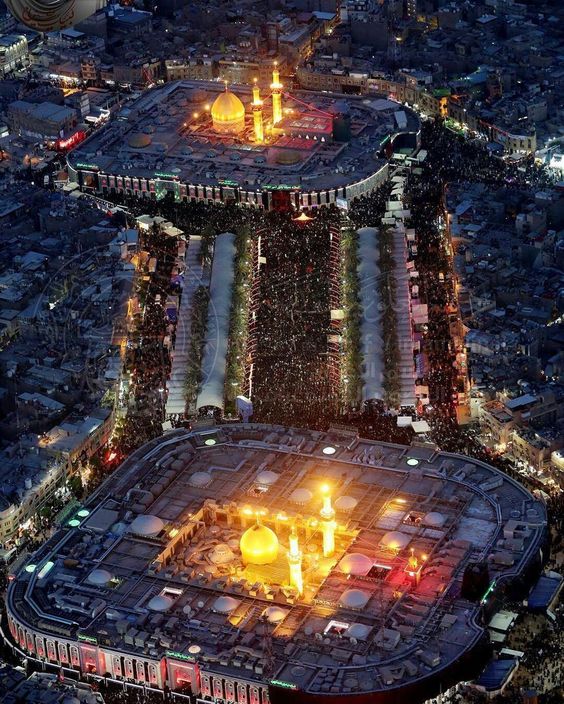
In 234 A.H. came one of the most tyrannical rulers of the Abbasid Khilafate – Mutawakkil. He ruled with tyranny, killing, looting and terrorising especially those who were the followers of Ahlulbayt. Mutawakkil is also the one who ordered the desecration of the grave of Imam Husayn (a.s.) wanting to remove Imam’s body and burn it (He did not succeed). He tried running water over the grave so no traces of the grave would remain but was unsuccessful. He ordered that all those wanting to visit Kerbala would have their fingers cut off, then hand and feet cut then only be able to go if one other from the family was killed. Imam still asked Shias to visit Kerbala. When Mutawakkil saw that all had failed and it did not discourage the visits than he banned all visits to Kerbala completely.
Mutawakkil called Imam to Samarra. Imam was called under the pretext of respect and love towards him. Imam was aware of Mutawakkil’s intentions but went knowing that this would be an opportunity to show the Turks too what true Islam was. On arriving in Samarra the Turkish spies sent with Imam were amazed at Imam’s knowledge of the Turkish language when he had never visited the Turks before.
It was an opportunity for Imam to prepare the Mu’mineen in Samarra for ghaibat. Imam was put up in an Inn which was meant for beggars, destitute and criminals. From this Inn he was removed and put into the custody of an evil man called Zarraqui (who changed to be an avid supporter of Imam) and then a man called Seyyid.
Mutawakkil knew of the progress Imam had made in Madina in 14 years of spreading knowledge. In fact he himself had to ask Imam when the Caesar of Rome wrote to him (Mutawakkil) to ask him:
“I have heard that there is a chapter of a divinely revealed book which does not contain the letters ( t d k S X ) and if this chapter is recited it grants the reciter paradise! I would like to know which chapter and in which book and why these letters are not present”.
Mutawakkil’s ‘Ulema’ were confused and eventually Mutawakkil turned to Imam. Imam told him that the chapter was Suratul Fatiha in the Qur’an and the above letters were not present because it was a chapter of mercy and each of the above letters represented words of Adhab (punishment) or Ghadhab (anger of Allah).
e.g.*- jaheem (hell), *- khusr (loss), *- zaqqum (fruit of Jahannam)
Mutawakkil seeing that he could not humiliate Imam in any way, he announced his arrival in Samarra as Ibnur Ridha (son of 8th Imam) and subjected him to things such as handing him a glass of wine in his hands in his court, asking him to sing, making him run in front of his (Mutawakkil’s) carriage..etc. Imam Hasan Al-Askery (a.s.) was placed under separate house arrest than his father at the young age of 5 years as Mutawakkil did not want the birth of the 12th Imam.
Whilst under house arrest Imam Ali An-Naqi (a.s.) arranged for the coming of Bibi Nargis to Samarra and for her to be well versed in Fiqh by his learned sister Bibi Hakima.
Imam spent his life making the imminent ghaibat of the 12th Imam easier. Soon after, Mutawakkil was killed by his own son who could not withstand the behaviour of his father.
After Mutawakkil’s death his son Muntasir was the successor and he lifted the restrictions of visiting Kerbala. His rule was unlike his father’s tyranny but remained in power for only 6 months and died at the age of 25 years. Then came Mustan Billah (Ahmed bin Mo’tasam) followed by Mo’taz Billah who continued his tyranny on Imam and his followers.
Martyrdom
Mo’taz arranged for the poisoning of Imam through an ambassador and Imam was martyred on Monday 3rd Rajab 254 a.h. nobody except Imam Hasan Askery (a.s.) was present at the time of his death. he gave his father ghusl and kafan and wept bitterly.
Children of Imam Ali Naqi (a.s.)
It is reported that Imam had 5 children
Imam Hasan Al-Askery (a.s.) the Eleventh Imam.
Husayn.
Muhammad (known as Syed Muhammad – Tomb near tomb of Balad).
Ja’fer.
Aaliya.
shiastudies.com