• Home
  • Bank of Subjects of Articles
    • Bibliography
    • Characters
    • Culture and art
    • Economics
    • Educational sciences
    • ethics
    • Geography of Islamic world
    • History
    • Islamic jurisprudence and principles
    • Kalam (Islamic scholastic theology)
    • Mahdism
    • Philosophy and logic
    • Political science
    • pray and pilgrimage
    • Prophet and Ahl-al bayt
  • Islamic Teachings
  • quran
  • The Infallibles
  • Shia Beliefs
  • Morality
  • Events
    • Media Reflection
    • Muharram
    • News of Shia World
    • News of Worldly Assembly for Shia Studies
  • Home
  • Bank of Subjects of Articles
    • Bibliography
    • Characters
    • Culture and art
    • Economics
    • Educational sciences
    • ethics
    • Geography of Islamic world
    • History
    • Islamic jurisprudence and principles
    • Kalam (Islamic scholastic theology)
    • Mahdism
    • Philosophy and logic
    • Political science
    • pray and pilgrimage
    • Prophet and Ahl-al bayt
  • Islamic Teachings
  • quran
  • The Infallibles
  • Shia Beliefs
  • Morality
  • Events
    • Media Reflection
    • Muharram
    • News of Shia World
    • News of Worldly Assembly for Shia Studies
Home Bank of Subjects of Articles

Polarization Around the Character of ‘Ali ibn Abi Talib(A.S) Chapter 14 and 15

by شهاب الدین مجتهدی
2020-02-09
in Bank of Subjects of Articles, Characters
0
Imam Ali’s Letter To the people of various provinces
0
SHARES
21
VIEWS
Share on FacebookShare on Twitter

Polarization Around the Character of ‘Ali ibn Abi Talib(A.S)

The Basis Of The Opinions Of The Khawarij
The underlying root of Khawarijism is formed from the following four things:
a) They regarded ‘Ali, `Uthman, Mu’awiyah, the fighters at the battle of Jamal and those who accepted arbitration all as infidels, except those who voted for arbitration but afterwards repented.
b) They regarded as infidels those who did not believe in the heresy of ‘Ali, `Uthman and the others mentioned in (a).
c) Faith was not for them only sincere belief, but putting the commands into action and desisting from the prohibitions was also part of faith. Faith was a compound thing made up of belief and action.
d) There was an unconditional necessity to revolt against an unjust governor or leader. They believed that “bidding to good” and “forbidding evil” are not conditional on anything, and that in all circumstances this divine command must be carried out.
According to these opinions, these people started their existence from the recognition that all men on earth were infidels, whose blood was of no value and who were all condemned to the Fire.

Chapter 15

What They Believed About The Caliphate
The only idea of the Khawarij’s that could be interpreted favourably by the modern thinkers of today is their theory about the caliphate. They had a quasi-democratic concept of it, and said that the caliph must be chosen by free election, and that the worthiest person was he who had merit as far as faith and piety were concerned. He could be from the Quraysh or not, from a distinguished and famous tribe, or from an insignificant and backward one, Arab or non-Arab.
If, after his election and after everyone had sworn allegiance to him, he took steps in a direction against the interests of the community of Islam, he should be removed from the caliphate, and if he refused, he should be fought with until killed.
In the matter of the caliphate they took a position opposite to that of the Shi`ah, who say that it is a divine office and that the caliph can only be someone who is nominated by God. They were also in opposition to the Sunni, who say the caliphate belongs to the Quraysh and who hold firmly to the principle “innama ‘l-a’immatu min qurayshin” – “but the leaders are from the Quraysh:”
Apparently their opinion about the caliphate was not something they had arrived at when they first came into existence. For, according to what their famous slogan “la hukma illa li ‘llah” – “no authority except Allah’s” -tells us, and also according to what we glean from Nahju ‘l balaghah [6] , they believed, in the beginning, that the people and the society did not need a leader or a government, and that the people should put the Book of God into practice on their own.
However, afterwards, they turned back on this belief and firmly swore allegiance to `Abdullah ibn al-Wahab. [7]
They recognised the caliphates of Abu Bakr and `Umar to be rightful, because they believed that these two persons had been rightfully elected and that they had not deviated from the way of the best interest, nor perpetrated anything against this best interest. They also recognised the election of `Uthman and `Ali to be rightful; however they said that towards the end of the sixth year of his caliphate, `Uthman changed his direction and ignored the best interest of the Muslims. So he should have been deposed from the caliphate, but since he continued in office he was killed as an unbeliever and his killing was a religious duty. As for ‘Ali, since he accepted the arbitration, but did not subsequently repent, he was killed as an unbeliever and his killing was a religious duty. Thus they denounced the caliphate of `Uthman after its seventh year, and that of ‘Ali after the arbitration. [8]
They also abhorred the rest of the caliphs, and were always at war with them.
Notes:
[6]. See sermon no.40, and also the commentary of Ibn Abi ‘ l-Hadid, vol.2, p.308
[7]. See Ibn Kathir, al-Kamil fi ‘t-tarikh.
[8]. See ash-Shahrastani, al-Milal wa ‘n-nihal, Cairo, 1961

shiastudies.com

Tags: Polarization Around the Character of 'Ali ibn Abi Talib(A.S)shiastudies
Previous Post

The Historians Pay Homage to Imam Zayn al-Abidin(A.S)

Next Post

Points to Ponder

شهاب الدین مجتهدی

Related Posts

10 facts about marriage in Islam
ethics

10 facts about marriage in Islam

by mustafa askari
2025-05-26
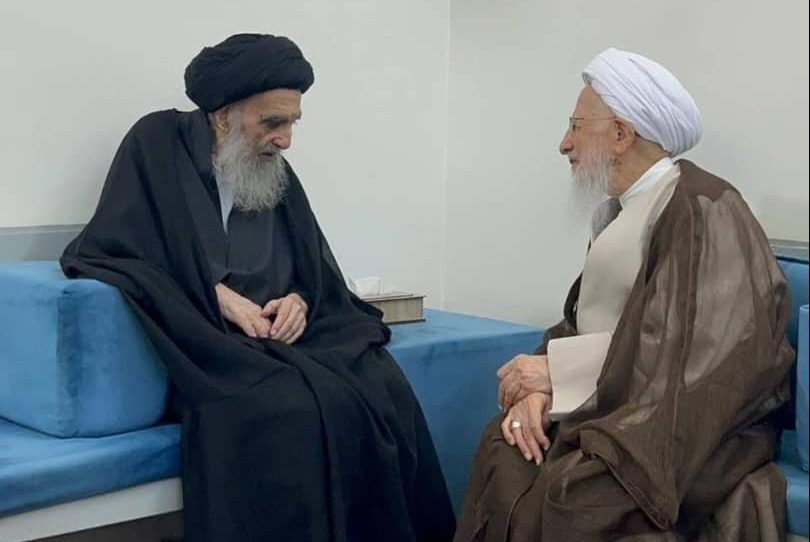
The Grand Ayatollah Sistani & the Grand Ayatollah Javadi Amoli Met in Najaf Ashraf
ethics

The Grand Ayatollah Sistani & the Grand Ayatollah Javadi Amoli Met in Najaf Ashraf

by mustafa askari
2025-05-19
Imam Ali (AS) Did Not Compromise on Unethical Politics
ethics

Imam Ali (AS) Did Not Compromise on Unethical Politics

by mustafa askari
2025-05-11
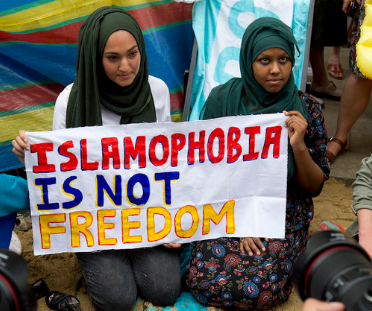
UK: Reform councillors face allegations of sharing social media Islamophobic content
ethics

UK: Reform councillors face allegations of sharing social media Islamophobic content

by mustafa askari
2025-05-11
How to be just with your children?
ethics

How to be just with your children?

by mustafa askari
2025-05-10
Next Post
Points to Ponder

Points to Ponder

Leave a Reply Cancel reply

Your email address will not be published. Required fields are marked *

Latest Post

10 facts about marriage in Islam

10 facts about marriage in Islam

2025-05-26
A Clear Message in Response to the Arrogance of Donald Trump

A Clear Message in Response to the Arrogance of Donald Trump

2025-05-24
The Grand Ayatollah Sistani & the Grand Ayatollah Javadi Amoli Met in Najaf Ashraf

The Grand Ayatollah Sistani & the Grand Ayatollah Javadi Amoli Met in Najaf Ashraf

2025-05-19
Imam Ali (AS) Did Not Compromise on Unethical Politics

Imam Ali (AS) Did Not Compromise on Unethical Politics

2025-05-11
UK: Reform councillors face allegations of sharing social media Islamophobic content

UK: Reform councillors face allegations of sharing social media Islamophobic content

2025-05-11
How to be just with your children?

How to be just with your children?

2025-05-10
Load More

Browse by Tags

Ahl al-Bayt (A.S.) Ahlul Bayt Al-Mahdi (AS) Allah Ashura Ayatollah Sobhani Ethics faith Fatima fiqh ghadir God History Holy Prophet Imam 'Ali Imam Ali (A.S.) Imam Husain Imams infallibles Islam Islamic Laws Islamic rules Jurisprudence Karbala Martyrdom morality Muhammad Nahj al Balaghah prayer prophet Quran Ramadan Reborn Salat Sayed Moustafa Qazwini shaistudies shia Shia Beliefs Shia Imams Shia Islam Shia Studie's World Assembly shiastudies Sin the differences between Shi’a and Sunni the story of those who converted to Shia Islam

The World Assembly of Shiite Studies was established in 2003 (1382 AH) by a group of scholars from seminaries and universities. The purpose of founding this independent academic institution was to introduce the school of Shi‘ism and defend its legitimacy through education, research, translation and publication, communications, and Islamic promotion. This center has continued its mission with strength and determination and envisions a bright future ahead.

Address: Qom, 45-Meter Ammar Yaser Boulevard, between Alley 4 and 6, World Assembly of Shiite Studies, Secretariat of Religious Scholars

Phone: +982537713773

Fax: +982537713774

All rights of the website are reserved and belong to the World Assembly of Shiite Studies.

Are you sure want to unlock this post?
Unlock left : 0
Are you sure want to cancel subscription?