• Home
  • Bank of Subjects of Articles
    • Bibliography
    • Characters
    • Culture and art
    • Economics
    • Educational sciences
    • ethics
    • Geography of Islamic world
    • History
    • Islamic jurisprudence and principles
    • Kalam (Islamic scholastic theology)
    • Mahdism
    • Philosophy and logic
    • Political science
    • pray and pilgrimage
    • Prophet and Ahl-al bayt
  • Islamic Teachings
  • quran
  • The Infallibles
  • Shia Beliefs
  • Morality
  • Events
    • Media Reflection
    • Muharram
    • News of Shia World
    • News of Worldly Assembly for Shia Studies
  • Home
  • Bank of Subjects of Articles
    • Bibliography
    • Characters
    • Culture and art
    • Economics
    • Educational sciences
    • ethics
    • Geography of Islamic world
    • History
    • Islamic jurisprudence and principles
    • Kalam (Islamic scholastic theology)
    • Mahdism
    • Philosophy and logic
    • Political science
    • pray and pilgrimage
    • Prophet and Ahl-al bayt
  • Islamic Teachings
  • quran
  • The Infallibles
  • Shia Beliefs
  • Morality
  • Events
    • Media Reflection
    • Muharram
    • News of Shia World
    • News of Worldly Assembly for Shia Studies
Home Bank of Subjects of Articles ethics

Love; Basis of Link Between God, Worshippers

by mustafa askari
2023-05-15
in ethics
0
Love; Basis of Link Between God, Worshippers
0
SHARES
28
VIEWS
Share on FacebookShare on Twitter
According to the teachings of Hazrat Ebrahim, the relationship between worshippers and God should be based on love more than anything else.


This is according to Ayatollah Seyyed Mostafa Mohaghegh Damad who made the remarks in a session dedicated to the interpretation of Surah Ash-Shu’ara. Here is a summary of what he said:

Hazrat Ibrahim challenged his people who worshiped idols. He asked them: do your gods hear you when you call them? If they do, why don’t they answer you and help you? If you sin, can they punish you? Their answer showed that they had not thought deeply about their faith. “They replied: ‘No, but we found our fathers doing so.’” (Surah Ash-Shu’ara, verse 74)

However, worship is not a matter of imitation. It is a matter of choice and reflection. One should choose one’s god based on reason and evidence.

Then the prophet told them about their mistake, noting that there should be love between god and worshipper: “people whom He loves and who love Him.” (Surah Al-Ma’idah, verse 5)

He then described God in simple terms that anyone could understand. He said God has these qualities that none of your idols have. First, he created me: “who created me, it is He who guides me,” (Surah Ash-Shu’ara, verse 78)

I did not exist before and he brought me into being. Who else can do that? He also guides me on the right path. He has set a purpose for me and He shows me the way to fulfill it. Can your idols guide you? No, they cannot.

Second, he feeds me: “and He gives me to eat and drink.” (Surah Ash-Shu’ara, verse 79) I may use my hand to eat and drink, but who provides me with food and water? Who makes the crops grow and the rainfall?

Third, “who, when I am sick, heals me.” (Surah Ash-Shu’ara, verse 80) I may use medicine and doctors, but who cures me? Who gives health and life?

Fourth, “who makes me to die and then revives me.” (Surah Ash-Shu’ara, verse 81) Who has power over death and resurrection? Can your idols do that? No, they cannot.

Fifth, He forgives me when I repent. I make mistakes, but I ask Him to pardon me and He accepts my repentance as He is merciful and forgiving: “and whom I am eager shall forgive me my sins on the Day of Recompense.” (Surah Ash-Shu’ara, verse 82)

Ibrahim then prayed to God and taught us how to pray. He said worshippers should first praise God and mentioned his attributes. Ibrahim’s first request from God is this: “My Lord, give me judgment, and join me with the righteous.” (Surah Ash-Shu’ara, verse 83)

He asks God to present him judgment and wisdom. This is a divine wisdom that is different from those acquired through research and studies.

source: iqna
 

Tags: Ahl al-Bayt (A.S.)Ahlul BaytAllahEthicsImam 'AlishaistudiesShia Studie's World Assembly
Previous Post

Shia doctrine: Does the Imam need to be just?

Next Post

All NewsFeaturedMiddle EastOther NewsOther Religions Ayatollah Arafi in a meeting with Patriarch of ACOE: Qom seminary believes in constructive Interfaith dialogue

mustafa askari

Related Posts

10 facts about marriage in Islam
ethics

10 facts about marriage in Islam

by mustafa askari
2025-05-26
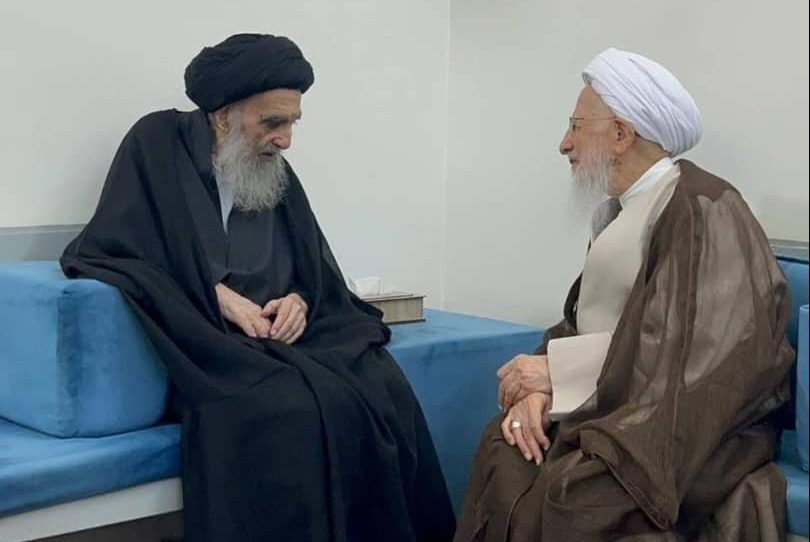
The Grand Ayatollah Sistani & the Grand Ayatollah Javadi Amoli Met in Najaf Ashraf
ethics

The Grand Ayatollah Sistani & the Grand Ayatollah Javadi Amoli Met in Najaf Ashraf

by mustafa askari
2025-05-19
Imam Ali (AS) Did Not Compromise on Unethical Politics
ethics

Imam Ali (AS) Did Not Compromise on Unethical Politics

by mustafa askari
2025-05-11
UK: Reform councillors face allegations of sharing social media Islamophobic content
ethics

UK: Reform councillors face allegations of sharing social media Islamophobic content

by mustafa askari
2025-05-11
How to be just with your children?
ethics

How to be just with your children?

by mustafa askari
2025-05-10
Next Post
All NewsFeaturedMiddle EastOther NewsOther Religions Ayatollah Arafi in a meeting with Patriarch of ACOE: Qom seminary believes in constructive Interfaith dialogue

All NewsFeaturedMiddle EastOther NewsOther Religions Ayatollah Arafi in a meeting with Patriarch of ACOE: Qom seminary believes in constructive Interfaith dialogue

Leave a Reply Cancel reply

Your email address will not be published. Required fields are marked *

Latest Post

10 facts about marriage in Islam

10 facts about marriage in Islam

2025-05-26
A Clear Message in Response to the Arrogance of Donald Trump

A Clear Message in Response to the Arrogance of Donald Trump

2025-05-24
The Grand Ayatollah Sistani & the Grand Ayatollah Javadi Amoli Met in Najaf Ashraf

The Grand Ayatollah Sistani & the Grand Ayatollah Javadi Amoli Met in Najaf Ashraf

2025-05-19
Imam Ali (AS) Did Not Compromise on Unethical Politics

Imam Ali (AS) Did Not Compromise on Unethical Politics

2025-05-11
UK: Reform councillors face allegations of sharing social media Islamophobic content

UK: Reform councillors face allegations of sharing social media Islamophobic content

2025-05-11
How to be just with your children?

How to be just with your children?

2025-05-10
Load More

Browse by Tags

Ahl al-Bayt (A.S.) Ahlul Bayt Al-Mahdi (AS) Allah Ashura Ayatollah Sobhani Ethics faith Fatima fiqh ghadir God History Holy Prophet Imam 'Ali Imam Ali (A.S.) Imam Husain Imams infallibles Islam Islamic Laws Islamic rules Jurisprudence Karbala Martyrdom morality Muhammad Nahj al Balaghah prayer prophet Quran Ramadan Reborn Salat Sayed Moustafa Qazwini shaistudies shia Shia Beliefs Shia Imams Shia Islam Shia Studie's World Assembly shiastudies Sin the differences between Shi’a and Sunni the story of those who converted to Shia Islam

The World Assembly of Shiite Studies was established in 2003 (1382 AH) by a group of scholars from seminaries and universities. The purpose of founding this independent academic institution was to introduce the school of Shi‘ism and defend its legitimacy through education, research, translation and publication, communications, and Islamic promotion. This center has continued its mission with strength and determination and envisions a bright future ahead.

Address: Qom, 45-Meter Ammar Yaser Boulevard, between Alley 4 and 6, World Assembly of Shiite Studies, Secretariat of Religious Scholars

Phone: +982537713773

Fax: +982537713774

All rights of the website are reserved and belong to the World Assembly of Shiite Studies.

Are you sure want to unlock this post?
Unlock left : 0
Are you sure want to cancel subscription?