• Home
  • Bank of Subjects of Articles
    • Bibliography
    • Characters
    • Culture and art
    • Economics
    • Educational sciences
    • ethics
    • Geography of Islamic world
    • History
    • Islamic jurisprudence and principles
    • Kalam (Islamic scholastic theology)
    • Mahdism
    • Philosophy and logic
    • Political science
    • pray and pilgrimage
    • Prophet and Ahl-al bayt
  • Islamic Teachings
  • quran
  • The Infallibles
  • Shia Beliefs
  • Morality
  • Events
    • Media Reflection
    • Muharram
    • News of Shia World
    • News of Worldly Assembly for Shia Studies
  • Home
  • Bank of Subjects of Articles
    • Bibliography
    • Characters
    • Culture and art
    • Economics
    • Educational sciences
    • ethics
    • Geography of Islamic world
    • History
    • Islamic jurisprudence and principles
    • Kalam (Islamic scholastic theology)
    • Mahdism
    • Philosophy and logic
    • Political science
    • pray and pilgrimage
    • Prophet and Ahl-al bayt
  • Islamic Teachings
  • quran
  • The Infallibles
  • Shia Beliefs
  • Morality
  • Events
    • Media Reflection
    • Muharram
    • News of Shia World
    • News of Worldly Assembly for Shia Studies
Home Islamic Teachings

Laylat al-Qadr: The Epitome of Resistance

by mustafa askari
2024-12-10
in Islamic Teachings
0
Laylat al-Qadr: The Epitome of Resistance
0
SHARES
37
VIEWS
Share on FacebookShare on Twitter

Preserving hope for the return of Imam al-Mahdi (AJ), the promised savior, is central to Shia Islam. While the concept of a messianic figure resonates across Abrahamic faiths, and firmly finds traditional and rational bases inside the shared heritage of all Muslim schools, the Shia understanding of this anticipation is unique. What distinguishes the Shia perspective? How does Shia identity shape the way believers await the Imam’s return? In his book The Sun of the Occident, the renowned scholar Allamah Muhammad-Reza Hakimi argues that this expectation is not a passive resignation, but rather a call to active resistance. The following excerpt, translated by Shafaqna, illuminates Hakimi’s view on the inherent link between waiting for the Mahdi and the imperative to resist injustice.

Laylat al-Qadr: The Epitome of Resistance

Resistance against oppression, tyranny, and the perpetrators of these acts, within the realm of believers – as previously mentioned – is both an article of faith and a fundamental duty. Rejecting the dominion of tyrants (taghut) is essential for the establishment of God’s rule and constitutes a cornerstone of practical monotheism (tawhid amali). This is why the resounding call to action, “Be the enemy of the oppressor and the ally of the oppressed,” perpetually echoes in the hearts and minds of the faithful.

We briefly explored Surat al-Qadr, its profound meanings, and its tangible connection to the station of supreme authority (wilaya kubra). It is profoundly insightful and compelling to note that Imam Jafar al-Sadiq (AS), in elucidating the political philosophy of Islam and the importance of God’s sovereignty, offers the following interpretation of Laylat al-Qadr:

لیله من امام عادل، خیر من الف شهر، ملک بنی امیه[1]

“A single night under the just rule of a righteous leader surpasses a thousand months under the tyranny of oppressors like the Umayyads.”

Thus, within the Shia Islamic worldview, a Muslim cannot remain apathetic towards matters of governance, blindly pledging allegiance to any ruling power. Because the Shi‘i school of thought is fundamentally predicated on the governance of the infallible and just, coupled with resistance against oppressive rule, a defining characteristic of the Shi‘i community during periods of unjust or tyrannical rule is its inherent embodiment of resistance, not submission. The foremost exemplar and inspiring teacher of this embodied resistance is the venerable lady, Faṭima al-Zahra (AS), the great Ṣiddiqa (SA).

Note:

[1] Tafsīr al-Burhān, vol. 4, p. 487.

Part of essay by the Late Allamah Muhammad-Reza Hakimi, Waiting for Imam al-Mahdi (AJ): Resistance, Not Submission 

www.shafaqna

Tags: Ahl al-Bayt (A.S.)EthicsImam 'AliIslammoralityShia Studie's World Assembly
Previous Post

Condolence on the Death of Fatima

Next Post

Significance of Month of Rajab

mustafa askari

Related Posts

10 facts about marriage in Islam
ethics

10 facts about marriage in Islam

by mustafa askari
2025-05-26
A Clear Message in Response to the Arrogance of Donald Trump
Islamic Teachings

A Clear Message in Response to the Arrogance of Donald Trump

by mustafa askari
2025-05-24
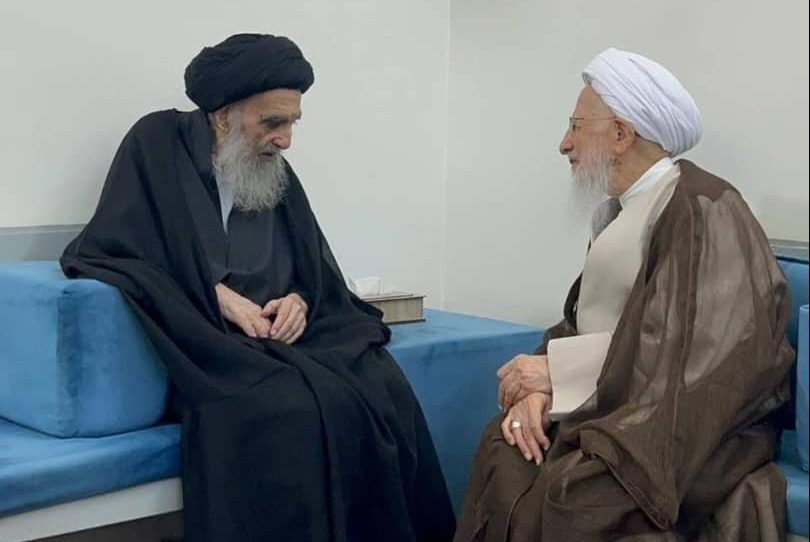
The Grand Ayatollah Sistani & the Grand Ayatollah Javadi Amoli Met in Najaf Ashraf
ethics

The Grand Ayatollah Sistani & the Grand Ayatollah Javadi Amoli Met in Najaf Ashraf

by mustafa askari
2025-05-19
Book of Deeds Will Be Given to Us on Resurrection Day
ethics

Book of Deeds Will Be Given to Us on Resurrection Day

by mustafa askari
2024-11-23
To which Party do you Belong
Islamic Teachings

To which Party do you Belong

by mustafa askari
2024-11-20
Next Post
Significance of Month of Rajab

Significance of Month of Rajab

Leave a Reply Cancel reply

Your email address will not be published. Required fields are marked *

Latest Post

10 facts about marriage in Islam

10 facts about marriage in Islam

2025-05-26
A Clear Message in Response to the Arrogance of Donald Trump

A Clear Message in Response to the Arrogance of Donald Trump

2025-05-24
The Grand Ayatollah Sistani & the Grand Ayatollah Javadi Amoli Met in Najaf Ashraf

The Grand Ayatollah Sistani & the Grand Ayatollah Javadi Amoli Met in Najaf Ashraf

2025-05-19
Imam Ali (AS) Did Not Compromise on Unethical Politics

Imam Ali (AS) Did Not Compromise on Unethical Politics

2025-05-11
UK: Reform councillors face allegations of sharing social media Islamophobic content

UK: Reform councillors face allegations of sharing social media Islamophobic content

2025-05-11
How to be just with your children?

How to be just with your children?

2025-05-10
Load More

Browse by Tags

Ahl al-Bayt (A.S.) Ahlul Bayt Al-Mahdi (AS) Allah Ashura Ayatollah Sobhani Ethics faith Fatima fiqh ghadir God History Holy Prophet Imam 'Ali Imam Ali (A.S.) Imam Husain Imams infallibles Islam Islamic Laws Islamic rules Jurisprudence Karbala Martyrdom morality Muhammad Nahj al Balaghah prayer prophet Quran Ramadan Reborn Salat Sayed Moustafa Qazwini shaistudies shia Shia Beliefs Shia Imams Shia Islam Shia Studie's World Assembly shiastudies Sin the differences between Shi’a and Sunni the story of those who converted to Shia Islam

The World Assembly of Shiite Studies was established in 2003 (1382 AH) by a group of scholars from seminaries and universities. The purpose of founding this independent academic institution was to introduce the school of Shi‘ism and defend its legitimacy through education, research, translation and publication, communications, and Islamic promotion. This center has continued its mission with strength and determination and envisions a bright future ahead.

Address: Qom, 45-Meter Ammar Yaser Boulevard, between Alley 4 and 6, World Assembly of Shiite Studies, Secretariat of Religious Scholars

Phone: +982537713773

Fax: +982537713774

All rights of the website are reserved and belong to the World Assembly of Shiite Studies.

Are you sure want to unlock this post?
Unlock left : 0
Are you sure want to cancel subscription?