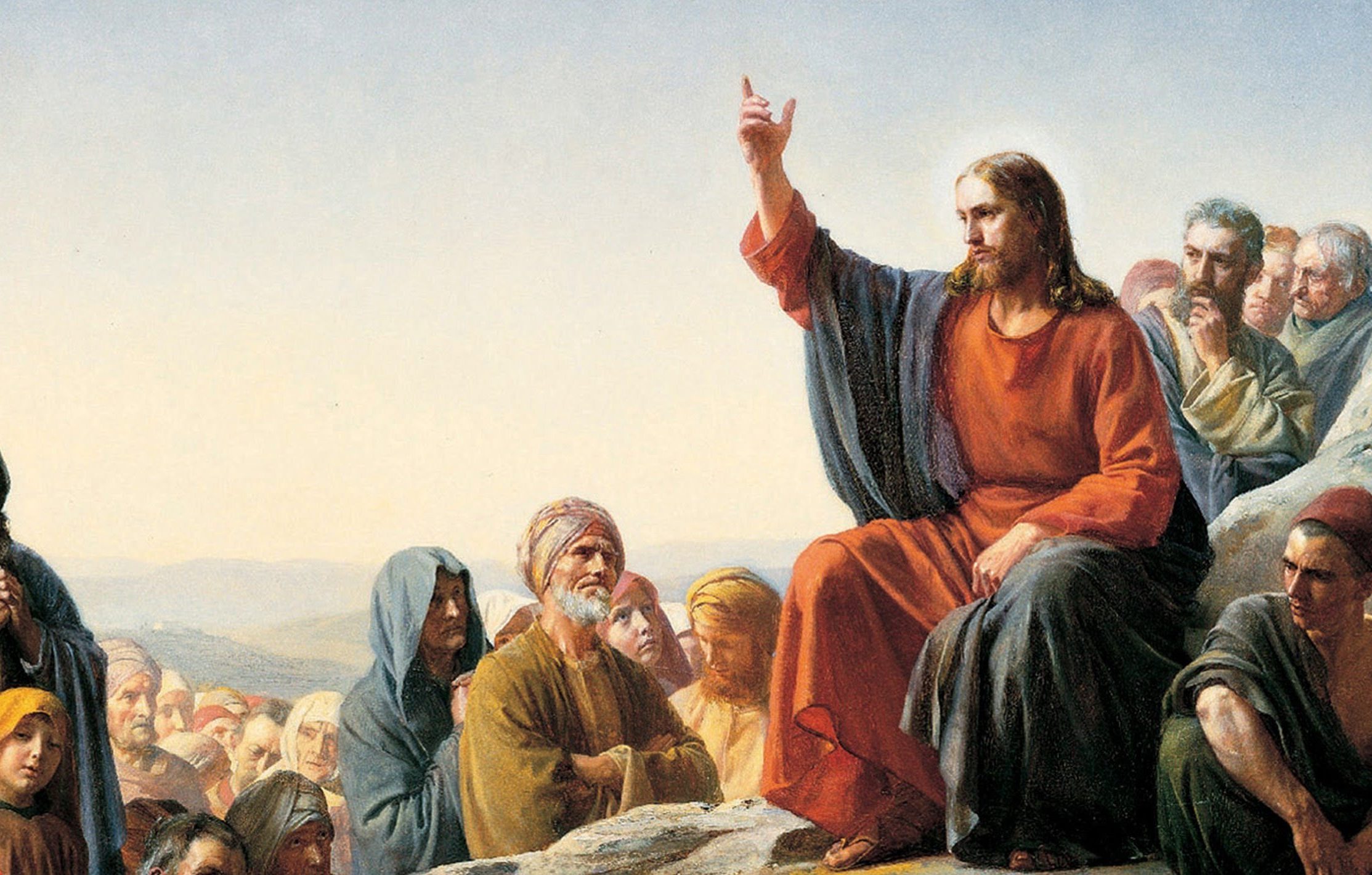
To Christians, Easter is a remembrance of the resurrection of Jesus Christ (peace be upon him) after his execution by crucifixion. The most commonly held date for the execution is Friday, April 7, 30 CE, which would put the date associated with his resurrection as April 9. But, even the four gospels in the New Testament do not agree entirely on the events of the crucifixion and resurrection and their timings, with the Gospel of John account differing significantly from the other three in many respects.
The date of Easter observance was set by the Council of Nicaea in 325 CE as the first Sunday after the first Paschal full moon after March 20. March 20 was the date of the Spring Equinox in 325 CE. Orthodox Christians modify this rule slightly compared to other Christians by using the Julian instead of the Gregorian calendar, and using the Nicaea calculation only if the date comes after Passover (14 Nisan on the Jewish calendar). The date of Jesus\’s execution is believed to have occurred after Passover, which Christians consider as a symbol of the blood sacrifice of Jesus. Passover is the observance of an event mentioned in Exodus, when God visited plagues on Egypt, including the killing of firstborn sons. Hebrew followers of Moses (peace be upon him) who marked their doorsteps with lamb\’s blood were passed-over for this plague.
There are a few opinions about the origin of the term “Easter”, most of which address ancient pagan religious observances. Easter is said to come from the name of the goddess of fertility IshtarEostre/Austron. Many modern Easter practices – both secular and religious – such as eating hot cross buns, the symbols of rabbits and eggs, Easter lilies, sunrise services, and Easter candles, all have origins in the worship of Ishtar in the season of the Spring Equinox. Ishtar is said to be the Queen Semiramis, the wife of Nimrud, great-grandson of Prophet Noah (peace be upon him).
Nimrud – whose name means “the rebel”, according to the Bible and legend from many other sources, was a disbelieving powerful tyrant, head of an occult mystery religion, and found of many great but corrupt cities like Babel and Nineveh. When he died, his wife deified him as the Sun-God later known by such names as Baal and Molech. She later had an illegitimate son, Tammuz, whom she claimed was the resurrected Nimrud supernaturally conceived.
Since pagans associated this resurrection story with the Ishtar festivals around the Spring Equinox, and Spring is the season in which the execution and resurrection of Jesus (as) are believed to have occurred, the two resurrection observances became the modern Easter.
Easter is largely considered the most important observance on the Christian calendar today, because it is associated with the belief in Jesus\’s role as savior. Generally speaking, Christians believe that no human being can live a good enough life to warrant entry into God\’s presence in heaven. Further, God is Just, so every sin must be paid for or punished. In order that humans have access to Heaven and aren\’t all doomed to Hell by their sinful natures, through His Mercy, God wills and accepts the death of Jesus, the only sinless person ever to live (a proof of his divine nature), as payment for the sins of all those, and only those, who believe and acknowledge this “Gospel Truth”. Therefore, they celebrate his rising as the completion and acceptance by God of this sacrifice, and thus as the guarantee of their after-lives in Heaven rather than Hell.
While Christians generally cite the divinity of Jesus as key to the way he saves, Muslims consider deification of Jesus as an obstacle to knowing God and His true salvation good news. Muslims, like Christians, regard Jesus as a savior, but not through a redemptive sacrifice. Islam rejects a few essential notions in the Christian salvation concept:
1. In Islamic canon, all prophets, and not just Jesus, lived sinless lives, and this trait is an indication of a messenger or guide of God, but not of divinity. The purpose of all these messengers and guides is to demonstrate and teach how to live a good life via example and delivery of God\’s guidance.
2. God can forgive sins by simply doing so, and has not chosen to constrict His forgiveness to the method of a blood sacrifice of a sinless or divine person. Salvation is in essence a meeting between a human\’s approaching God by trying to live a sinless and ideal life according to God\’s guidance, and the Love and Mercy of God turning to His Creation with forgiveness. No one is guaranteed salvation by claiming a certain set of beliefs, but people’s actions, beliefs and intentions will all be weighed with both Justice and Mercy.
3. According to the Qur’an and other Islamic sources, Jesus was not crucified and did not die for anyone\’s sins. He has not died yet, and was raised alive and will return.
On these latter points of being raised alive and returning, as well as many other awesome aspects of Jesus\’ nature, such as virgin birth and performance of miracles, Muslims and Christians tend to agree. Thus, the primary differences between Muslims and Christians about the historical Jesus are only his divinity and his death – but these differences contribute to considerably different conclusions about salvation.
Christians claim Jesus as their savior, and Muslims do too. In that sense, Muslims are Christians. But in the same sense, Muslims could also be called Ibrahimians, Musaians, Nuhians, and even the politically incorrect Muhammadans. Muslims claim all the sinless prophets and guides as saviors, through their deliverance of God\’s message to mankind, as well as perhaps through intercession. Therefore, applying the name of any one of them alone is incomplete as a reference to Muslims. The universal message that all the prophets delivered and which instructs mankind about knowing and approaching God, distinguishing truth from falsehood, and distinguishing right from wrong actions, is what Muslims consider as the “Gospel” that Jesus delivered and that saves.
The Qur\’an makes examples of Jesus and other prophets extensively. We learn and apply the teachings from all of them and not Prophet Muhammad (peace be upon him and his progeny) alone. We are not limited to the Bible or Qur\’an for knowing and following Jesus. Shia hadith collections are another source on Jesus worthy of study for Muslims and Christians alike. Some of the sayings in Shia sources attributed to or about Jesus are also contained in the Gospels of the Christians, while others may be only from the Ahlul Bayt (peace be upon them). Hajj Muhammad Legenhausen, a contributor to Islamic Insights, translated the most comprehensive collection available in English, Jesus through the Qur\’an and Shi’ite Narrations. In the Easter season, Muslims and Christians can expand their understandings of Jesus and better apply his universal message by delving into more than just the Qur’an or the New Testament for his teachings.