• Home
  • Bank of Subjects of Articles
    • Bibliography
    • Characters
    • Culture and art
    • Economics
    • Educational sciences
    • ethics
    • Geography of Islamic world
    • History
    • Islamic jurisprudence and principles
    • Kalam (Islamic scholastic theology)
    • Mahdism
    • Philosophy and logic
    • Political science
    • pray and pilgrimage
    • Prophet and Ahl-al bayt
  • Islamic Teachings
  • quran
  • The Infallibles
  • Shia Beliefs
  • Morality
  • Events
    • Media Reflection
    • Muharram
    • News of Shia World
    • News of Worldly Assembly for Shia Studies
  • Home
  • Bank of Subjects of Articles
    • Bibliography
    • Characters
    • Culture and art
    • Economics
    • Educational sciences
    • ethics
    • Geography of Islamic world
    • History
    • Islamic jurisprudence and principles
    • Kalam (Islamic scholastic theology)
    • Mahdism
    • Philosophy and logic
    • Political science
    • pray and pilgrimage
    • Prophet and Ahl-al bayt
  • Islamic Teachings
  • quran
  • The Infallibles
  • Shia Beliefs
  • Morality
  • Events
    • Media Reflection
    • Muharram
    • News of Shia World
    • News of Worldly Assembly for Shia Studies
Home Bank of Subjects of Articles

Sir Issac Newton on the Bible

by شهاب الدین مجتهدی
2019-12-31
in Bank of Subjects of Articles, History
0
Sir Issac Newton on the Bible
0
SHARES
50
VIEWS
Share on FacebookShare on Twitter

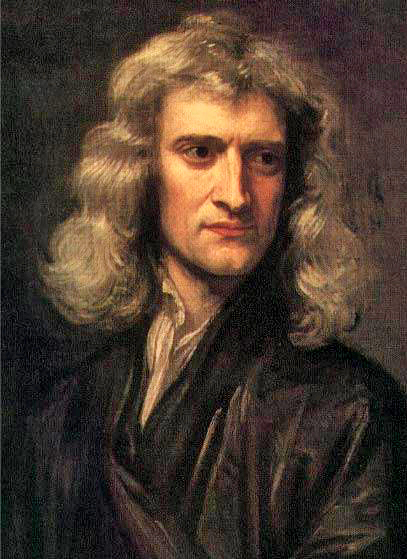
In 1690, Sir Isaac Newton (died 1727) wrote a manuscript on the corruption of the text of the New Testament concerning I John 5:7 and Timothy 3:16. It was entitled, “A Historical Account of Two Notable Corruptions of Scripture.” Due to the prevailing environment against criticism, he felt it unwise to profess his beliefs openly and felt that printing it in England would be too dangerous. Newton sent a copy of this manuscript to John Locke requesting him to have it translated into French for publication in France. Two years later, Newton was informed of an attempt to publish a Latin translation of it anonymously. However, Newton did not approve of its availability in Latin and persuaded Locke to take steps to prevent this publication.
Below are excerpts from “A Historical Account of Two Notable Corruptions of Scripture”.

Newton on I John 5:7
Newton states that this verse appeared for the first time in the third edition of Erasmus’s New Testament.
“When they got the Trinity; into his edition they threw by their manuscript, if they had one, as an almanac out of date. And can such shuffling dealings satisfy considering men?….It is rather a danger in religion than an advantage to make it now lean on a broken reed.
“In all the vehement universal and lasting controversy about the Trinity in Jerome\’s time and both before and long enough after it, this text of the “three in heaven” was never once thought of. It is now in everybody’s mouth and accounted the main text for the business and would assuredly have been so too with them, had it been in their books.
“Let them make good sense of it who are able. For my part, I can make none. If it be said that we are not to determine what is Scripture what not by our private judgments, I confess it in places not controverted, but in disputed places I love to take up with what I can best understand. It is the temper of the hot and superstitious art of mankind in matters of religion ever to be fond of mysteries, and for that reason to like best what they understand least. Such men may use the Apostle John as they please, but I have that honour for him as to believe that he wrote good sense and therefore take that to be his which is the best.”

Newton on I Timothy 3:16
“In all the times of the hot and lasting Arian controversy it never came into play . . . they that read “God manifested in the flesh” think it one of the most obvious and pertinent texts for the business.”
“The word Deity imports exercise of dominion over subordinate beings and the word God most frequently signifies Lord. Every lord is not God. The exercise of dominion in a spiritual being constitutes a God. If that dominion be real that being is the real God; if it be fictitious, a false God; if it be supreme, a supreme God.”
Newton also wrote a discussion on two other texts that Athanasius had attempted to corrupt. This work has not been preserved. He believed that not all the books of the Scriptures have the same authority.

Reference
A. Wallace, “Anti-Trinitarian Biographies,” Vol. III, 1850.

Previous Post

Sahih Muslim and Sahih Bukhari and Traditions about the Mahdi AS

Next Post

Christian Concept of Sins

شهاب الدین مجتهدی

Related Posts

10 facts about marriage in Islam
ethics

10 facts about marriage in Islam

by mustafa askari
2025-05-26
The Grand Ayatollah Sistani & the Grand Ayatollah Javadi Amoli Met in Najaf Ashraf
ethics

The Grand Ayatollah Sistani & the Grand Ayatollah Javadi Amoli Met in Najaf Ashraf

by mustafa askari
2025-05-19
Imam Ali (AS) Did Not Compromise on Unethical Politics
ethics

Imam Ali (AS) Did Not Compromise on Unethical Politics

by mustafa askari
2025-05-11
UK: Reform councillors face allegations of sharing social media Islamophobic content
ethics

UK: Reform councillors face allegations of sharing social media Islamophobic content

by mustafa askari
2025-05-11
How to be just with your children?
ethics

How to be just with your children?

by mustafa askari
2025-05-10
Next Post
Christian Concept of Sins

Christian Concept of Sins

Leave a Reply Cancel reply

Your email address will not be published. Required fields are marked *

Latest Post

10 facts about marriage in Islam

10 facts about marriage in Islam

2025-05-26
A Clear Message in Response to the Arrogance of Donald Trump

A Clear Message in Response to the Arrogance of Donald Trump

2025-05-24
The Grand Ayatollah Sistani & the Grand Ayatollah Javadi Amoli Met in Najaf Ashraf

The Grand Ayatollah Sistani & the Grand Ayatollah Javadi Amoli Met in Najaf Ashraf

2025-05-19
Imam Ali (AS) Did Not Compromise on Unethical Politics

Imam Ali (AS) Did Not Compromise on Unethical Politics

2025-05-11
UK: Reform councillors face allegations of sharing social media Islamophobic content

UK: Reform councillors face allegations of sharing social media Islamophobic content

2025-05-11
How to be just with your children?

How to be just with your children?

2025-05-10
Load More

Browse by Tags

Ahl al-Bayt (A.S.) Ahlul Bayt Al-Mahdi (AS) Allah Ashura Ayatollah Sobhani Ethics faith Fatima fiqh ghadir God History Holy Prophet Imam 'Ali Imam Ali (A.S.) Imam Husain Imams infallibles Islam Islamic Laws Islamic rules Jurisprudence Karbala Martyrdom morality Muhammad Nahj al Balaghah prayer prophet Quran Ramadan Reborn Salat Sayed Moustafa Qazwini shaistudies shia Shia Beliefs Shia Imams Shia Islam Shia Studie's World Assembly shiastudies Sin the differences between Shi’a and Sunni the story of those who converted to Shia Islam

The World Assembly of Shiite Studies was established in 2003 (1382 AH) by a group of scholars from seminaries and universities. The purpose of founding this independent academic institution was to introduce the school of Shi‘ism and defend its legitimacy through education, research, translation and publication, communications, and Islamic promotion. This center has continued its mission with strength and determination and envisions a bright future ahead.

Address: Qom, 45-Meter Ammar Yaser Boulevard, between Alley 4 and 6, World Assembly of Shiite Studies, Secretariat of Religious Scholars

Phone: +982537713773

Fax: +982537713774

All rights of the website are reserved and belong to the World Assembly of Shiite Studies.

Are you sure want to unlock this post?
Unlock left : 0
Are you sure want to cancel subscription?