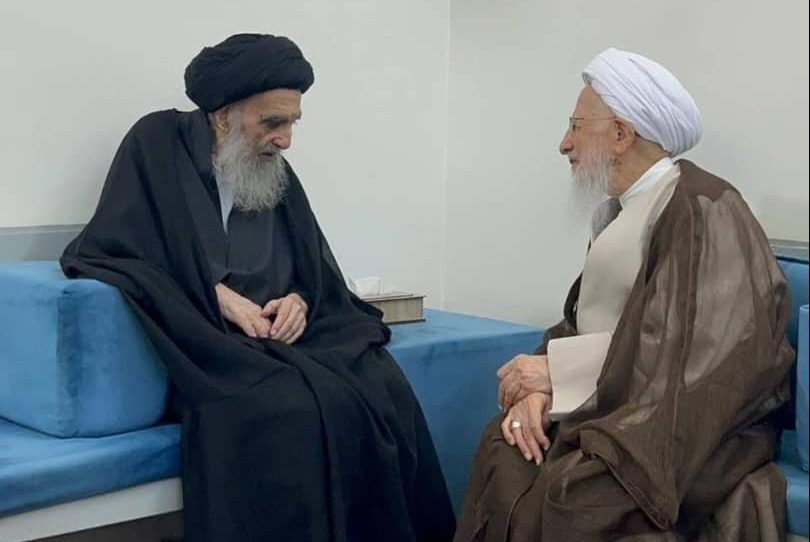
The Imam’s Bonds of Kinship
Allah, the Wise, has said:
فَهَلْ عَسَيْـتُمْ إِنْ تَوَلَّيْـتُمْ أَنْ تُفْسِدُوا فِي الأَرْضِ وَ تَقَطَّعُوا أََرْحَامَکُمْ
”But if you held command, you were sure to make mischief in the land and cut off the ties of kinship.”[111]
Imam Baqir (a.s) said:
صِلَةُ الأََرْحَامِ تَطِيبُ النَّفْسَ وَ تَزِيدُ فِي الرِّزقِ
.
“Establishing the bonds of kinship freshens the soul and increases the sustenance.”[112]
Short Explanation
The term “rahim” is used to denote those, who are one’s relatives by birth, and it is forbidden to severe one’s relationship with them.
Those, who associate with their relatives in a goodly manner and seek to help them, Allah shall lengthen their lives, grant them an increase in their livelihood and subject them to an easy reckoning on the Day of Judgment.
On the other hand those, who distance themselves from their relatives and seek to trouble them shall have to face detrimental consequences for such acts of theirs – destruction of their faith, ruining of their hereafter, lessening of their life-span, diminution in sustenance and, the worst of all, the termination in the bestowal of Divine grace and favour upon them. Allah has mentioned in the ‘Hadith-e-Qudsi’: “I am the Rahman. One, who severs his relation with his relatives, I shall sever My relation with him.”[113]
1 – Plague
Once, one of the companions of Imam Sadiq (a.s) said to him (a.s): “My brothers and cousins have made life very difficult for me in my house, to the extent that I lead my life in only one room. If I were to even attempt to complain to them or the governor, they shall take away all the wealth and property that I possess.”
The Imam (a.s) said: “Be patient for after adversity you shall be in ease and comfort.”
Later, narrating the incident, the man said: ”(Paying heed to the Imam’s counsel) I decided against initiating legal proceedings against them. Before long plague struck the region in the year 131 ah and all those relatives, who used to trouble him died as a result of it.”
After a period he presented himself before the Imam (a.s), who inquired: “How are your relatives?”
The man replied: “All of them are dead!”
The Imam (a.s) said: “They died as a result of the inconveniences that they had subjected you to; a punishment for their deeds (for severing the bonds of relationship) with respect to you – their relative.”
The Imam (a.s) then asked: “Did you want them to stay alive and inconvenience you?” Whereupon the man replied: “By Allah! No.””[114]
2 – The Imam’s Bonds of Kinship
Hasan Ibn Ali, a cousin of Imam Sadiq (a.s), was a courageous, robust and physically powerful person such that he was referred to as the lance of the family of Abu Talib. Possessing a wide nose, he was popularly known as Hasan Aftas.
He was the standard-bearer in the uprising initiated by ‘Abdullah Mahdh (the grandson of Imam Hasan (a.s)) against Mansur Dawaniqi. His relations with Imam Sadiq (a.s) turned sour over the issue and he even went to the extent of attacking him (a.s) with a large knife with the intention of killing him (a.s).
Salimah, one of Imam’s (a.s) slave-girls, relates: “The Imam (a.s) was on his death-bed and I was at his bedside, nursing him, when he suddenly dropped into unconsciousness. As soon as he had regained his consciousness, he instructed me: ‘Give seventy dinars to Hasan Aftas and such and such sums to such and such individuals.’”
I said to him: “Should we give seventy dinars to the person, who had lunged at you with a knife and desired to kill you?”
He (a.s) said: “Do you not desire that I should be one of those about whom Allah says:
وَ الَّذِينَ يَصِلُونَ ما أَمَرَ اللَّهُ بِهِ أَنْ يُوصَلَ وَ يَخْشَوْنَ رَبَّهُمْ وَ يَخافُونَ سُوءَ الْحِسابِ وَ الَّذِينَ صَبَرُوا ابْتِغاءَ وَجْهِ رَبِّهِمْ وَ أَقامُوا الصَّلاةَ وَ أَنْفَقُوا مِمَّا رَزَقْناهُمْ سِرًّا وَ عَلانِيَةً وَ يَدْرَؤُنَ بِالْحَسَنَةِ السَّيِّئَةَ أُولئِكَ لَهُمْ عُقْبَى الدَّار
“And those who join that which Allah has bidden to be joined and have awe of their Lord and fear the evil reckoning. And those who are constant, seeking the pleasure of their Lord, and keep up prayer and spend (benevolently) out of what We have given them secretly and openly, and repel evil with good; as for those, they shall have the (happy) issue of the abode.”[115]
He (a.s) then continued: “Yes, O’ Salimah! Allah has created the Paradise and made it pure and fragrant such that its fragrance can be perceived at a distance of two thousand years – but this fragrance shall not reach the person, who has severed ties with his relatives, and one, who has been disowned by his parents.”[116]
3 – Abbas – The Noble Prophet’s Uncle
‘Abbas, the uncle of the Noble Prophet (s.a.w), was a person who exhibited great kindness towards his relatives and thus found himself to be an object of praise and commendation of the Noble Prophet (s.a.w), who lauded him by saying:
هَذاَ عَبَّاس بنُ عَبدِ الْمُطَّلِب اَجوَدُ قُرَيش کفًّا وَ اَوصَلُها رَحماً
“Abbas Ibn ‘Abdul Muttalib is the most generous and benevolent towards his relatives from amongst all the Quraish.”
During one of the battles, the Noble Prophet (s.a.w) ordered: “Whoever happens to encounter anyone from the Bani Hashim (during the battle) should not kill him, for the Bani Hashim have been made to participate in the battle under compulsion.”
During the battle of Badr a person by the name of Abu Yasir captured Abbas, who, not intending to resist the capture stood firm and unmoving like a staff. When the battle had concluded the Noble Prophet (s.a.w), for the sake of equity, did not exhibit any discrimination between Abbas and the other captives.
At night all the captives were tied by means of ropes and Abbas was seated near the tent of the Noble Prophet (s.a.w). The moans and groans of Abbas kept reaching his (s.a.w) ears as a result of which, he could not sleep till midnight and kept turning from one side to another.
One of the Muslims, who was near him (s.a.w), inquired: “O’ Prophet of Allah! Why do you not sleep?”
He (s.a.w) replied: “The moans of my uncle Abbas distress me and prevent me from sleeping.” A little later the moans subsided and could not be heard anymore. The Noble Prophet (s.a.w) inquired: “What has happened that I do not hear the moans of my uncle Abbas anymore.” The man said: “I have loosened the ropes that bound him.” Hearing this, he (s.a.w) instructed: ”(In that case) loosen the ropes of all the other captives too.”[117]
4 – Non-Observance of Silah Rahim & Death
Shoa’ib Aqarquqi narrates: “Imam Musa Ibn Jafar (a.s) said to me: “Tomorrow, a person by the name of Yaqub – an inhabitant of Maghreb – shall meet you and inquire about me; guide him to my house.”
I found the person performing the circumambulation (of the Kabah), and as I inquired about his health, I realized that he appeared to know me and so asked him: “How do you know me?” He said: “A person appeared to me in my dreams and said: “Meet Shoa’ib and ask him whatever you desire to know!” Upon waking up I inquired about you and the people pointed you to me.”
I found him to be an intelligent person and upon his request took him to the Imam’s (a.s) house. Reaching there, I sought permission to enter the house and the Imam (peace be upon granted) obliged.
As soon as the Imam’s (a.s) eyes fell upon him, he (a.s) said: ‘O’ Yaqub! You arrived here (Mecca) yesterday but on the way, at such and such a place, there ensued a quarrel between you and your brother – to the extent that both of you hurled Abuses and insults at each other. This is neither our conduct nor that of the religion of our forefathers. We do not approve of such a conduct from anybody; fear Allah, Who is One and has no partners. Very soon death shall cause a separation between both of you – a consequence of having broken the bond of kinship!’
He said: ‘May I be made your ransom! When am I going to die?’
The Imam (a.s) replied: ‘Verily, your end had neared too, but since you resolved your differences with your aunt and re-established your bonds of kinship at such and such place, your life has been increased by twenty years.’
A year later I met Yaqub during the season of Hajj and inquired after his health, whereupon he said: ‘On the return journey my brother died before he could reach home and was buried on the way.’”[118]
5 – The Painful Consequence of Breaking Family Ties
The intense slandering with respect to Imam Musa Ibn Jafar (a.s) that reached the ears of Haroon al-Rashid, the Abbasid caliph, provoked him to say: ‘Present before me someone from the descendants of Abu Talib so that I can become aware of his (a.s) activities.’
Haroon’s minister, Yahya Barmaki, and some others suggested the name of Ali Ibn Ismail – the Imam’s (a.s) nephew.
Upon Haroon’s orders, a letter was dispatched to him asking him to present himself before the Caliph in Baghdad. When the Imam (a.s) came to know of this, he called for him and questioned: “Where do you intend to go?”
Ali Ibn Ismail answered: “Baghdad.”
The Imam (a.s) inquired: “For what purpose?”
He replied: “I am burdened by great debts.”
The Imam (a.s) said: “I shall repay your debts and arrange for your expenses”, however Ali Ibn Ismail refused the offer and instead, said: “Advise me!”
The Imam (a.s) said: “I advise you that you do not associate yourself in shedding my blood and do not make my children fatherless.” Repeating this three times, he (a.s) presented him with three hundred dinars and four thousand dirhams.
Later, when Ismail had left, he (a.s) said to those around him: “His slandering and vilification shall contribute to my murder.”[119]
Arriving in Baghdad Ali Ibn Ismail went to Yahya Ibn Khalid Barmaki. That night Yahya said to him: “Tomorrow, in the presence of the Caliph, when you are questioned about Musa Ibn Jafar (a.s), you must say: ‘I have never witnessed two caliphs exercising authority at one time – you, in Baghdad and Musa Ibn Jafar (a.s), in Madinah. He is about to incite the people into rebelling against you!!’”
The next morning, arriving in the presence of the caliph, Ali Ibn Ismail maligned and slandered the Imam (a.s) as much as he could. In the course of his talks he even said that people from distant places brought money for him and armed him with weapons, and that he was taking the pledge of allegiance from the people and intended to establish a separate state and government.
Hearing this, Haroon appeared to have been jolted out of sleep; he dismissed him from his presence and sent a sum of four thousand dirhams (or twenty thousand dirhams according to another report) for him to the place where he had been staying.
When the money was brought before him, an intense pain rose up inside his throat and he died then and there – a consequence of having severed the bond of kinship with his uncle – Musa Ibn Jafar (a.s).
The bags of money were carried back to Haroon’s coffers while sorrow and regret was the only thing that Ismail carried to his grave.”[120]
Notes:
[111] Surat Muhammad (47), Verse 22
[112] Jami~ al-Sa~adat, vol. 2, pg. 260
[113] Ihya al-Qulub, pg. 127
[114] Shaytan, vol. 1, pg. 515; al-Kafi
[115] Suratul Ra~d (13), Verse 21-22
[116] Hikayat-ha-e-Shanidani, vol. 5, pg. 30; Al-Ghunyah of (Sheikh) Tusi, pg. 128
[117] Paighambar Wa Yaran, vol. 4, pg. 85; Tabaqat, vol. 4, pp. 2-7
[118] Muntahal A~mal, vol. 2, pg. 206
[119] Muntahal A~mal, vol. 2, pg. 213
[120] Jame~ al-Nurain, pg. 24