• Home
  • Bank of Subjects of Articles
    • Bibliography
    • Characters
    • Culture and art
    • Economics
    • Educational sciences
    • ethics
    • Geography of Islamic world
    • History
    • Islamic jurisprudence and principles
    • Kalam (Islamic scholastic theology)
    • Mahdism
    • Philosophy and logic
    • Political science
    • pray and pilgrimage
    • Prophet and Ahl-al bayt
  • Islamic Teachings
  • quran
  • The Infallibles
  • Shia Beliefs
  • Morality
  • Events
    • Media Reflection
    • Muharram
    • News of Shia World
    • News of Worldly Assembly for Shia Studies
  • Home
  • Bank of Subjects of Articles
    • Bibliography
    • Characters
    • Culture and art
    • Economics
    • Educational sciences
    • ethics
    • Geography of Islamic world
    • History
    • Islamic jurisprudence and principles
    • Kalam (Islamic scholastic theology)
    • Mahdism
    • Philosophy and logic
    • Political science
    • pray and pilgrimage
    • Prophet and Ahl-al bayt
  • Islamic Teachings
  • quran
  • The Infallibles
  • Shia Beliefs
  • Morality
  • Events
    • Media Reflection
    • Muharram
    • News of Shia World
    • News of Worldly Assembly for Shia Studies
Home ghadir

The First Explicit Appointment

by javad
2021-07-31
in ghadir, Islamic Teachings
0
0
SHARES
48
VIEWS
Share on FacebookShare on Twitter

The First Explicit Appointment

Adopted from the Book : “Shi’ism; Imamate and Wilayat” by : “Seyyed Muhammad Rizvi”

Islam began when the Prophet (PBUH) became 40 years old, Initially, the mission was kept a secret. Then three years after the advent of Islam, the Prophet (PBUH) was ordered to commence the open declaration of his message. This was the occasion when Almighty Allah revealed the verse “and warn thy nearest relations.” (26;214)

When this verse was revealed, the Prophet organized a feast which is known as “the Feast of the Clan” (Da’wat Dhil-Ashira). This is the first time that the Prophet (PBUH) openly and publicly called the relations to accept him as the Messenger and Prophet of Allah (SWT). It is also the same feast in which the Prophet (PBUH) declared Ali bin Abi Talib (AS) very openly, very clearly, and very explicitly as his successor and caliph. I will just summarize what the Prophet said: O’ Sons of Abdul-Muttalib! By Allah (SWT), I do not know of any person among the Arabs who has come to his people with better than what I have brought to you. I have brought to you the good of this world and the next, and I have been commanded by the Lord to call you unto him. Therefore, who amongst you will support me in this matter so that he may be my brother (Akhi), my successor (Wasiyyi) and my caliph (Khalifati)?

The Prophet (PBUH) used the word “my brother, my successor, my Caliph”. This is as explicit as it can get in the very first call to Islam! No one answered except Ali bin Abi Talib (AS) who was only around fifteen years old at that time. The Prophet (PBUH) called Ali (AS) closer to himself, patted his neck, and said; Verily this is my brother, my successor, and my caliph amongst you. Therefore, listen to him and obey.”1

This is very explicit because the audience understand the appointment of Ali very clearly. Some of them, including Abu Lahab, even joked with Abu Talib (AS) that your nephew, Muhammed (PBUH), has ordered you to listen to and obey your own son! At the least, this shows that the appointment was clear and explicit, not just implied. The greatest proof of the explicit nature of this appointment at the very early stage of Prophet Muhammad’s (PBUH) mission is the attempt by Sunni writers to conceal the words used by the Propeht (PBUH).

For example, the famous Muslim historian, Ibn Jarir At-Tabari (d. 310 AH.) has recorded this incident with the crucial words intact in his Ta’rikhu ‘I-Umam wa l-Muluk. The 1879 edition of his Ta’rikh, published in the Leiden (Netherlands) has the words; “… this is my brother, my successor and my caliph ….” But when it came to at Tabari’s Tafsir, while commenting on the verse 26:214 at-Tabari himself or the editors have changed the words as follows; “…. this is my brother, and so and so.’

All these attempts to delete the whole incident from the pages of history or change the crucial words “my successor and my caliph’ into so-and-so” clearly shows that those terms where were very explicit in supporting the appointment of Imam Ali (AS) as the successor of the Prophet (PBUH). If it had been otherwise, then there was no need on the part of our opponents to hide or change these words.

____________
1. For more on this event, see the chapter, “Self-Censorship in Muslim History”.

Tags: Ahl al-Bayt (A.S.)Imam 'AliImam Ali (A.S.)shaistudiesShia BeliefsShia Studie's World Assembly
Previous Post

Eid Al-Ghadeer

Next Post

Shia Paradigm of Islam: Prophets and Imams

javad

Related Posts

10 facts about marriage in Islam
ethics

10 facts about marriage in Islam

by mustafa askari
2025-05-26
A Clear Message in Response to the Arrogance of Donald Trump
Islamic Teachings

A Clear Message in Response to the Arrogance of Donald Trump

by mustafa askari
2025-05-24
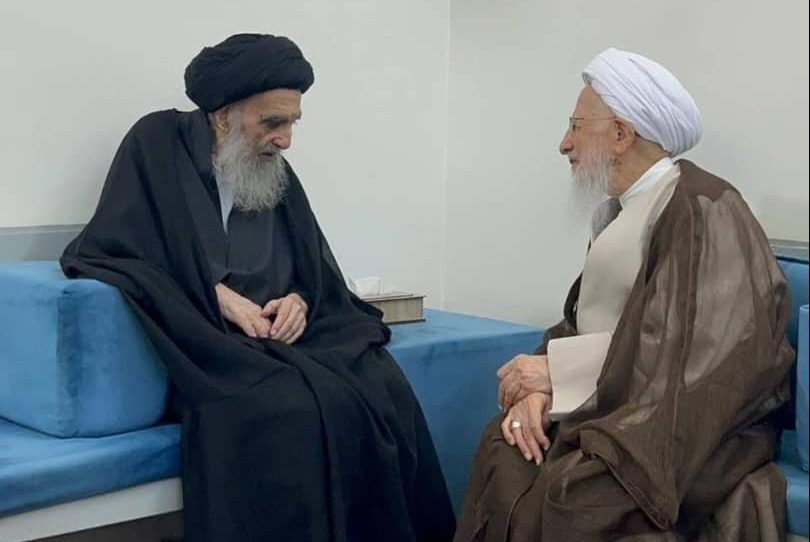
The Grand Ayatollah Sistani & the Grand Ayatollah Javadi Amoli Met in Najaf Ashraf
ethics

The Grand Ayatollah Sistani & the Grand Ayatollah Javadi Amoli Met in Najaf Ashraf

by mustafa askari
2025-05-19
Laylat al-Qadr: The Epitome of Resistance
Islamic Teachings

Laylat al-Qadr: The Epitome of Resistance

by mustafa askari
2024-12-10
Book of Deeds Will Be Given to Us on Resurrection Day
ethics

Book of Deeds Will Be Given to Us on Resurrection Day

by mustafa askari
2024-11-23
Next Post
Shia Paradigm of Islam: Prophets and Imams 

Shia Paradigm of Islam: Prophets and Imams

Leave a Reply Cancel reply

Your email address will not be published. Required fields are marked *

Latest Post

10 facts about marriage in Islam

10 facts about marriage in Islam

2025-05-26
A Clear Message in Response to the Arrogance of Donald Trump

A Clear Message in Response to the Arrogance of Donald Trump

2025-05-24
The Grand Ayatollah Sistani & the Grand Ayatollah Javadi Amoli Met in Najaf Ashraf

The Grand Ayatollah Sistani & the Grand Ayatollah Javadi Amoli Met in Najaf Ashraf

2025-05-19
Imam Ali (AS) Did Not Compromise on Unethical Politics

Imam Ali (AS) Did Not Compromise on Unethical Politics

2025-05-11
UK: Reform councillors face allegations of sharing social media Islamophobic content

UK: Reform councillors face allegations of sharing social media Islamophobic content

2025-05-11
How to be just with your children?

How to be just with your children?

2025-05-10
Load More

Browse by Tags

Ahl al-Bayt (A.S.) Ahlul Bayt Al-Mahdi (AS) Allah Ashura Ayatollah Sobhani Ethics faith Fatima fiqh ghadir God History Holy Prophet Imam 'Ali Imam Ali (A.S.) Imam Husain Imams infallibles Islam Islamic Laws Islamic rules Jurisprudence Karbala Martyrdom morality Muhammad Nahj al Balaghah prayer prophet Quran Ramadan Reborn Salat Sayed Moustafa Qazwini shaistudies shia Shia Beliefs Shia Imams Shia Islam Shia Studie's World Assembly shiastudies Sin the differences between Shi’a and Sunni the story of those who converted to Shia Islam

The World Assembly of Shiite Studies was established in 2003 (1382 AH) by a group of scholars from seminaries and universities. The purpose of founding this independent academic institution was to introduce the school of Shi‘ism and defend its legitimacy through education, research, translation and publication, communications, and Islamic promotion. This center has continued its mission with strength and determination and envisions a bright future ahead.

Address: Qom, 45-Meter Ammar Yaser Boulevard, between Alley 4 and 6, World Assembly of Shiite Studies, Secretariat of Religious Scholars

Phone: +982537713773

Fax: +982537713774

All rights of the website are reserved and belong to the World Assembly of Shiite Studies.

Are you sure want to unlock this post?
Unlock left : 0
Are you sure want to cancel subscription?