• Home
  • Bank of Subjects of Articles
    • Bibliography
    • Characters
    • Culture and art
    • Economics
    • Educational sciences
    • ethics
    • Geography of Islamic world
    • History
    • Islamic jurisprudence and principles
    • Kalam (Islamic scholastic theology)
    • Mahdism
    • Philosophy and logic
    • Political science
    • pray and pilgrimage
    • Prophet and Ahl-al bayt
  • Islamic Teachings
  • quran
  • The Infallibles
  • Shia Beliefs
  • Morality
  • Events
    • Media Reflection
    • Muharram
    • News of Shia World
    • News of Worldly Assembly for Shia Studies
  • Home
  • Bank of Subjects of Articles
    • Bibliography
    • Characters
    • Culture and art
    • Economics
    • Educational sciences
    • ethics
    • Geography of Islamic world
    • History
    • Islamic jurisprudence and principles
    • Kalam (Islamic scholastic theology)
    • Mahdism
    • Philosophy and logic
    • Political science
    • pray and pilgrimage
    • Prophet and Ahl-al bayt
  • Islamic Teachings
  • quran
  • The Infallibles
  • Shia Beliefs
  • Morality
  • Events
    • Media Reflection
    • Muharram
    • News of Shia World
    • News of Worldly Assembly for Shia Studies
Home Islamic Teachings

How Islam Views Jesus: What Quran Says

by mustafa askari
2023-12-25
in Islamic Teachings
0
How Islam Views Jesus: What Quran Says
0
SHARES
43
VIEWS
Share on FacebookShare on Twitter
Islam and Christianity share common threads when it comes to their views on Jesus and while both faiths acknowledge Jesus as a significant figure, the details surrounding his life, mission, and fate diverge.

Islam’s recognition of Jesus is evident in the Quran, where his name appears over twenty-five times.

Like Christianity, Islam upholds the concept of the Virgin birth, with the Quran referring to Jesus as the Messiah.

The Quran, akin to the Gospel of Luke, narrates the conversation between the Angel Gabriel and the Virgin Mary, foretelling the birth of Jesus.

“O Mary, Allah gives you the good news of a Word from Him whose name is Messiah, Jesus son of Mary, distinguished in the world and the Hereafter and one of those brought near [to Allah].” (Surah Al-Imran, verse 45)

However, a nuanced difference surfaces in the Quranic account of Jesus’ birth, where Mary is described as giving birth under a palm tree rather than in a manger, as depicted in the New Testament.

Mary (better known as Maryam in Islamic texts), his mother, conceived him through the divine command, untouched by marital bonds. Following his birth, she sought refuge in Egypt, where Jesus lived discreetly for twelve years before relocating to the Levant and settling in the city of Nazareth.

Read More:

  • About Prophet Jesus


According to Islamic narrations, Jesus was divinely appointed to prophethood at the age of 30. His mission encompassed the propagation of Christianity and the call for people to embrace God, peace, friendship, and fraternity.

This noble endeavor incurred opposition from the Jewish community, leading to attempts on his life. Yet, God intervened, saving him through the intercession of the Angel Gabriel.

Fundamental disparities emerge in the core understanding of Jesus between Islam and Christianity. While Christians view Jesus as the Savior and the Son of God, Muslims regard him as a prophet.

Islamic teachings assert that the term “Son of God” is metaphorical, denoting one of God’s chosen prophets.

Jesus himself is quoted in the Quran as stating, ” Indeed I am a servant of Allah! He has given me the Book and made me a prophet.” (Surah Maryam, verse 30).

Read More:

  • Miracles of Jesus in Quran


Various perspectives exist regarding the fate of Jesus. According to historical records, interpretations range from his demise to his ascent to the heavens at the behest of God.

Upon extending invitations to embrace God’s religion, Jesus faced vehement opposition from senior Jewish figures and rabbis. According to one account, a coordinated effort resulted in his capture with the assistance of one of his companions. Subsequently, following a trial, he was crucified until death.

Divergent accounts of this pivotal event populate history books and religious texts among Jews and Christians. Jewish beliefs assert that Jesus underwent arrest, trial, and torture leading to his death.

Conversely, Christians maintain that he was arrested, tortured, and miraculously resurrected after three days, ascending to the heavens.

Read More:

  • What Quran Says about Crucifixion of Jesus  


The Quran, however, provides a distinct perspective, asserting that the individual arrested bore a resemblance to Jesus. In this narrative, a case of mistaken identity led to the wrongful trial, torture, and death of another person.

“And for their saying, ‘We killed the Messiah, Jesus son of Mary, the apostle of Allah’—though they did not kill him nor did they crucify him, but so it was made to appear to them. Indeed those who differ concerning him are surely in doubt about him: they do not have any knowledge of that beyond following conjectures, and certainly, they did not kill him.” (Surah An-Nisa, verse 157).

source: iqna

Tags: Ahl al-Bayt (A.S.)EthicsImam 'AliIslamJurisprudencemoralityQuran
Previous Post

‘ Supporters’: Rights Group Launches Campaign in Support of Gaza

Next Post

2 million tourists visited Syria in 2023

mustafa askari

Related Posts

10 facts about marriage in Islam
ethics

10 facts about marriage in Islam

by mustafa askari
2025-05-26
A Clear Message in Response to the Arrogance of Donald Trump
Islamic Teachings

A Clear Message in Response to the Arrogance of Donald Trump

by mustafa askari
2025-05-24
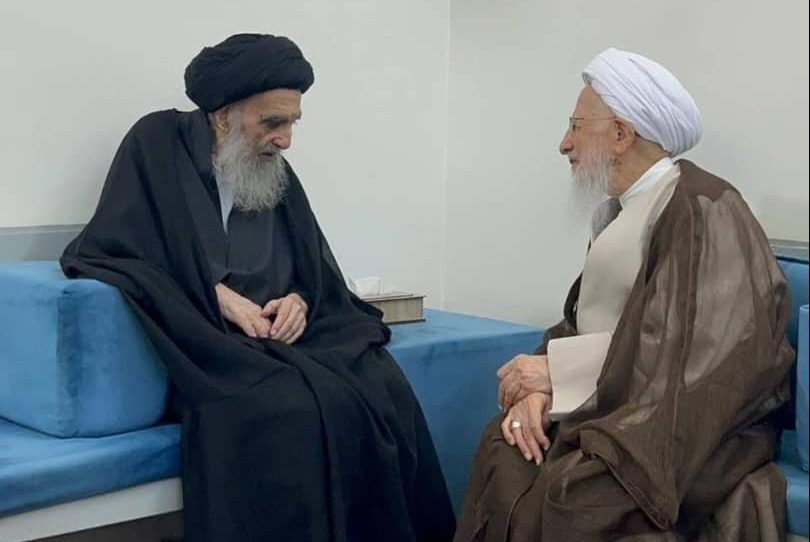
The Grand Ayatollah Sistani & the Grand Ayatollah Javadi Amoli Met in Najaf Ashraf
ethics

The Grand Ayatollah Sistani & the Grand Ayatollah Javadi Amoli Met in Najaf Ashraf

by mustafa askari
2025-05-19
Laylat al-Qadr: The Epitome of Resistance
Islamic Teachings

Laylat al-Qadr: The Epitome of Resistance

by mustafa askari
2024-12-10
Book of Deeds Will Be Given to Us on Resurrection Day
ethics

Book of Deeds Will Be Given to Us on Resurrection Day

by mustafa askari
2024-11-23
Next Post
2 million tourists visited Syria in 2023

2 million tourists visited Syria in 2023

Leave a Reply Cancel reply

Your email address will not be published. Required fields are marked *

Latest Post

10 facts about marriage in Islam

10 facts about marriage in Islam

2025-05-26
A Clear Message in Response to the Arrogance of Donald Trump

A Clear Message in Response to the Arrogance of Donald Trump

2025-05-24
The Grand Ayatollah Sistani & the Grand Ayatollah Javadi Amoli Met in Najaf Ashraf

The Grand Ayatollah Sistani & the Grand Ayatollah Javadi Amoli Met in Najaf Ashraf

2025-05-19
Imam Ali (AS) Did Not Compromise on Unethical Politics

Imam Ali (AS) Did Not Compromise on Unethical Politics

2025-05-11
UK: Reform councillors face allegations of sharing social media Islamophobic content

UK: Reform councillors face allegations of sharing social media Islamophobic content

2025-05-11
How to be just with your children?

How to be just with your children?

2025-05-10
Load More

Browse by Tags

Ahl al-Bayt (A.S.) Ahlul Bayt Al-Mahdi (AS) Allah Ashura Ayatollah Sobhani Ethics faith Fatima fiqh ghadir God History Holy Prophet Imam 'Ali Imam Ali (A.S.) Imam Husain Imams infallibles Islam Islamic Laws Islamic rules Jurisprudence Karbala Martyrdom morality Muhammad Nahj al Balaghah prayer prophet Quran Ramadan Reborn Salat Sayed Moustafa Qazwini shaistudies shia Shia Beliefs Shia Imams Shia Islam Shia Studie's World Assembly shiastudies Sin the differences between Shi’a and Sunni the story of those who converted to Shia Islam

The World Assembly of Shiite Studies was established in 2003 (1382 AH) by a group of scholars from seminaries and universities. The purpose of founding this independent academic institution was to introduce the school of Shi‘ism and defend its legitimacy through education, research, translation and publication, communications, and Islamic promotion. This center has continued its mission with strength and determination and envisions a bright future ahead.

Address: Qom, 45-Meter Ammar Yaser Boulevard, between Alley 4 and 6, World Assembly of Shiite Studies, Secretariat of Religious Scholars

Phone: +982537713773

Fax: +982537713774

All rights of the website are reserved and belong to the World Assembly of Shiite Studies.

Are you sure want to unlock this post?
Unlock left : 0
Are you sure want to cancel subscription?