• Home
  • Bank of Subjects of Articles
    • Bibliography
    • Characters
    • Culture and art
    • Economics
    • Educational sciences
    • ethics
    • Geography of Islamic world
    • History
    • Islamic jurisprudence and principles
    • Kalam (Islamic scholastic theology)
    • Mahdism
    • Philosophy and logic
    • Political science
    • pray and pilgrimage
    • Prophet and Ahl-al bayt
  • Islamic Teachings
  • quran
  • The Infallibles
  • Shia Beliefs
  • Morality
  • Events
    • Media Reflection
    • Muharram
    • News of Shia World
    • News of Worldly Assembly for Shia Studies
  • Home
  • Bank of Subjects of Articles
    • Bibliography
    • Characters
    • Culture and art
    • Economics
    • Educational sciences
    • ethics
    • Geography of Islamic world
    • History
    • Islamic jurisprudence and principles
    • Kalam (Islamic scholastic theology)
    • Mahdism
    • Philosophy and logic
    • Political science
    • pray and pilgrimage
    • Prophet and Ahl-al bayt
  • Islamic Teachings
  • quran
  • The Infallibles
  • Shia Beliefs
  • Morality
  • Events
    • Media Reflection
    • Muharram
    • News of Shia World
    • News of Worldly Assembly for Shia Studies
Home Islamic Teachings

Muslims Can Do Much More for Environment

by mustafa askari
2022-07-16
in Islamic Teachings
0
Muslims Can Do Much More for Environment
0
SHARES
18
VIEWS
Share on FacebookShare on Twitter
While the pandemic has been a major stumbling block for humanity and will take years to fully overcome, environmental issues are slowly coming back to the fore, with climate change representing an important and urgent problem.


There are a number of factors that are bringing about this realization, including stronger awareness and action by the young generation, as well as various commitments now being made by political and religious leaders around the world.

Let us focus on Islamic scholars and leaders and Muslim people more broadly.

In August 2015, 40 or so Islamic scholars, policymakers and Muslim social activists gathered in Istanbul to discuss climate change and other environmental and planet-related issues. They issued a bold, well-informed and wide-ranging declaration that set clear targets on greenhouse gas emissions (to be phased out by 2050) and energy sources (complete switch to renewable sources by 2050).

The declaration reminded Muslims of their religious responsibilities and duties to safeguard the planet that we have been entrusted with: “What will future generations say of us, who leave them a degraded planet as our legacy? How will we face our Lord and Creator?” It also pointed to a host of environmental, ecological and socioeconomic issues that require our immediate and serious attention, including: Global and local climate change; the contamination and befoulment of the atmosphere, lands, water systems and seas; soil erosion, deforestation and desertification; and damage to human health, including a host of modern-day diseases. It also presented a list of Islamic moral and behavioral principles to live by for the betterment of our planet and human communities.

Commenting on the declaration, Hakima El-Haite, then Morocco’s minister for the environment, underscored the religious basis for the call and the program that the leaders issued by saying: “It is an emotive call for a spiritual fight against climate change that will be very important for Muslims… I think that the right way to make this sort of call is through the Qur’an.”

The importance of the Islamic perspective was further stressed by the UN’s climate chief, Christiana Figueres, who said: “Islam’s teachings, which emphasize the duty of humans as stewards of the Earth and the teacher’s role as an appointed guide, illuminate pathways to take the right action on climate change.”

Muslim scholars also highlighted the great example set by Prophet Muhammad. He lived a frugal life, free of excess, waste and ostentation; he renewed and recycled his meager possessions by repairing or giving them away; and he ate simple, healthy food.

However, in practice, there is so much more that Muslims can do, both individually and collectively. The conservation of water, for example, is a serious issue, particularly in the (Persian) Gulf. The act of ablution (washing up before prayers) should be performed much more carefully and thriftily; after all, it is itself an act of worship, and preserving God’s Earth and natural resources is an important principle for Muslims. And yet we see so much water waste.

Another way that Muslims can help the environment, this time collectively, is by turning mosques into “green houses.” I mean this literally, i.e., “ecological mosques,” not “greenhouses” (those synonymous with warming). Mosques should be designed to conserve energy and water, while also encouraging worshipers to act more positively toward the environment, such as by using the lowest possible amount of plastic and paper inside and around the mosque. Mosques should use solar panels on their roofs, especially as many Islamic countries enjoy large amounts of solar radiation most days of the year.

This idea of ecological mosques has been implemented in a number of places, from Indonesia to California, but considering the very large number of mosques around the world, ecological ones remain few and far between.

More broadly, buildings and residence areas should be greener in the Islamic world. With all the religious statements mentioned above, it is perplexing to see so few buildings carrying plants and shrubs in our region, particularly in the Arab world. In other parts of the world, it is now quite common to see multistory buildings covered with plants and entire roofs turned into little vegetable gardens or fields.

Finally, in my experience, the Muslim world needs to raise everyone’s awareness of the serious impact of plastics and the importance of reducing fossil fuel consumption, particularly with cars (in rich Arab countries, public transportation is practically unheard of).

As soon as we have overcome the pandemic, or at least learned to live safely with it, we need to turn our serious attention to the environment. Major issues require immediate action — climate change, water scarcity/overuse, plastic and other pollution, etc. Religious leaders and institutions can help a lot, particularly in the Arab-Muslim world, where people are much more responsive to religious than political discourse. With Ramadan approaching, and mosques being used more, we have an opportunity to combine religious practice with environmental engagement.


By Nidhal Guessoum (professor at the American University of Sharjah, UAE)

Source: iqna

Tags: Ahl al-Bayt (A.S.)AllahEthicsQuranshaistudiesShia Studie's World Assembly
Previous Post

Saudi Arabia Resumes Issuing Umrah Visas

Next Post

Hijabi Woman Targeted with Hate Speech on London Bus: Report

mustafa askari

Related Posts

10 facts about marriage in Islam
ethics

10 facts about marriage in Islam

by mustafa askari
2025-05-26
A Clear Message in Response to the Arrogance of Donald Trump
Islamic Teachings

A Clear Message in Response to the Arrogance of Donald Trump

by mustafa askari
2025-05-24
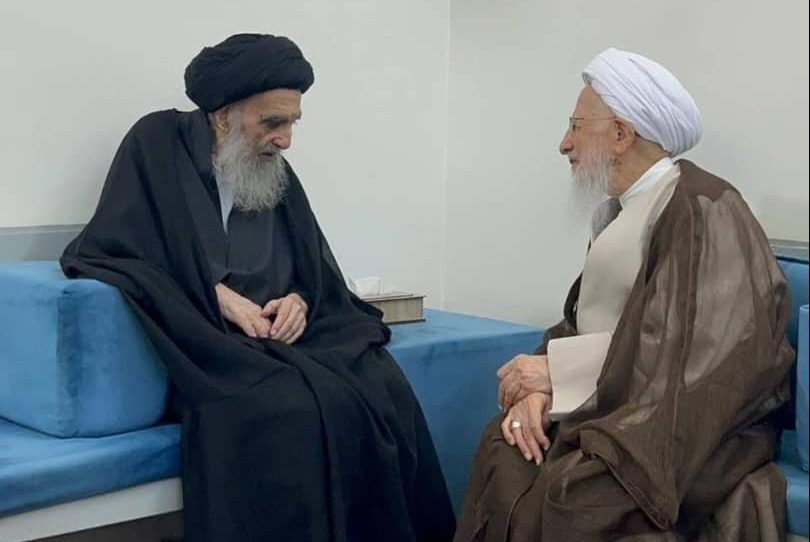
The Grand Ayatollah Sistani & the Grand Ayatollah Javadi Amoli Met in Najaf Ashraf
ethics

The Grand Ayatollah Sistani & the Grand Ayatollah Javadi Amoli Met in Najaf Ashraf

by mustafa askari
2025-05-19
Laylat al-Qadr: The Epitome of Resistance
Islamic Teachings

Laylat al-Qadr: The Epitome of Resistance

by mustafa askari
2024-12-10
Book of Deeds Will Be Given to Us on Resurrection Day
ethics

Book of Deeds Will Be Given to Us on Resurrection Day

by mustafa askari
2024-11-23
Next Post
Hijabi Woman Targeted with Hate Speech on London Bus: Report

Hijabi Woman Targeted with Hate Speech on London Bus: Report

Leave a Reply Cancel reply

Your email address will not be published. Required fields are marked *

Latest Post

10 facts about marriage in Islam

10 facts about marriage in Islam

2025-05-26
A Clear Message in Response to the Arrogance of Donald Trump

A Clear Message in Response to the Arrogance of Donald Trump

2025-05-24
The Grand Ayatollah Sistani & the Grand Ayatollah Javadi Amoli Met in Najaf Ashraf

The Grand Ayatollah Sistani & the Grand Ayatollah Javadi Amoli Met in Najaf Ashraf

2025-05-19
Imam Ali (AS) Did Not Compromise on Unethical Politics

Imam Ali (AS) Did Not Compromise on Unethical Politics

2025-05-11
UK: Reform councillors face allegations of sharing social media Islamophobic content

UK: Reform councillors face allegations of sharing social media Islamophobic content

2025-05-11
How to be just with your children?

How to be just with your children?

2025-05-10
Load More

Browse by Tags

Ahl al-Bayt (A.S.) Ahlul Bayt Al-Mahdi (AS) Allah Ashura Ayatollah Sobhani Ethics faith Fatima fiqh ghadir God History Holy Prophet Imam 'Ali Imam Ali (A.S.) Imam Husain Imams infallibles Islam Islamic Laws Islamic rules Jurisprudence Karbala Martyrdom morality Muhammad Nahj al Balaghah prayer prophet Quran Ramadan Reborn Salat Sayed Moustafa Qazwini shaistudies shia Shia Beliefs Shia Imams Shia Islam Shia Studie's World Assembly shiastudies Sin the differences between Shi’a and Sunni the story of those who converted to Shia Islam

The World Assembly of Shiite Studies was established in 2003 (1382 AH) by a group of scholars from seminaries and universities. The purpose of founding this independent academic institution was to introduce the school of Shi‘ism and defend its legitimacy through education, research, translation and publication, communications, and Islamic promotion. This center has continued its mission with strength and determination and envisions a bright future ahead.

Address: Qom, 45-Meter Ammar Yaser Boulevard, between Alley 4 and 6, World Assembly of Shiite Studies, Secretariat of Religious Scholars

Phone: +982537713773

Fax: +982537713774

All rights of the website are reserved and belong to the World Assembly of Shiite Studies.

Are you sure want to unlock this post?
Unlock left : 0
Are you sure want to cancel subscription?