• Home
  • Bank of Subjects of Articles
    • Bibliography
    • Characters
    • Culture and art
    • Economics
    • Educational sciences
    • ethics
    • Geography of Islamic world
    • History
    • Islamic jurisprudence and principles
    • Kalam (Islamic scholastic theology)
    • Mahdism
    • Philosophy and logic
    • Political science
    • pray and pilgrimage
    • Prophet and Ahl-al bayt
  • Islamic Teachings
  • quran
  • The Infallibles
  • Shia Beliefs
  • Morality
  • Events
    • Media Reflection
    • Muharram
    • News of Shia World
    • News of Worldly Assembly for Shia Studies
  • Home
  • Bank of Subjects of Articles
    • Bibliography
    • Characters
    • Culture and art
    • Economics
    • Educational sciences
    • ethics
    • Geography of Islamic world
    • History
    • Islamic jurisprudence and principles
    • Kalam (Islamic scholastic theology)
    • Mahdism
    • Philosophy and logic
    • Political science
    • pray and pilgrimage
    • Prophet and Ahl-al bayt
  • Islamic Teachings
  • quran
  • The Infallibles
  • Shia Beliefs
  • Morality
  • Events
    • Media Reflection
    • Muharram
    • News of Shia World
    • News of Worldly Assembly for Shia Studies
Home Bank of Subjects of Articles

Importance of Awkaf (Endowments) in Islam

by شهاب الدین مجتهدی
2020-04-21
in Bank of Subjects of Articles, Islamic jurisprudence and principles
0
Importance of Awkaf (Endowments) in Islam
0
SHARES
9
VIEWS
Share on FacebookShare on Twitter

Importance of Awkaf (Endowments) in Islam

“This is what Ali b. Abi Talib, the slave of Allah has laid down about his property, in pursuance of seeking Allah\’s pleasure so that He may by virtue of it give him entry into Paradise and accord him peace.
A part of the same: It will be administered by Hasan b. Ali (A.S.). He will take from it a suitable portion for his livelihood and spend it on charity. If something happens to Hasan (A.S.) and Husayn (A.S.) survives, he will administer it after Hasan (A.S.) and deal with it accordingly. In the charitable estate of the two sons of Fatima (A.S.), they have the rights as all (other) sons of Ali. I have laid down the administration on the two sons of Fatima (A.S.) in order to seek the pleasure of Allah and nearness to the Messenger of Allah (S.A.W.) with due regard for his honor and consideration of his kinship. It is obligatory on him who administers it that he retains the estate as it is and spends the usufruct as he has been ordered and instructed. He should not sell the seedlings in the plantations of these villages until the land changes its face by turning them into plants”.
The Apostle of Allah (S.A.W.) said: “When a believer (or an offspring of Adam) dies, his actions are interrupted, unless otherwise by virtue of three things: sadaqa jariya (ever continuous charity) [waqf]; knowledge that is beneficial to others; or a righteous child who prays for the parent.” [Bihar al-Anwar, II, 22; Ahmad Hanbal, Musnad, II, 372, No. 8627; Muslim, Sahih, V, 73.]
Imam al-Sadiq (A.S.) reminisced about Amir al-Mu’minin Ali (A.S.): “He was a servant of Allah. Allah had preordained for him the Paradise, yet he declared his property as continuous charity for the prospective poor, and said: O Allah! I did this so that You keep away the Fire from my face and keep my face away from the Fire.” [Mustadrak al-Wasa’il, XIV, 45-46]
Waqf is of high significance among the Muslims. It has had a great impact on development of life conditions and strengthening of various social, cultural, economic, and medical infrastructures of the Muslim communities. To provide social justice, Islam obliged the Muslims to take steps toward removal of poverty as per the instructions by the Holy Qur’an and the Holy Prophet (S.A.W.). Similarly, Muslims are held responsible to each other as they are commanded to meet the needs of the needy. Endowment is one of the most evident instances of meeting the needs of the needy people in the society.
A thorough study of endowment and its role is highly significant in that knowledge of its how\’s and whys would clarify part of the causes and reasons for the magnificence of thoughts and discerning attitudes of the benefactors (waqifs) – who did not overlook the non-Muslims, nor even the birds. Surely, the “good practice” of endowment is adopted from the Holy Qur’an, the Noble Traditions of the Holy Apostle of Islam (S.A.W.), the Imams of Guidance (A.S.), and the sira of great Muslim dignitaries. Many of the “endowments” are definitely rooted in their benefactors’ deep faith and heartfelt convictions.
The Holy Qur’an’s guidance and the dignified and treasured sayings of the Apostle of Allah (S.A.W.) and the Holy Imams (A.S.) concerning endowment have all been aimed at fostering the spirits, purifying the souls, and flourishing the talents of human beings as well as giving direction to all the forces and compassions that are supposed to be reserved for the happiness and perfection of mankind.
The compassions and affections of the benefactors are vividly reflected in the historical monuments and cultural heritages of the Muslim communities. If we take a look at the schools, mosques, tekkyes, bath-houses, bridges, passes, mental asylums, monasteries, caravanserais, and water cisterns which are constructed in the ancient Muslim cities – even in the farthest reaches of the Muslim world – we will notice that there has been an endowed property next to each of these constructions which had sustained their maintenance and survival.
A short glance at the extant endowment deeds would show that the endowments were extremely efficient in providing people’s requirements and played a significant part in consolidating various cultural, economical, social, and hygienic grounds of Muslim communities throughout history.


shiastudies.com/en

Tags: Importance of Awkaf (Endowments) in Islamshaistudies
Previous Post

Islam and the Countries

Next Post

Talfiq and the Adoption of Rukhsah

شهاب الدین مجتهدی

Related Posts

10 facts about marriage in Islam
ethics

10 facts about marriage in Islam

by mustafa askari
2025-05-26
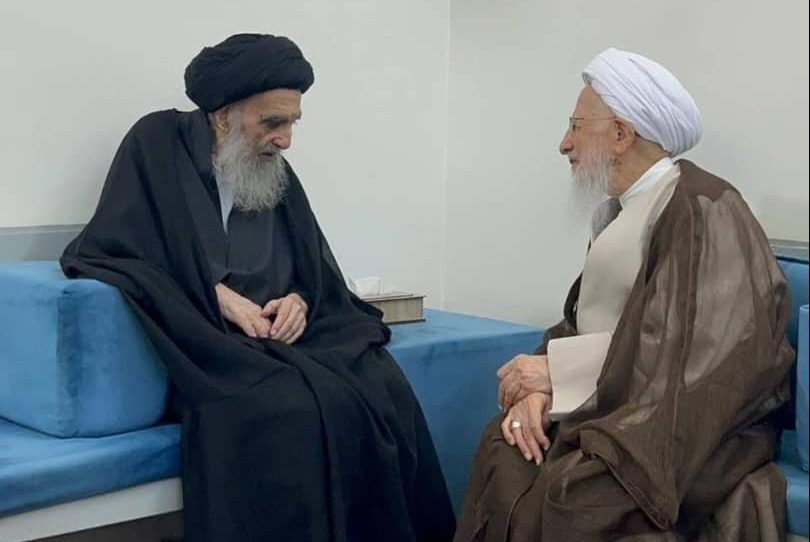
The Grand Ayatollah Sistani & the Grand Ayatollah Javadi Amoli Met in Najaf Ashraf
ethics

The Grand Ayatollah Sistani & the Grand Ayatollah Javadi Amoli Met in Najaf Ashraf

by mustafa askari
2025-05-19
Imam Ali (AS) Did Not Compromise on Unethical Politics
ethics

Imam Ali (AS) Did Not Compromise on Unethical Politics

by mustafa askari
2025-05-11
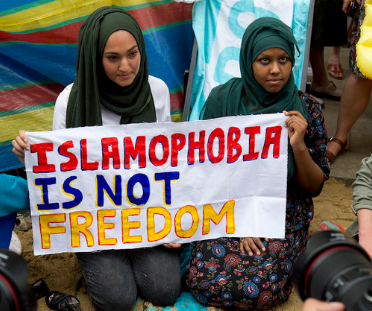
UK: Reform councillors face allegations of sharing social media Islamophobic content
ethics

UK: Reform councillors face allegations of sharing social media Islamophobic content

by mustafa askari
2025-05-11
How to be just with your children?
ethics

How to be just with your children?

by mustafa askari
2025-05-10
Next Post
Rights of Parents

Talfiq and the Adoption of Rukhsah

Leave a Reply Cancel reply

Your email address will not be published. Required fields are marked *

Latest Post

10 facts about marriage in Islam

10 facts about marriage in Islam

2025-05-26
A Clear Message in Response to the Arrogance of Donald Trump

A Clear Message in Response to the Arrogance of Donald Trump

2025-05-24
The Grand Ayatollah Sistani & the Grand Ayatollah Javadi Amoli Met in Najaf Ashraf

The Grand Ayatollah Sistani & the Grand Ayatollah Javadi Amoli Met in Najaf Ashraf

2025-05-19
Imam Ali (AS) Did Not Compromise on Unethical Politics

Imam Ali (AS) Did Not Compromise on Unethical Politics

2025-05-11
UK: Reform councillors face allegations of sharing social media Islamophobic content

UK: Reform councillors face allegations of sharing social media Islamophobic content

2025-05-11
How to be just with your children?

How to be just with your children?

2025-05-10
Load More

Browse by Tags

Ahl al-Bayt (A.S.) Ahlul Bayt Al-Mahdi (AS) Allah Ashura Ayatollah Sobhani Ethics faith Fatima fiqh ghadir God History Holy Prophet Imam 'Ali Imam Ali (A.S.) Imam Husain Imams infallibles Islam Islamic Laws Islamic rules Jurisprudence Karbala Martyrdom morality Muhammad Nahj al Balaghah prayer prophet Quran Ramadan Reborn Salat Sayed Moustafa Qazwini shaistudies shia Shia Beliefs Shia Imams Shia Islam Shia Studie's World Assembly shiastudies Sin the differences between Shi’a and Sunni the story of those who converted to Shia Islam

The World Assembly of Shiite Studies was established in 2003 (1382 AH) by a group of scholars from seminaries and universities. The purpose of founding this independent academic institution was to introduce the school of Shi‘ism and defend its legitimacy through education, research, translation and publication, communications, and Islamic promotion. This center has continued its mission with strength and determination and envisions a bright future ahead.

Address: Qom, 45-Meter Ammar Yaser Boulevard, between Alley 4 and 6, World Assembly of Shiite Studies, Secretariat of Religious Scholars

Phone: +982537713773

Fax: +982537713774

All rights of the website are reserved and belong to the World Assembly of Shiite Studies.

Are you sure want to unlock this post?
Unlock left : 0
Are you sure want to cancel subscription?